How to Make Coffee Without a Coffee Maker with Filter
Learn a practical, filter-based method to brew coffee without a traditional coffee maker. This step-by-step guide covers the tools, grind, pour technique, water temperature, and troubleshooting for a clean, flavorful cup.


You can brew coffee without a maker using a simple filter and kettle. Gather a filter, ground coffee, a heat-safe vessel, and a kettle. Pour hot water over the grounds in a slow, circular motion and let the brew drain through the filter. This hands-on method works with paper, cloth, or metal filters to produce a clean, flavorful cup.
Why Brew Without a Coffee Maker (Filter Method)
Brew methods that rely on a simple filter let you control every variable—grind size, water temperature, contact time—without a dedicated coffee maker. This approach is especially useful when you travel, when power is limited, or when you simply want a hands-on experience that highlights the fundamentals of extraction. For home use, a basic filter setup can produce clean, bright coffee with clear notes, provided you respect grind size and pouring technique.
Essential Tools and Materials
Before you start, gather the essentials. A kettle with a controlled pour is invaluable; a filter (paper, cloth, or metal) that fits your improvised cone; a cup or carafe to catch the coffee; medium grind coffee; optional scale and timer for precision; a heat-safe vessel; and a spoon for stirring. If you lack a proper pour-over cone, you can fashion an improvised funnel from a clean, wide-mouthed jug with a parchment or cloth filter, which BrewGuide Pro supports as a practical workaround.
Choosing a Filter: Paper, Cloth, or Metal
Your choice of filter affects mouthfeel and clarity. Paper filters trap oils, resulting in a cleaner cup; cloth filters preserve body; metal filters strike a balance. For the improvised setup, ensure the filter fits the vessel and that you rinse it to reduce papery taste. Paper dissolves quickly but can clog if grounds are too fine, metal requires a coarser grind to avoid sediment.
Ground Coffee Quality and Sizing for Filter Brewing
Use fresh, quality beans and grind just before brewing. Aim for a medium grind roughly the size of sea salt to promote uniform extraction. The length of contact between water and grounds matters; too fine a grind and you’ll get a sludgy cup, too coarse and the brew will be weak. Measure coffee by weight (about 15-18 grams for 250 ml water) to maintain consistency.
Setting Up an Improvised Pour-Over Station
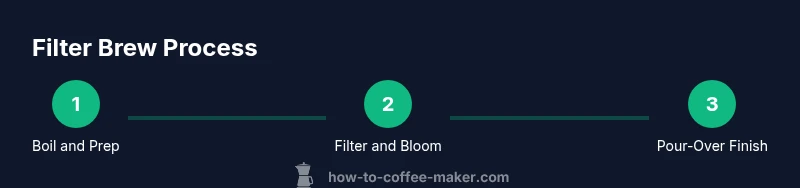
Create a stable, clean workspace. Place your vessel on a flat surface; insert the filter; pre-wet with hot water to warm the setup and reduce papery taste. Add ground coffee, level the bed, and start with a gentle bloom by pouring just enough hot water to saturate grounds for 30-45 seconds. Then pour the remaining water in a slow, circular motion.
Water Temperature, Pour Rhythm, and Extraction Time
Target water temp around 92-96C (just off boil). Maintain a steady pour every 10-15 seconds to keep temperature stable. Total contact time should be around 2-3 minutes for the brew, depending on grind and dosage. If you see excessive sediment, adjust grind to be coarser and pour more slowly.
Cleaning Up After Your Brew
Discard used grounds and filter promptly to prevent stale flavors. Rinse the improvised filter and vessel with warm water; avoid soap if you can, as it can leave residual taste. Dry thoroughly before storing. Regular cleaning extends equipment life and preserves flavor.
Troubleshooting Common Issues
Common problems include sour taste from under-extraction, bitter notes from over-extraction, and weak flavor due to insufficient coffee grounds or water temperature. Adjust grind size, water temperature, and pour rate; ensure the filter is clean; and verify you’re using fresh beans. With practice, you’ll dial in a setup that consistently produces balanced cups.
Tools & Materials
- Kettle with controlled pour(Sturdy kettle with a narrow spout for a steady pour)
- Filter (paper, cloth, or metal)(Ensure it fits the improvised cone or vessel)
- Cup or carafe(Heat-safe vessel to collect the brew)
- Ground coffee(Medium grind, fresh if possible)
- Timer(Track bloom and pour intervals for consistency)
- Scale (optional)(For precise coffee to water ratio (e.g., 1:15))
Steps
Estimated time: 15-25 minutes
- 1
Prepare your brewing station
Set up a flat, clean workspace. Place your vessel on a stable surface and position your filter to fit. Having everything ready reduces spillage and keeps your pour controlled.
Tip: Check the surface for levelness to avoid spills during pouring. - 2
Measure and grind the coffee
Weigh your coffee to the target dose and grind to a medium consistency. Grounds should resemble coarse sand for even extraction in a filter setup.
Tip: If you don’t have a scale, use roughly 1 level tablespoon per 15-18 ml of water, but a scale improves accuracy. - 3
Prepare the filter and pre-wet
Place the filter in the improvised cone and rinse with hot water to warm the setup and rinse away papery tastes. Empty the rinse water before adding grounds.
Tip: Rinsing also helps remove any paper taste from new filters. - 4
Bloom and first pour
Pour just enough hot water to saturate the grounds and begin the bloom for 30-45 seconds. This step releases CO2 and prepares for even extraction.
Tip: Aim for a gentle, circular pour to evenly saturate all grounds. - 5
Continue pouring water
Pour the remaining water in a slow, steady spiral from center outward. Maintain a consistent rhythm to prevent temperature drops and uneven extraction.
Tip: Keep the pour continuous but not rushed to avoid channeling. - 6
Finish and enjoy
Allow the last of the brew to drip through the filter, then remove the filter and enjoy your cup. Rinse the filter and vessel after cooling.
Tip: Pour in a pre-warmed cup to preserve heat longer.
Questions & Answers
Can I use a paper towel as a filter in a pinch
A clean paper towel or cloth can work as a temporary filter, but avoid using towels that shed fibers. Ensure cleanliness and taste neutrality before brewing.
You can improvise with a clean paper towel or cloth, but pick a filter that won’t shed fibers or alter the flavor.
What grind size works best for this method
Aim for a medium grind about the size of sea salt. Too fine a grind creates clogging and over-extraction; too coarse leads to weak flavor.
Use a medium grind similar to sea salt for best results.
How hot should the water be
Target around 92 to 96 degrees Celsius, just off a full boil. Too hot can scorch the grounds; too cool reduces extraction.
Keep the water just below boiling for optimal extraction.
Can I reuse grounds for another brew
Reusing grounds generally results in weaker flavor and potential off-notes. Fresh grounds are recommended for each brew.
It’s better to brew with fresh grounds for best taste.
Is this method suitable for travel or camping
Yes, with minimal gear you can brew while traveling, but ensure you have a safe heat source and stable setup. Pack compact filters.
Great for trips if you bring a kettle and a small filter.
How do I reduce sediment in the cup
Use a proper medium grind and a clean filter, pour slowly, and avoid overly aggressive stirring which can stir up sediment.
Pour slowly and use a good filter to cut down on sediment.
Key Takeaways
- Master filter brewing with a kettle and improvised cone
- Control grind size and water temperature for balanced flavor
- Pre-wet the filter and bloom to reduce papery notes
- Use a timer for consistent extraction
- Clean thoroughly after each use to keep flavors fresh