Is it possible to make coffee without a coffee maker
Learn practical, no-machine coffee brewing methods, including pour-over, French press, and stovetop options. Master grind, water temp, and timing for consistent results at home with BrewGuide Pro guidance.


You can brew coffee without a traditional coffee maker by using manual methods such as pour-over, French press, Moka pot on a stove, or cowboy coffee. You'll need hot water, ground coffee, and a way to filter. The key is controlling grind size, water temp, and brew time for your chosen method.
Is it possible to brew coffee without a coffee maker?
Yes—it's practical to brew coffee without a traditional machine using manual methods. According to BrewGuide Pro, you can extract great flavor with straightforward tools like a kettle, a filter, and a suitable vessel. The goal is to control grind size, water temperature, and brew time to suit your preferred style. Whether you use pour-over, a French press, or a stove-top moka pot, you can achieve café-quality results with careful technique and consistent ratios. This approach also lowers equipment costs and teaches you to read flavors rather than rely on automation. With patience, you can dial in brightness, sweetness, and body to taste.
Common manual methods you can use
If you want coffee without a coffee maker, start with these proven methods. Pour-over with a cone or dripper gives clean, bright cups and lets you control extraction. A French press delivers a fuller body by steeping grounds and pressing through a metal mesh. A stove-top moka pot produces a concentrated espresso-style shot, then you can dilute to taste. Cowboy coffee relies on boiling grounds directly in water for a bold, rustic cup; its rough edges appeal to some palates. Turkish coffee uses a cezve and very fine grounds for a dense, aromatic cup. Each method requires different grind sizes, water temperatures, and brew times. The key to success is consistency: measure your coffee and water, keep agitation to a minimum, and aim for even extraction.
Equipment you actually need
Most no-maker brews rely on a few sturdy items you likely already own. Essential: a kettle or heat source to bring water to the right temperature; ground coffee; a filter or cloth to trap solids; a cup or mug to serve into; and a timer to pace a consistent brew. A simple dripper or cone, plus a filter, helps manage flow for pour-over; a French press requires a plunger and beaker; a moka pot sits directly on the stove. Optional but helpful: a kitchen scale for precise ratios, a thermometer to verify water temperature, and a heatproof mat or mitt to handle hot equipment safely. If you grind beans, a grinder is ideal; if not, pre-ground coffee is fine but may limit freshness. Finally, keep a clean sponge and some soap ready for post-brew cleanup to prevent stale flavors last.
How grind size, water temperature, and time shape flavor
When you skip a machine, grind size and water temperature become the primary levers for flavor. A finer grind increases surface area and extraction speed, which can yield stronger cups but risk bitterness if overdone. A coarser grind reduces extraction and can lead to weak or underdeveloped flavor. Water should be just off boil for most methods—about 195–205°F (90–96°C). Too hot water can scorch compounds and taste harsh; too cool water will under-extract. Brew time depends on method: pour-over typically takes 2–4 minutes from the first pour to the final drain; French press often runs 4–5 minutes; moka pot pulls strong shots in 5–6 minutes. Fresh, clean water and correctly heated vessels help maintain temperature stability throughout. Adjusting grind and time in small increments—say 0.1–0.2 mm or 15–30 seconds—speaks volumes about how your coffee evolves without a machine.
Techniques to brew without electricity or fancy gear
Beyond standard pour-over or French press, you can improvise with common kitchen items. A simple cloth or paper filter can substitute for a dripper; a clean jar method can work for cold brew in a pinch. If you have a kettle and a mug, you can use a makeshift pour-over by placing a filter on a cup and pouring in circles to saturate the grounds evenly. For richer, espresso-like flavors, a stovetop moka pot excels because it concentrates pressure and oils, then you can dilute to taste. Alternatively, a long-steep method in a pot or jar with a lid can produce a bold, robust cup by letting grounds soak longer at a stable temperature. Each approach requires attention to cleanliness and timing to avoid off-flavors. Practicing with small batches helps you calibrate strength and aroma without specialized equipment.
Cleaning and care after brewing without a machine
Rinse equipment thoroughly after use to prevent stale flavors. Dispose of used grounds in compost or trash rather than down the drain. If you used a cloth filter, rinse and air-dry to prevent mold. Clean mugs and kettles with warm soap and water to remove oils, then dry completely. Regular scrubbing of metal mesh screens prevents flavor carryover. If you built a long-term habit of using improvised gear, consider dedicating a small rinse basin to keep things fresh and easy to sanitize. Finally, store any reusable filters in a dry place to prevent bacteria growth. With proper cleaning, your no-maker setup can deliver consistent flavor over time.
Quick-start checklist for your no-maker brew
Use this at-a-glance checklist to set up quickly and avoid common missteps.
- Confirm you have: kettle, ground coffee, filter, heat source, mug, timer, and a clean workspace.
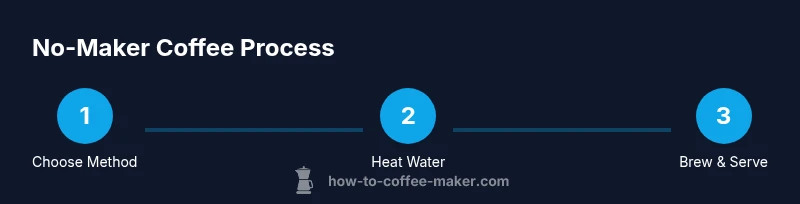
- Choose your method: pour-over for clarity, French press for body, moka pot for espresso-like intensity.
- Heat water to 195–205°F (90–96°C) and pre-warm your mug.
- Grind to the correct size for your method and measure accurately.
- Prep filter and rinse to remove paper taste and stabilize temperature.
- Start the brew with a short bloom, then continue in a slow, circular pour.
- Allow full drainage, then enjoy and promptly clean to maintain flavor.
- Note adjustments: increase/decrease grind size or water volume to dial in flavor over time.
This checklist helps beginners and seasoned hobbyists alike achieve repeatable results without a dedicated coffee maker.
Tools & Materials
- Kettle or heat source(A narrow-spout kettle helps control pour rate)
- Ground coffee(Freshly ground preferred for aroma)
- Filter (paper or cloth)(Fits your chosen brewing method)
- Cup or mug(For serving and tasting)
- Grinder(Optional if using pre-grinded coffee)
- Timer(Helpful for consistency)
- Scale(Optional for precise ratios)
Steps
Estimated time: 10-12 minutes
- 1
Gather gear and prep workspace
Collect all essential equipment and place within easy reach. Pre-warm your mug and rinse any filters. This setup reduces interruptions and ensures a smoother brew.
Tip: Keep your workspace clear and arrange items by proximity to your pour. - 2
Heat water to target temperature
Bring water to around 195-205°F. Use a thermometer to verify and adjust heat as needed in response to your kettle's performance.
Tip: If water cools too much while brewing, briefly reheat between pours. - 3
Grind coffee to appropriate size
Grind right before brewing to preserve aroma. Match grind size to your method: medium for pour-over, coarse for French press.
Tip: Avoid over-grinding; fresher grounds yield better flavor. - 4
Rinse filter and pre-wet
Rinse filter to remove paper taste and pre-wet to warm the brewing vessel. This helps control pour rate and temperature.
Tip: Discard the rinse water before pouring for a cleaner cup. - 5
Add coffee to filter
Evenly distribute grounds in the filter to create a flat bed. Do not tamp unless using moka pot; consistency matters.
Tip: Tap the filter gently to settle grounds before pouring. - 6
Bloom and pour water
Pour a small amount of water to saturate grounds; wait 30-45 seconds to allow blooming. Then continue pouring slowly in a circular motion until you reach your target.
Tip: Keep pours steady and avoid rushing the process. - 7
Finish brew, serve, and clean
Let the brew drain completely; remove equipment, pour, and enjoy. Clean gear promptly to prevent flavors from lingering.
Tip: Rinse with hot water immediately after use for easier cleanup.
Questions & Answers
Can I get good coffee without a coffee maker?
Yes. With the right method, grind, and water temperature, you can produce flavorful coffee without a machine. Practice will improve consistency.
Yes, you can get good coffee without a maker with the right method, grind, and water temperature.
What is the easiest method to start with?
Pour-over with a cone is beginner-friendly and gives clean flavors. French press is also forgiving and provides body.
Pour-over is a great place to start for clean flavor, and French press for body.
Do I need a grinder?
A grinder helps maximize flavor, but you can start with pre-ground coffee. Grinding just before brew yields best results.
Grinder helps, but you can begin with pre-ground and improve by grinding fresh.
How long does it take?
Most no-maker brews take about 8–15 minutes from start to finish, depending on method and grind size.
Most no-maker brews take around 8 to 15 minutes depending on method.
Can I use hot water from the tap?
Tap water works, but better results come from filtered, fresh water at the correct temperature.
Use fresh water at the right temperature for best taste.
Will flavor differ if I use a moka pot vs pour-over?
Yes. A moka pot emphasizes intensity and richness, while pour-over yields clarity and brightness.
Moka pot gives richness; pour-over gives brightness.
Watch Video
Key Takeaways
- Choose a manual method that fits your taste.
- Keep grind size and temperature consistent.
- Measure coffee and water for repeatable results.
- Pre-wet filters to improve flavor and flow.
- Clean equipment after each brew.