How to Make Coffee Without a Coffee Maker: A Practical DIY Guide
Learn practical, step-by-step methods to brew coffee without a coffee maker using common kitchen tools. Explore pour-over, cowboy coffee, and improvised filtration with clear guidance from BrewGuide Pro.


Ready to brew a rich, aromatic cup without a coffee maker? This guide shows practical methods you can master with common kitchen tools. According to BrewGuide Pro, flavor emerges when you control grind size, water temperature, and brew time with simple, repeatable techniques. You’ll learn multiple approaches, safety tips, and a step-by-step process you can apply tonight.
Practical approaches to coffee without a maker
When you lack a traditional coffee maker, you still have several reliable routes to a satisfying cup. The most common methods rely on simple physics: steady pouring, controlled heat, and contact time between water and grounds. The goal is to extract flavor without overheating or over-extracting. In this guide, you’ll explore pour-over with improvised filters, cowboy coffee from a pot, and steeped infusions that let you bend the rules while staying safe. According to BrewGuide Pro, flavor emerges most clearly when you minimize unnecessary steps and focus on repeatable technique. This section sets up the core ideas you’ll apply in each method.
Essential gear and improvised setups
You don’t need a dedicated coffee maker to make a strong cup; simple kitchen items can do the job. Start with a heat-safe container, a way to pour water steadily, and a method to separate grounds from the drink. A kettle or pot for heating is essential, and a fine-mesh sieve, a clean cloth, or even a clean paper towel can act as a filter in a pinch. Grinders (manual or electric) help you control grind size, which is crucial when you’re not using a percolator. If you don’t own a grinder, you can approximate ground texture by crushing beans with a sturdy utensil. For scale and timing, a kitchen scale and a timer are helpful but optional. The goal is repeatability, not perfection.
Key variables: grind, water, and temperature
Grind size: For improvised methods, aim for a medium-coarse grind for pour-over and a coarser texture for cowboy coffee. Finer grinds over-extract quickly and can clog improvised filters. Water temperature: 92–96°C (198–205°F) yields balanced extraction; boiling water (100°C/212°F) can scorch the grounds. Coffee-to-water ratio: Start with a moderate ratio and adjust to taste. Freshness matters: grind just before brewing for maximum aroma. Set expectations: you may need 1–2 extra minutes of contact time when using improvised filtration to achieve the same strength as a conventional brew.
Core methods: pour-over with improvised filters; cowboy coffee
Pour-over with improvised filter: Place your improvised filter over the cup or container, add coffee grounds, and pour hot water in slow, circular motions. Allow the grounds to drain fully before removing the filter and tasting. Cowboy coffee: Boil water, add grounds, simmer briefly, and pour into a separate cup after a short rest. Both methods benefit from pre-warming your mug and your brewing vessel to maintain temperature. Expect a fuller body from longer steep times and a shorter brew from quick passes.
Flavor tuning, troubleshooting, and flavor notes
If the brew tastes bitter, you likely used too fine a grind or too hot water, or brewed too long. If it tastes weak, increase contact time slightly, grind coarser, or allow a longer bloom. Salt or small amounts of sugar can balance acidity. With improvised filters, keep the filter clean and avoid letting paper residues affect flavor. Use fresh, clean water; mineral content can influence extraction. Document what works for your setup so you can reproduce it.
Safety, cleanup, and storage
Always handle hot equipment with dry safeguards; use a trivet or heat-resistant surface. Empty grounds properly to avoid clogs; dispose of them safely. Rinse filters and vessels after use to prevent staining and odors. Store beans in a cool, dark place and keep your grinder clean for consistent flavor. If using improvised filters like fabric or paper towels, ensure food-grade materials are used and avoid releasing fibers into the brew.
Quick-start checklist
- Gather essential items: kettle, pot, improvised filter, grounds, scale (optional).
- Heat water to just below boiling and pre-warm your mug.
- Prepare the improvised filter and set up your pouring path.
- Grind coffee to the texture described for your method.
- Pour water in slow, controlled pulses and watch for full drainage.
- Taste, then adjust grind or water next time for your preferred strength.
Authority sources
- Britannica: Coffee. https://www.britannica.com/topic/coffee
- National Coffee Association: Brewing basics. https://www.ncausa.org
- Scientific American: How to brew coffee. https://www.scientificamerican.com/article/how-to-brew-coffee/
Tools & Materials
- Kettle or heat-safe pot(Prefer a spout for controlled pouring)
- Container to brew into (cup or mug)(Pre-warm if possible)
- Improvised filter (cloth, paper towel, or sieve)(Food-grade if using fabric)
- Ground coffee(Moderate grind texture if possible)
- Water(Fresh, clean water)
- Scale or timer (optional)(Helpful for consistency)
- Grinder (manual or electric)(Useful for control, not mandatory)
- Spoon or stirrer(Mix or stir during brew)
Steps
Estimated time: 25-45 minutes
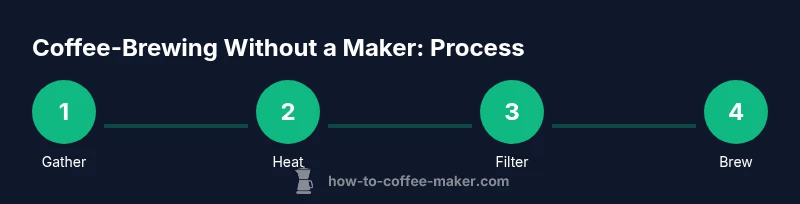
- 1
Gather gear and ingredients
Collect your kettle, pot, improvised filter, grounds, and a cup. Have your water ready and within reach. Ensure all equipment is clean to avoid off flavors.
Tip: Put everything within arm’s reach to keep a steady pace. - 2
Heat water to the target temperature
Heat water to about 92–96°C (198–205°F). Avoid rolling boil for delicate filters to prevent scorching the grounds. Pre-warm the brewing vessel and the cup if possible.
Tip: Use a thermometer or watch the water bubbles for rough temperature cues. - 3
Prepare the improvised filter
Set up your cloth, paper towel, or sieve over the cup. Rinse or pre-wet the filter if working with cloth to reduce fiber taste. Ensure the filter sits flat and stable.
Tip: Avoid over-tightening the filter to prevent clogging. - 4
Grind the coffee to the right texture
If you have a grinder, aim for a medium-coarse texture. If grinding by hand, try to achieve even particle size to promote uniform extraction. Measure grounds so you have a consistent starting point.
Tip: Too-uneven grounds lead to uneven extraction and inconsistent flavor. - 5
Brew using the chosen method
Pour water in a slow, circular motion, allowing the grounds to bloom and settle. For pour-over, let the water pass through the grounds before lifting the filter. For cowboy, maintain gentle simmer and avoid over-extraction.
Tip: Maintain a steady pour rate to coax even extraction. - 6
Separate grounds and serve
Once extraction is complete, remove the filter and pour the coffee into your cup. If needed, let it rest briefly to temper. Taste and note any adjustments for next time.
Tip: A short rest helps flavors settle in and reduces bitterness. - 7
Evaluate and adjust for next brew
Reflect on strength, aroma, and balance. Adjust grind texture, filter choice, or pour rate based on your preferences. Keep a simple log to reproduce results.
Tip: Small changes compound, so document what works. - 8
Clean up and store leftover materials
Rinse equipment, dispose of used grounds safely, and dry all parts. Store beans in a cool, dark place and keep your grinder clean for consistent results.
Tip: Dry everything thoroughly to prevent mold or odors.
Questions & Answers
What is the easiest method to brew coffee without a maker?
Pour-over with an improvised filter or cowboy coffee are the simplest and most accessible options. Both methods require only basic kitchen items and careful heat management.
The easiest method is usually pour-over with an improvised filter or cowboy coffee, using common kitchen items and careful heat control.
Can I use a cloth or paper towel as a filter?
Yes, a clean cloth or paper towel can work as a temporary filter. Ensure the material is food-grade and free of detergents or residues that could affect flavor.
A clean cloth or paper towel can work as a filter as long as it's food-grade and free of residues.
Is boiling water safe for coffee brewing without a maker?
Boiling water is acceptable, but it can scorch delicate grounds. If possible, cool to around 92–96°C before pouring for a smoother extraction.
Boiling water can scorch the grounds, so let it cool a bit to around 92–96°C before pouring.
How long should extraction take with improvised methods?
Extraction time varies by method, but aim for steady drainage with even contact. If flavor is imbalanced, adjust grind size or pour rate and retest.
Aim for steady drainage and even contact; adjust grind size or pour rate if flavor isn’t balanced.
What beans work best for these methods?
Medium to dark roasts often perform well with improvised methods, but lighter roasts can showcase brightness with careful technique. Freshly roasted beans yield the best aroma.
Medium to dark roasts generally perform well, though lighter roasts can shine with precise control. Fresh beans lose aroma quickly, so grind just before brewing.
Do I need a scale for this process?
A scale is optional but helpful for consistency. If you don’t have one, rely on familiar volume measures and taste to guide adjustments.
A scale helps consistency, but you can brew by eye if you’re careful with measurements and taste.
Watch Video
Key Takeaways
- Choose a method that fits your tools and space
- Control heat and time for balanced flavor
- Use fresh grounds and clean filters for best aroma
- Practice pour technique to improve consistency
- Clean equipment promptly to preserve flavor