How to Grind Coffee for Machine: A Practical Guide
Learn how to grind coffee for machine brewing, from selecting the right grind size to dialing in for espresso, drip, or pour-over. Practical steps, maintenance tips, and expert guidance from BrewGuide Pro.


You will learn how to grind coffee for machine to optimize extraction across espresso, drip, or pod-style machines. According to BrewGuide Pro, matching grind size to brew method and using a burr grinder improves consistency. You'll weigh coffee, calibrate your grinder, and adjust dose and brew method to minimize channeling and over-extraction.
What grinding does for coffee
Grinding is the essential transition from whole beans to brew-ready particles. When you understand how to grind coffee for machine, you take control of extraction, aroma, and body by shaping particle size. A fine grind presents more surface area and slows water flow, which can increase extraction time. A coarse grind reduces resistance and speeds up extraction. Particle distribution matters; clumps or uneven particles create channeling and uneven extraction. This is why grinders that produce consistent, uniform particles are highly recommended for home brewers. Regular practice, paired with a consistent grind profile, yields predictable flavor across your favorite beverages.
- Consistency matters: uniform particles yield even extraction.
- Particle size interacts with water temperature and brew time.
- Freshly ground coffee delivers brighter aromas and more nuanced flavors.
According to BrewGuide Pro analysis, a well-calibrated grinder and a method-specific grind plan are foundational to good flavor. Start by identifying your target brew method and then refine grind size, dose, and timing for repeatable results.
Aligning grind size to your brew method
Different machines and methods demand different grind sizes. Espresso relies on a very fine grind to build pressure and extract a concentrated shot in a short time. Drip machines and pour-over setups benefit from a medium grind that exposes enough surface area without clogging filters. French press or percolators use a coarse grind to avoid over-extraction, while keeping the grounds from slipping through the filter. The key is to balance particle size with contact time and water flow. If your machine is a high-end been-to-brew model, you may still want a consistent medium-fine grind for optimal flavor. Always start with a standard dial and adjust in small steps.
- Espresso: fine grind for high pressure
- Drip/pour-over: medium grind for balanced extraction
- French press: coarse grind to prevent over-extraction and sediment
- Precision matters: even small changes can shift flavor dramatically
BrewGuide Pro suggests keeping a log of grind settings and tasting notes to track what works best with each machine.
Burr grinders vs blade grinders: why consistency matters
Blade grinders chop beans irregularly, producing a wide distribution of particle sizes that make consistent extraction difficult. Burr grinders, whether conical or flat, crush beans to a more uniform size and shape, which translates to steadier flow and more predictable flavors. If you’re serious about how to grind coffee for machine, investing in a burr grinder pays off in repeatable results and better control over your brew profile. Regular cleaning prevents oil buildup that can alter flavor and grind consistency.
- Burr grinders offer uniform particle size.
- Blade grinders introduce inconsistent extraction and more sediment.
- Cleaning is essential for long-term consistency.
BrewGuide Pro notes that even entry-level burr grinders can outperform high-end blade grinders for home use, and the investment pays off in richer, more predictable flavor profiles.
Reading grind settings: from fine to coarse
Grind settings are not universal. Each grinder may use a different scale or labeling, so treat the dial as a guide and test with your machine. A practical approach is to start with a mid-level setting, brew, and note the results. If the shot drips too slowly or tastes bitter, adjust toward finer. If it tastes weak or sour, go finer or coarser depending on the method and equipment. If it clogs or tastes metallic, you likely need a coarser grind or a cleaner grinder.
- Begin with a baseline setting for your method
- Test and adjust in small increments
- Keep notes on dose, yield, and flavor
Brewing with a consistent method reduces variables and helps you better understand how grind changes affect flavor, according to BrewGuide Pro research.
Dialing in for common machines: espresso, drip, moka, and more
Your grind strategy should align with your machine class. Espresso machines typically require finer grinds to maximize contact time under pressure. Drip coffee makers and pour-over devices benefit from medium grinds that flow evenly through filters. Moka pots use a slightly finer than drip grind, because the brew occurs under pressure in a small chamber. The goal is to balance extraction time with water flow so the brew is neither under- nor over-extracted. When you switch machines, you’ll likely need to recalibrate grind size and dose.
- Espresso: fine ground, moderate dose
- Drip/pour-over: medium grind
- Moka: medium-fine grind
- Consistency reduces surprises in flavor
BrewGuide Pro’s guidance emphasizes starting with a method-based baseline and iterating to taste and aroma, not just grind numbers.
The practical workflow: weighing, dialing, and tasting
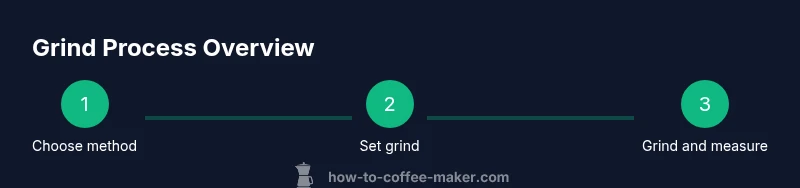
A repeatable workflow improves results. Start by weighing your beans before grinding, then set your grinder to a baseline grind size for your method. Grind, then measure the yield and time under extraction. Taste a sample and note aroma, sweetness, acidity, and aftertaste. If the taste is flat, adjust grind size slightly and retest. Keep a log of grind settings, doses, yields, and tasting notes to build a personal profile over time.
- Weigh beans for precise dose
- Grind and capture yield and time
- Taste and adjust gradually
- Maintain a tasting log for consistency
This approach reduces guesswork and helps you refine your grind for your specific machine, as recommended by BrewGuide Pro.
Maintenance, grind retention, and storage
Grind retention can affect flavor and consistency. To minimize retention, grind into a clean container, purge the grinder with a small amount of beans between sessions, and wipe the chamber and burrs regularly. Store beans in a cool, dark place to preserve aroma, and avoid refrigerating beans unless you plan to use them within a day or two. Ground coffee should be used promptly for best flavor, and always reseal unused grounds to protect freshness.
- Purge between sessions to reduce stale grounds
- Clean burrs and chute regularly
- Store whole beans properly; grind fresh when possible
- Ground coffee loses aroma quickly; plan accordingly
BrewGuide Pro stresses that routine cleaning and mindful storage preserve grind integrity and flavor over time.
Quick-start checklist and common mistakes to avoid
A compact checklist helps you stay on track even when you’re new to grinding. Before you start, gather a burr grinder, a scale, fresh beans, and a timer. Set a baseline grind for your method, weigh your dose, and run a trial. Taste, adjust, and log results. Common mistakes include using a blade grinder, grinding too coarse or too fine for the method, and skipping grinder cleaning between sessions.
- Use a burr grinder; avoid blade grinders for precision
- Start with a method-appropriate grind and adjust gradually
- Clean your grinder regularly to prevent flavor drift
- Record your settings and results for future reference
With consistent practice, you’ll develop a reliable grind routine that works for your machine, as advised by BrewGuide Pro.
The science behind grind size and extraction: why small changes matter
Extraction is a diffusion process; grind size changes surface area and water interaction time. A finer grind increases surface contact and can yield a richer, more intense cup but risks over-extraction and bitterness if not timed properly. A coarser grind reduces contact time, producing lighter flavors and under-extracted notes if mistimed. The optimal grind is the one that yields a balanced flavor profile for your specific machine.
- Fine grinds for high-pressure extraction
- Medium grinds for balanced flavor in most drip systems
- Coarse grinds reduce over-extraction in long contact-time brews
- Track results to build a consistent flavor profile
BrewGuide Pro’s research indicates that the most reliable results come from a disciplined, data-driven dialing-in process, not from guessing based on grinders alone.
Tools & Materials
- Burr coffee grinder(Prefer a true burr grinder (conical or flat) for uniform particle size.)
- Digital kitchen scale(Measure dose by weight for consistency (±0.1 g if possible).)
- Fresh coffee beans(Store in a cool, dark place; grind just before brewing.)
- Timer(Track extraction time and pour/shot duration.)
- Grinder cleaning brush(Help remove oils and old grounds; use weekly.)
- Soft cloth or wipe(Wipe burrs and chute after cleaning for precision.)
Steps
Estimated time: 20-30 minutes
- 1
Prepare your workspace
Set up the grinder, scale, beans, and a clean container for grounds. Wipe surfaces and sensors to prevent contamination of flavors. Run a quick purge if your grinder has been idle to remove stale grounds.
Tip: Flush the grinder with a small amount of beans to clear old residues. - 2
Choose the target grind size by brew method
Identify your brew method (espresso, drip, pour-over, moka) and select a baseline grind size for that method. Remember, every grinder is different, so use the dial as a guide and test with a short pull or brew.
Tip: Start at a mid-range setting and adjust in small increments. - 3
Weigh your coffee dose
Weigh the amount of coffee you’re going to grind. A precise dose improves consistency across brews and makes dial-in easier.
Tip: Use a consistent bag or scoop to transfer beans to the grinder hopper. - 4
Ground into a clean container
Grind directly into a container or filter, depending on your brew method, to avoid losing precious aroma and flavor during transfer.
Tip: Purging the chute with a few grams of grounds helps verify flow. - 5
Grind and observe particle uniformity
Inspect the grounds for uniformity. If you see clumps or large uneven particles, reassess your grinder settings and run a quick ground batch to check flow.
Tip: A uniform grind reduces channeling and improves extraction balance. - 6
Brew a test and evaluate
Brew a test batch and note aroma, sweetness, acidity, and aftertaste. Compare to your target flavor profile and determine if grind adjustment is needed.
Tip: Taste with intention; small changes in grind size make big flavor differences. - 7
Dial in based on results
If the brew tastes dull or sour, adjust the grind in small steps and repeat a test. Keep notes for future reference.
Tip: Document the exact grind setting, dose, and yield for future sessions. - 8
Document settings
Record your grind setting, dose, and equipment so you can reproduce the same result later. This is essential for consistency over time.
Tip: Create a simple coffee journal or spreadsheet entry. - 9
Maintain your grinder
Clean burrs and hoses regularly to prevent oil buildup that can alter grind and flavor. A clean grinder leads to more consistent extracts.
Tip: Schedule a monthly cleaning routine.
Questions & Answers
What grind size should I use for espresso vs drip coffee?
Espresso typically benefits from a finer grind to maximize extraction under pressure, while drip coffee uses a medium grind to balance flow and extraction. Start with a baseline for each method and adjust based on taste and shot timing.
Espresso uses a finer grind, drip uses a medium grind; start there and adjust based on taste.
Can I use a blade grinder for coffee grind for machines?
A blade grinder can work in a pinch, but it creates uneven particle sizes and inconsistent extraction. For dependable results, invest in a burr grinder or a grinder with consistent particle sizing.
Blade grinders are not ideal for consistent coffee grinding; a burr grinder is better.
How often should I clean the grinder?
Clean your grinder at least once a month for regular home use, or more often if you use oily roasts. Wipe the burrs and chute, and run some dry beans to clear oils.
Clean monthly, or more if you use oily roasts.
Why is grind uniformity important?
Uniform grind size ensures even water contact and diffusion, reducing channeling and under- or over-extraction. It leads to more reliable flavor across multiple cups.
Even grinding helps flavors come out evenly.
What’s a good way to dial in a new grinder?
Start with a baseline grind for your brew method, brew, taste, and adjust by small steps. Keep notes for reproducibility and refine until the flavor balances sweetness, acidity, and body.
Dial in by starting, tasting, and adjusting in small steps.
Should I grind beans ahead of time or just before brewing?
Grind just before brewing when possible. Ground coffee loses aroma and flavor quickly, so grinding on demand yields better results.
Grind fresh right before brewing for best flavor.
Watch Video
Key Takeaways
- Match grind size to brew method.
- Use a burr grinder for consistency.
- Weigh your dose for repeatable results.
- Clean your grinder regularly to prevent flavor drift.
- Document your settings to reproduce great brews