How Does a Coffee Maker Brew Stronger Coffee?
Learn practical, science-backed steps to brew stronger coffee with drip machines. Adjust grind, dose, temperature, and brew time for richer flavor. Includes tips, troubleshooting, and expert insights from BrewGuide Pro.


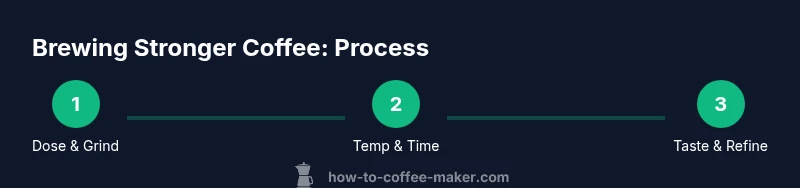
A standard drip coffee maker can produce stronger coffee by balancing extraction through dose, grind size, temperature, and brew time. Start by increasing the coffee-to-water ratio moderately, use a finer grind (but not too fine to avoid clogging), ensure the water is hot enough, and extend the brew time slightly with mindful pour patterns or a pre-wet bloom step. Small, deliberate adjustments compound into a noticeably bolder cup.
Why Strength Varies in Coffee Makers
Strength in coffee brewing is not a fixed property of the coffee itself; it is the result of extraction. In a home drip machine, a dozen small decisions add up to the final cup. The BrewGuide Pro team has found that many home brewers chase “strong” by dumping more coffee into the basket, only to end up with a sour or bitter cup. The secret is balancing extraction: enough coffee to saturate the grounds and dissolve desirable flavors, but not so much that overpowering tannins, oils, and solubles turn the drink into mud. In this section we map the levers that affect perceived strength and explain how small changes can compound into a noticeably stronger coffee without burning the taste buds. Consider that coffee quality, roast level, and machine design also influence strength. A light roast, for instance, often requires a different grind and brew time to achieve the same body as a medium roast. Similarly, a machine with a powerful pump may over-extract if you run a long brew with a fine grind. By understanding these interactions, you can maximize your routine while preserving balance. In the next sections we'll break down each factor, share concrete tests, and provide starter recipes to guide your adjustments.
Core factors that influence brew strength
Here are the primary levers that shape strength in a drip system:
- Dose: The coffee-to-water ratio sets the ceiling for extraction. More grounds can yield a bolder cup, but only if you adjust water and flow accordingly.
- Grind size: Finer grind increases surface area and extraction potential; too fine, and the machine can clog or over-extract, producing bitterness.
- Water temperature: Water should be hot enough to extract flavors but not scorch the beans. Lukewarm water leads to weak, under-extracted coffee.
- Brew time and flow rate: Longer contact time or slower flow often boosts strength, but overdoing it can dull the flavor or produce a muddy cup.
- Water quality and pre-bloom: Pre-wetting or a brief bloom helps distribute hot water evenly and improve extraction.
- Bean freshness and roast level: Fresh beans and the right roast level contribute to aroma, body, and perceived strength. Small changes in roast level can change how your machine extracts flavor.
Step-by-step adjustments you can make today
-
Measure the dose precisely: Use a digital scale to weigh coffee (start with a modest bump, e.g., +2–4 grams) and keep water constant during tests. Why: precise dosing reduces variability and helps you detect real strength changes.
-
Tweak grind size: Move to a slightly finer grind if flow is steady and the cup tastes under-extracted. Why: more surface area speeds up extraction and enhances body.
-
Check water temperature: If your machine’s water feels cooler, pre-heat the carafe and ensure the machine heats water adequately. Why: insufficient temperature leads to weak flavors.
-
Adjust brew time: Allow a slightly longer brew by choosing a slower pour or a small reduction in flow rate. Why: extended contact increases extraction of soluble compounds.
-
Improve water quality: Use filtered water or a dedicated water conditioner. Why: minerals and impurities alter extraction and flavor perception.
-
Consider a bloom step: Some machines benefit from a brief pre-wet (bloom) before full coffee contact. Why: bloom liberates trapped aromas and promotes even extraction.
-
Keep beans fresh and roasted suitably: Store beans in a cool, airtight container and use within a few weeks of roast. Why: stale beans lose flavor compounds that contribute to perceived strength.
-
Log your results: Record dose, grind, temp, and time for each test; compare taste profiles. Why: a simple journal helps you converge on a consistent, stronger brew.
How to optimize for different machines
If your brewer has a dedicated strength or bold setting, use it along with precise dosing and grinding. If not, rely on dose and grind adjustments plus a slight time extension. For high-volume machines, a larger dose with a corresponding water ratio generally yields a fuller-bodied brew; for compact 8–12 cup machines, be cautious not to overfill baskets. The goal is balanced extraction, not simply more caffeine or a darker color.
Practical routines you can test
Routine A (starting point): 1) Weigh 20 g coffee for 240 g water; 2) Use a medium-fine grind; 3) Pre-heat carafe; 4) Brew and taste; 5) Adjust by +2 g coffee or -1 notch on grind if needed. Routine B (stronger body): 1) Weigh 24 g coffee for 240 g water; 2) Use a finer grind; 3) Ensure water is hot and flowing steadily; 4) Extend brew time by ~15 seconds; 5) Add a bloom step if possible. Routine C (balanced strength with high clarity): start with routine A and introduce a bloom step and filtered water; compare and log results.
Authority sources
To support the science of extraction and brewing strength, see these authoritative references:
- https://www.nist.gov
- https://nap.edu
- https://www.science.org
AUTHORITY SOURCES
The science of extraction is supported by established research on measurements and material science. For practical brewing guidance, it's helpful to anchor your adjustments to well-documented principles of temperature, contact time, and grind consistency. This article references general principles from trusted sources to help you reason about strength rather than rely on guesswork.
Tools & Materials
- Burr grinder(for consistent grind size)
- Digital kitchen scale(to measure coffee and water precisely)
- Fresh coffee beans (roast as desired)(whole beans preferred for freshness)
- Drip coffee maker with adjustable strength(or a standard machine with variable dose)
- Filter (paper or reusable)(ensures clean extraction)
- Kettle (optional)(for pouring control when testing bloom)
- Filtered or purified water (optional but recommended)(improves extraction consistency)
Steps
Estimated time: 25-40 minutes
- 1
Measure the dose precisely
Place the empty carafe on the scale and tare to zero. Weigh your coffee and set a baseline you’ll adjust from in future rounds. This makes strength changes measurable rather than guesswork.
Tip: Tip: Keep water volume constant while adjusting dose to isolate strength changes. - 2
Adjust grind size for consistency
If your brew runs clear or tastes weak, try a slightly finer grind and observe the flow rate. Don’t go so fine that the machine slows or clogs.
Tip: Tip: Grind shortly before brewing to preserve aroma and oils. - 3
Ensure water is hot enough
If the coffee tastes flat, your machine may not be reaching optimal extraction temperatures. Run a test cycle without coffee to verify the heater is warming properly.
Tip: Tip: Pre-warm the carafe to reduce heat loss during brewing. - 4
Extend brew time slightly
If the flow is steady but the cup is weak, extend the contact time by a small amount. This can improve extraction without making the cup bitter.
Tip: Tip: Small incremental changes beat large jumps that disrupt balance. - 5
Improve water quality
Use filtered water if your tap water is hard or tastes off. Minerals influence extraction and mouthfeel.
Tip: Tip: A simple water filter can dramatically improve perceived strength. - 6
Add a bloom or pre-wet step
Briefly pre-wet grounds before full brewing if your machine supports it. This helps even extraction and can boost perceived strength.
Tip: Tip: Start with a 15–20 second bloom before continuing the cycle. - 7
Taste-test and log results
Record the dose, grind size, and brew time for each test. Use taste notes to identify the best combination for strength without sacrificing flavor.
Tip: Tip: Create a simple log with columns for dose, grind, temp, time, and flavor notes. - 8
Refine and repeat
Use your log to converge on a repeatable routine that delivers the strength you want, then stick with it for consistency.
Tip: Tip: Consistency in equipment and process is the key to repeatable strength.
Questions & Answers
Why does my coffee taste weak even after adding more coffee?
Weak taste often means under-extraction. Adjust grind size, temperature, and brew time, and ensure the coffee is fresh. Taste changes should follow a measurable adjustment, not guesses.
Weak coffee usually means under-extraction. Try a finer grind and a slightly longer brew time, plus fresh beans.
Does increasing coffee-to-water ratio always make it stronger?
Raising the ratio can increase strength, but without corresponding adjustments to grind and temperature you may end up with bitterness or a flat cup. Focus on balanced extraction.
Increasing ratio helps only if grind, temp, and brew time support better extraction.
Can I use the strong/bold setting on my coffee maker to get stronger coffee?
Some machines adjust flow or temperature with a bold setting. If yours does, combine it with proper dose and grind for best results; if not, rely on dose and grind tweaks.
If your machine has a bold setting, use it with careful dosing; otherwise adjust grind and brew time.
What grind size should I use for drip coffee to maximize strength?
For many drip machines, a medium grind works best; if the brew is weak, try a touch finer, ensuring your machine can still extract without clogging.
Medium grind is common; go finer if the flow stays steady and taste is weak.
Is water temperature important for strength?
Yes. Water that’s too cool leads to under-extraction and weak coffee; too hot can over-extract and taste harsh. Aim for consistently hot water.
Hot water helps extraction; avoid under-heating or overheating your brew.
How long should the brew cycle be to extract more flavor?
Longer brew time can increase extraction, but only if flavor remains balanced. If bitterness appears, scale back time slightly and adjust grind.
A longer brew can help, but watch for bitterness—adjust other variables if needed.
Should I pre-wet or bloom coffee in a drip machine?
Bloom helps release aromatics and can improve extraction when your machine supports it. If not, pre-wetting grounds briefly still benefits uniform extraction.
Bloom can help on machines that support it; otherwise a brief pre-wet works too.
How can I tell if my adjustments are improving strength?
Use a tasting log, compare side-by-side brews, and note body, aroma, and finish. Strength is a perception of extraction quality as much as concentration.
Keep a taste log and compare each brew to see if strength improves without sacrificing flavor.
Watch Video
Key Takeaways
- Increase dose with careful ratio checks to boost strength.
- Grind size and temperature must be balanced for optimal extraction.
- Water quality and bloom steps improve consistency.
- Test, log, and iterate to find a repeatable stronger brew.