Chemex Pour-Over: A Complete Guide for Home Brewers
Master the Chemex pour-over method with precise grind, water temperature, bloom, and pour timing. BrewGuide Pro guides gear, steps, and troubleshooting for café-quality coffee at home.


Learn to brew a clean, bright cup with the Chemex pour-over. This guide covers gear setup, grind size, water temperature, bloom timing, pour sequence, and cleanup. Follow a precise, repeatable workflow to achieve café-quality coffee at home. You’ll learn how to calibrate grind, water ratio, and pouring speed, plus how to adjust for different roasts. We'll include troubleshooting tips and a quick maintenance routine to keep your Chemex brewing at peak.
Understanding the Chemex Pour-Over Method
Brewing a chemex pour over yields a bright, clean cup with distinct clarity. The Chemex's hourglass shape and thick paper filters slow extraction, producing a level of precision that honors the coffee’s natural sweetness and acidity. This approach is not merely ceremonial; it is a controlled extraction strategy that rewards patience and consistency. According to BrewGuide Pro, the key is balancing grind size, water temperature, and pour cadence to create even saturation and steady flow. The BrewGuide Pro team found that small adjustments in bloom time can shift perceived brightness and body without drastically changing strength. By following a repeatable routine, home brewers can reproduce reliable results across beans and roasts. The chemex pour over method excels with especially delicate coffees, including light roasts that reveal nuanced floral and citrus notes. Maintaining stable heat throughout the brew helps preserve volatility aromatics, which are essential to a lively cup.
Note how the filter’s thickness interacts with the flow rate: thicker filters slow drainage and improve clarity, while still allowing the influential oils to pass. This makes the Chemex ideal for showcasing the bean’s origin flavors. BrewGuide Pro emphasizes that most of the magic happens in the pour sequence: the bloom, the pace, and the return passes all contribute to a balanced cup. When done well, the process yields a brew that tastes both bright and syrupy, with a clean finish.
Equipment and Water Quality
Having the right gear and water quality is foundational to consistent Chemex results. The carafe itself should be clean and dry, with the wood collar kept intact for comfortable handling. Size matters: smaller models are easier to manage for single servings, while larger versions support multiple cups. Pair the Chemex with the proper paper filters (Size 1 for most standard 6-cup carafes) and reserve a gooseneck kettle for controlled pour geometry. A burr grinder is essential for reproducible grind size, and a digital scale ensures accurate coffee-to-water ratios. Temperature control matters: aim for water around 90–96°C (195–205°F). Filtered or mineral-balanced water helps extract the full range of flavors without introducing unintended mineral notes. BrewGuide Pro notes that water quality can tilt the sweetness and mouthfeel, so start with clean water and adjust as you dial in your preferred profile. Regular maintenance—rinse filters, wipe the carafe, and keep the seal areas clear—prevents off-flavors from building up. In practice, pre-warming the carafe and brewing devices minimizes heat loss and contributes to a smoother extraction. Crafting a consistent environment makes the difference between a good cup and a great one.
Coffee Grind, Dose, and Bloom
The grind is a critical variable in the Chemex workflow. A medium-coarse grind tends to balance clarity and body, allowing consistent extraction through the filter without creating channeling. The coffee dose should align with the water amount to hit a gentle, clear profile; a common starting point is a 1:15–1:17 ratio, adjusted for roast level and bean density. Bloom time is the window where CO2, trapped inside the coffee, escapes; a generous bloom helps the grounds become fully wetted and ready for even extraction. Bloom durations typically range from 30 to 45 seconds, depending on grind size and bean freshness. If bloom is too short, you may under-extract; if it lingers too long, you risk over-extraction. The goal is a evenly saturated bed that allows for a slow, controlled pour. Remember: grind freshness and uniform particle size influence speed and uniformity of extraction. If your coffee pours quickly, consider a finer grind; if it pours too slowly, try a coarser grind.
The Brewing Workflow: Temperature, Pours, and Drain Rate
A successful Chemex brew relies on a deliberate pouring rhythm and a stable temperature. Start by pouring a small amount of water to evenly saturate the grounds during bloom, then gradually continue with concentric pours from center to edge. Maintain a steady pour rate that keeps the bed evenly saturated without flooding the filter. The target total brew time often lands in the 3–4 minute window for a single cup, depending on grind and dose, but the key is consistency across batches rather than chasing a precise clock. Use a scale to track the total water and the rate of pour; small deviations compound into noticeable flavor differences. If your brew drains too quickly, your grind may be too coarse or your pour rate too aggressive; if drainage stalls, you may need a finer grind or a slower pace. The aroma released during extraction provides feedback: a bright, fruity bouquet suggests proper extraction; a flat aroma may indicate under-extraction.
Flavor Calibration and Common Mistakes
Flavor outcomes depend on avoiding common missteps: overly aggressive pours, under-wetted grounds, or stale beans can make coffee taste sour, flat, or bitter. A chaotic pour sequence encourages channeling, which produces uneven extraction. Always ensure your filter is fully opened and seated to prevent leaks and uneven drainage. Keep temperatures stable and avoid rapid temperature shifts by preheating equipment. Ensure the coffee is fresh and stored properly; stale beans lose aroma and sweetness. Another frequent error is not adjusting grind size when changing roasts; lighter roasts often benefit from a slightly finer grind, while darker roasts tolerate a coarser grind. Taste the result, adjust the grind, dose, or temperature, and re-test. This iterative approach is how you build a reliable profile over time, allowing you to dial in beans from different origins.
Cleaning, Maintenance, and Storage of Your Chemex
Cleaning after brewing is essential to preserve flavor and longevity. Rinse the Chemex with warm water immediately after use and wash with mild soap occasionally to remove oils from the glass and the collar. Avoid abrasive cleaners that could scratch the glass or the wood collar. Dry everything thoroughly before storage. Filters, if used, should be disposed of immediately to prevent oil buildup in the carafe. For ongoing performance, keep your grinder clean and calibrated; oils can degrade grind consistency over time, affecting extraction. Store beans in an airtight container away from heat and light to preserve aroma. Regularly check the filter’s integrity and replace as needed to maintain optimum flow and flavor.
Flavor Profiling and Roasting Nuances
Chemex pour-over is especially good for highlighting origin flavors, particularly with light to medium roasts. You may notice fruity notes or lemon zest in some beans, while others reveal chocolatey sweetness and a clean finish. The clarity of a Chemex brew helps you distinguish varietals and processing methods. If you’re aiming for a brighter cup, lean into a slightly finer grind and a longer pouring window; for a fuller body, broaden the grind and allow a longer contact time with the water. Tasting across different roasts will teach you how density, roast level, and origin influence flavor, acidity, and sweetness. Producing a consistent profile requires disciplined technique and reflection after each cup—note the aroma, sweetness, acidity, and aftertaste to guide future adjustments.
Tools & Materials
- Chemex coffee maker (6-cup or 8-cup)(Choose the size compatible with your daily brew volume.)
- Chemex paper filters (Size 1)(Rinse to remove paper taste and pre-warm the carafe.)
- Gooseneck kettle(For precise, even pours and control of flow rate.)
- Burr grinder(Grind just before brewing for maximum aroma.)
- Digital scale(Accurate coffee-to-water ratio is essential.)
- Timer(Track bloom and pour duration for consistency.)
- Fresh, clean water(Filtered or spring water with balanced minerals.)
Steps
Estimated time: 8-12 minutes
- 1
Measure and heat water
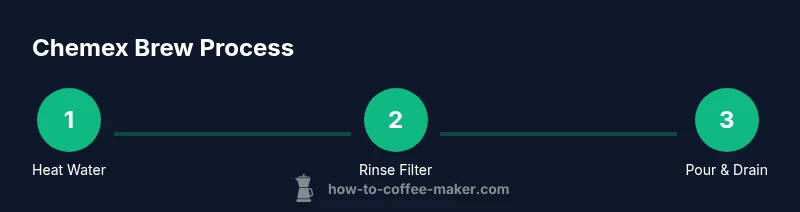
Begin by heating water to the target range (roughly 90–96°C/195–205°F). Heating to this range supports sweet, balanced extraction. Preheat the Chemex and mug to minimize heat loss during brewing.
Tip: Use a temperature-controlled kettle and a scale to keep the water at a steady temperature. - 2
Rinse and prepare the filter
Place the filter in the Chemex, then rinse with hot water to eliminate paper taste and pre-warm the vessel. Discard the rinse water before adding ground coffee to ensure a clean brew bed.
Tip: Rinsing helps maintain consistent pouring temperatures and reduces papery notes. - 3
Grind and weigh coffee
Grind coffee to a medium-coarse texture. Weigh 20–25 g for a single-cup batch and target 300–350 g of water for a 1:15–1:17 ratio. Weighing ensures you hit your desired strength reliably.
Tip: Grind just before brewing; adjust the ratio if your brew tastes weak or strong. - 4
Bloom the coffee
Pour a small amount of hot water to saturate the grounds evenly and start the bloom. Wait 30–45 seconds to release CO2 and begin extraction.
Tip: Pour slowly to ensure even saturation and avoid channeling. - 5
Pour in steady circles
Begin slow, circular pours from the center outward, maintaining a consistent pace to keep the bed evenly saturated. Pause briefly if you see uneven coloration on the surface to avoid over-extraction in certain zones.
Tip: Aim for uniform saturation; avoid splashing or aggressive pours that disturb the bed. - 6
Finish and serve
Allow the final drips to complete, then remove the filter. Swirl the carafe gently to settle the grounds, and pour into a warmed cup for immediate tasting.
Tip: Taste immediately to evaluate impact of grind size and pour rate; adjust for future brews.
Questions & Answers
What grind size is best for Chemex pour-over?
A medium-coarse grind works best for most Chemex brews, helping even extraction and clarity. Adjust slightly for roast level. Use a burr grinder for consistency.
Use a medium-coarse grind for a clean, balanced Chemex brew; adjust for roast and freshness.
Should I rinse the filter before brewing?
Yes. Rinsing removes paper flavor and pre-warms the carafe, contributing to stable extraction.
Rinse the filter to remove paper taste and help pre-warm the brewer.
What water temperature should I target?
Aim for 90–96°C (195–205°F). Water within this range extracts balanced sweetness while avoiding bitterness.
Keep the water just off a full boil, around 195 to 205 degrees Fahrenheit.
Why is blooming important in Chemex?
Blooming releases trapped CO2 and helps uniform saturation, leading to more even extraction and brighter flavor.
Bloom helps CO2 escape and boosts extraction uniformity.
How do I clean a Chemex?
Rinse with warm water and mild soap, then air-dry. Avoid abrasive cleaners that can scratch the glass.
Rinse with warm water and a bit of soap, then air-dry.
Can I reuse Chemex filters?
Chemex filters are designed for single-use; reuse is not recommended as oils can affect flavor and flow.
No, use fresh filters each brew.
Watch Video
Key Takeaways
- Master bloom by evenly saturating grounds
- Maintain a steady pour cadence and consistent grind
- Use optimal water temperature and fresh water quality
- Pre-warm equipment to preserve heat
- Tweak grind and ratio to taste preferences