Why is my drip coffee maker so slow? A practical troubleshooting guide
Discover practical steps to diagnose why your drip coffee maker is slow. Descale, clean, adjust grind size, and maintain performance with BrewGuide Pro guidance.


Most slow-drip issues come from mineral scale or coffee residue blocking the flow. Begin with a thorough descaling and cleaning of the brew head and filter basket, then confirm you’re not using too fine a grind or too much coffee. If it remains slow, continue with the diagnostic flow for deeper causes. This quick check often resolves the problem without tools.
Why is my drip coffee maker so slow?
According to BrewGuide Pro, a slow brew usually traces back to mineral buildup, old coffee residue, or improper grind settings. The phenomenon is common in older machines and can affect both speed and taste. Before blaming the device, confirm you’re using clean water and the carafe is aligned properly to receive the flow. In many cases, this issue is not a defect but a maintenance task that restores performance and flavor. Regular maintenance—descaling, cleaning, and dialing in grind size—can dramatically improve speed and consistency. If you find yourself asking, “why is my drip coffee maker so slow?” the quickest answer is often a clean, scaled-free pathway that allows water to move freely from the reservoir to the shower head.
Common Causes of Slow Drip
Several common culprits reduce flow rate in drip brewers. Mineral scale forms a crust on the heating element and internal channels, restricting heat transfer and water movement. A clogged shower head or screen can also impede flow, especially if you grind coffee too finely or load too much coffee into the filter. Additionally, using water that’s too cold or a coffee dose that’s out of balance can slow brewing. Finally, worn seals or cracked tubing may reduce pressure and slow extraction. Understanding these causes helps you prioritize fixes without guessing.
Quick Fixes You Can Try Right Now
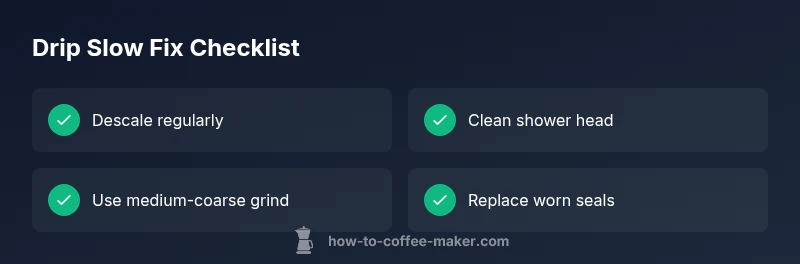
Start with the simplest actions first. Run a descaling cycle using a manufacturer-recommended descaler or a safe vinegar solution if your machine allows it, followed by a thorough rinse. Remove and wash the brew head, shower screen, and filter basket to eliminate trapped oils. Check the grind size—aim for a medium-coarse grind for most standard drip brewers, and ensure you’re not using too much coffee, which can almost plug the flow. Finally, use fresh, cold water and allow the machine to reheat before brewing a test batch. These steps often restore normal speed without tools.
Diagnostic Deep Dive: Flow Path and Signals
Understanding the flow path helps you target the problem efficiently. Water travels from the reservoir through a tube into the heating element, then to the brew head and shower screen before dripping into the carafe. If you notice a slow start, check for air pockets in the tube or a restricted passage in the brew head. Temperature too low can also slow extraction; ensure the heating element reaches the proper brewing temperature within a reasonable time. Listen for unusual sounds from the pump, which can indicate a weak pump or air entrapment. By analyzing flow, you can separate scale-related issues from mechanical faults and adopt the correct fix.
Step-by-Step Cleaning and Descaling Routine
This routine combines descaling with mechanical cleaning to address the most common slow-brew causes. It’s designed to be performed monthly for average households and after every 3-5 pots if you live in hard water areas. Begin by unplugging the unit and removing the carafe. Prepare your descaler solution according to the product directions, then run a complete brew cycle with the descaler in the reservoir. After the cycle, run 2-3 full pots of clean water to rinse all residues. Remove the brew head and rinse the shower screen, filter basket, and gasket. Reassemble, run a test brew, and adjust grind size if needed. Finally, note any persistent issues that may require deeper investigation or professional service.
Prevention: Maintenance Schedule for Speed and Flavor
Prevention beats repair. Establish a simple maintenance rhythm to keep your drip brewer operating at peak speed. Descale every 1-3 months depending on water hardness and usage, and clean the brew head weekly. Replace water filters as recommended by the manufacturer and check seals and tubing for signs of wear twice a year. Use a consistent grind size and coffee dose to avoid overloading the filter. Store water away from heat and ensure the reservoir cap is sealing properly to prevent air leaks. A proactive plan minimizes scale buildup and flow resistance, preserving both speed and taste.
When to Seek Professional Help and What to Expect
If the above steps don’t restore normal speed, you may be facing a more complex issue such as a failing pump, cracked tubing, or a severely worn seal. In this case, contact a qualified appliance technician or the manufacturer’s service line. Document symptoms (speed, sounds, leakage) and steps you’ve taken. A professional assessment can confirm whether parts need replacement or a full machine replacement is more economical. Early intervention often prevents further damage and cost.
Quick Reference Troubleshooting Recap
- Start with descaling and thorough cleaning of the brew head and basket.
- Check grind size and coffee dose to ensure you’re not overloading.
- Inspect water temperature and ensure proper heating.
- Look for clogs in the shower screen and tubing.
- If the problem persists, arrange professional service.
Steps
Estimated time: 45-60 minutes
- 1
Power off and prep
Unplug the brewer, remove the carafe, and inspect for obvious clogs or residue. Rinse removable parts with warm water and set aside.
Tip: Safety first—unplug before handling heating elements. - 2
Descale the system
Prepare the descaler according to the product instructions and run a full brew cycle without coffee. Follow with two full pots of clean water to rinse.
Tip: Avoid mixing descalers with cleaners not designed for coffee machines. - 3
Clean the brew head and shower screen
Remove the brew head and shower screen; scrub away oils and coffee residue. Rinse thoroughly before reassembly.
Tip: Use a soft brush to reach tight areas without scratching surfaces. - 4
Check grind size and dose
Switch to a medium-coarse grind and reduce the coffee dose if you typically fill beyond the recommended line.
Tip: A tiny adjustment can dramatically improve flow without sacrificing flavor. - 5
Rinse and test
Reassemble the machine, run a test cycle with just water, and observe flow and temperature.
Tip: Record timings for future reference to spot gradual declines. - 6
Assess the pump and seals
If flow remains slow after cleaning, inspect visible tubing and seals for cracks or leaks.
Tip: Professional service is recommended if you notice wet spots or significant resistance.
Diagnosis: Drip coffee maker is slow to brew a full pot
Possible Causes
- highMineral scale buildup in heating element and internal passages
- highClogged shower head or brew head due to coffee oils and fine grounds
- mediumUsing too fine grind or too much coffee causing resistance
- lowWorn pump or damaged seals reducing flow
Fixes
- easyDescale with manufacturer-recommended descaler and rinse thoroughly
- easyDisassemble and clean brew head, shower screen, and filter basket
- easyAdjust grind size to medium-coarse and reduce coffee dose
- mediumInspect seals and tubing; replace worn parts if slow flow persists
Questions & Answers
Why is my drip coffee maker slow after descaling?
Descaling often fixes mineral buildup, but if the flow remains slow, there may be a clog in the shower head or tubing, or a worn pump part.
Descaling helps a lot, but if it’s still slow, check the shower head and pump.
Can vinegar be used for descaling a coffee maker?
Vinegar can be effective for mineral removal, but check your manufacturer’s guidelines since some parts may be sensitive to acid.
Vinegar can work, but follow your machine's guidelines to avoid damage.
How often should I descale my drip coffee maker?
Descale based on water hardness and usage. In hard water areas, consider every 1-2 months; otherwise every 2-4 months.
Descale according to your water quality and usage; in hard water areas, do it every 1-2 months.
What if speeding up the brew requires parts replacement?
If cleaning and descaling don’t restore speed, consult a technician who can inspect seals, tubing, and the pump.
If cleaning doesn't help, a technician should check the pump and seals.
Is a slow brew always a sign of failure?
Not necessarily. Many slow brews are due to buildup or improper grind. Early maintenance usually prevents major failures.
Slow brewing is often fixable with maintenance; rarely a sign of imminent failure.
When should I replace my drip coffee maker?
If repairs exceed a certain cost or performance remains poor after maintenance, replacement may be more economical.
If repairs are too costly or ineffective, consider replacement.
Watch Video
Key Takeaways
- Identify scale and clog as primary culprits
- Descale and clean before replacing parts
- Dial in grind size to prevent flow resistance
- Maintain a regular cleaning schedule