Why Is My Coffee Maker Not Brewing a Full Amount? Quick Troubleshoot Guide
Urgent, practical steps to diagnose why your coffee maker isn't brewing a full pot, with safe cleaning tips and prevention from BrewGuide Pro.


Most often, a partial brew is caused by clogged channels or an incorrect fill amount. According to BrewGuide Pro, start by ensuring the reservoir is full to the line, the filter is clean, and the carafe is correctly positioned. If the brew still falls short, run a descaling cycle and clean the spray head to restore full extraction.
Quick checks you can do before deeper troubleshooting
If you’re asking why is my coffee maker not brewing a full amount, start with the simplest checks that avoid unnecessary disassembly. First, unplug the unit and inspect the power switch for a solid connection. Then confirm the water reservoir is filled to the correct line and that the carafe is seated correctly on the warming plate. A misplaced carafe or an underfilled reservoir can trim brew volume by several ounces and leave you with a weak pot. According to BrewGuide Pro, many partial brews are caused by scale buildup or a clogged spray head, which prevents water from reaching the grounds evenly. Next, inspect the brew filter for blockages and replace it if it looks discolored or clogged. Finally, make sure you’re using the right grind size and coffee-to-water ratio for your machine.
Confirm your brew volume vs target: how to measure
To know whether you’re truly short, measure both the filled reservoir and the resulting brew with a carafe that has clear marks. Use a metered pour and compare to the manufacturer's stated capacity. If the brew amount consistently falls below the target line, you’re likely dealing with a flow restriction. This section explains how to quantify the issue so you can pick the right fix. In practice, you should track your measurements for a few cooks to see if pattern emerges. BrewGuide Pro notes that even small misreads can accumulate to a noticeably weak brew.
Common culprits: water, grind, and hardware
Several factors commonly combine to reduce brewed volume. Low water level or misread reservoir markings can fool you into thinking you have a full pot. Scale buildup on the shower head or spray arms can restrict flow and cause uneven extraction. Clogged coffee filters or baskets block water from passing through grounds efficiently. A grind that is too fine or too coarse can affect brew dynamics and total volume. Finally, a damaged carafe lid or misaligned carafe can slightly alter pouring and temperature stability, reducing perceived volume.
The reservoir and water path: why full volume matters
Water must travel from the reservoir through tubes, into the heating chamber, and out through the spray head to the grounds. Any restriction or air pocket in the path reduces the amount that reaches the grounds and, ultimately, the carafe. Make sure the reservoir is seated properly, the gasket is intact, and there are no cracks in the carafe or lid that could affect flow. Regularly inspecting seals helps maintain consistent brew volume over time.
Cleaning and descaling: spray head, shower, and lines
Mineral buildup is a frequent culprit for reduced brew output. Descaling removes lime and mineral deposits that narrow channels. Run a manufacturer-approved descaling solution according to the cycle instructions, then rinse with clean water. After descaling, remove and clean the spray head, shower screen, and any accessible tubes. A thorough rinse helps prevent residue from re-blocking water paths and restores full volume.
Filter and carafe issues: cap, lid, and placement
Check that the filter is clean and properly seated; a clogged or misaligned filter basket can impede water flow. Inspect the carafe lid for a tight seal, since leaks or gaps can alter temperature and extraction. Ensure the carafe is positioned correctly on the warming plate. Even a small misalignment can disrupt the brew-to-carafe transfer and give the impression of a smaller brew.
Step-by-step diagnostic flow you can follow
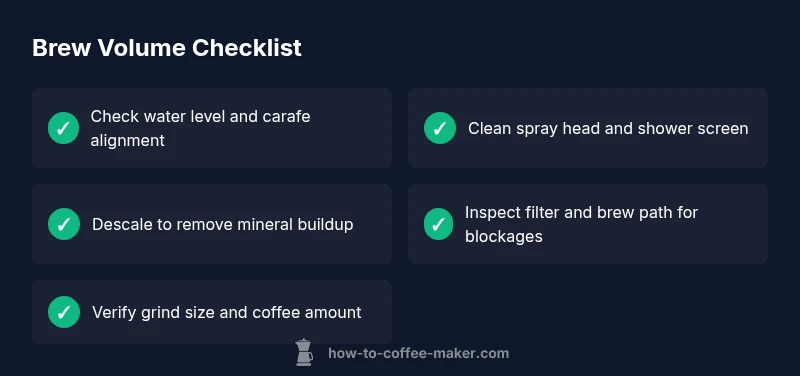
- Verify water level is at the correct line and the carafe sits correctly. 2) Clean the filter and spray head; re-test with clean water. 3) Run a descaling cycle and rinse thoroughly. 4) Check grind size and coffee amount; adjust if needed. 5) Inspect for kinks or leaks in the water path and reseat the reservoir. 6) Re-test with coffee to confirm full brew before relying on it.
Note: If the issue persists after these steps, contact the manufacturer or a qualified appliance technician for service.
Safety warnings and when to seek professional help
Always unplug the machine before disassembly or deep cleaning. Do not use harsh chemicals or vinegar unless the manufacturer approves. If you notice burning smells, unusual noises, or leaking during operation, stop use immediately and seek professional service. Regular maintenance by a professional can prevent future partial brews and extend the life of your machine.
Pro tips for consistent full brews
- Schedule quarterly descaling and monthly filter checks to prevent volume loss.
- Keep a simple maintenance log to track when you descale, clean, and replace filters.
- Use filtered water to reduce mineral buildup and improve taste.
- Calibrate your grind size and scoop level to maintain consistent extraction.
Steps
Estimated time: 40-60 minutes
- 1
Check water level and carafe alignment
Unplug the machine, verify the reservoir is at or near the max line, and ensure the carafe sits securely on the warming plate. A misread water line or a misaligned carafe can cut observed brew volume. Re-seat and run a test cycle with plain water.
Tip: Use a clear measuring cup to verify exact water input and output. - 2
Clean and inspect spray head
Remove and rinse the spray head and shower screen. Look for mineral deposits or debris that can restrict flow. Use a soft brush to remove buildup and reassemble before testing again.
Tip: Do not force parts; gentle scrubbing prevents damage. - 3
Descale the machine
Run a manufacturer-approved descaling cycle with the recommended solution and water. Follow with 2–3 full-rinse cycles to flush residues. This step often restores full volume by removing mineral plugs.
Tip: Always finish with a clear-water rinse to avoid aftertaste. - 4
Validate grind size and coffee amount
If you use espresso grind or overly fine coffee, consider switching to a medium-coarse grind and adjust the scoop amount per the recipe. Improper grind can affect extraction and volume.
Tip: Use a scale to measure coffee for consistency. - 5
Check the brew path and filter
Inspect the filter basket for clogs and ensure the brew path is free of obstructions. Replace the filter if it looks worn or deformed.
Tip: Always replace with manufacturer-approved parts. - 6
Run a final test brew
Brew with plain water, then with coffee, to confirm full volume is restored. If volume remains low, escalate to professional service.
Tip: Document timings and measurements for the technician.
Diagnosis: Coffee maker not brewing a full amount
Possible Causes
- highLow or inaccurate water level
- highScale buildup on spray head or shower
- highBlockage in filter/basket or brew path
- mediumIncorrect grind size or coffee amount
- lowDamaged carafe lid or misalignment
- lowInternal sensor or plumbing issue
Fixes
- easyFill reservoir to the correct line and reseat carafe firmly
- easyDescale and clean the spray head/shower screen
- easyReplace or clean the filter/basket and clear any blockage
- easyAdjust grind size and coffee amount to manufacturer recommendations
- mediumInspect for leaks or damaged components and reseat reservoir
- hardIf unresolved, contact manufacturer service or a qualified technician
Questions & Answers
What is the most common reason a coffee maker doesn’t brew a full pot?
The most common culprits are scale buildup, a clogged spray head, or an inaccurate water fill. Start with descaling, cleaning the spray head, and confirming water levels before exploring more complex issues. This approach fixes the majority of partial-brew problems.
Most people fix partial brews by descaling and cleaning the spray head, then checking water levels.
Is descaling effective for all models?
Descaling helps remove mineral deposits that impede flow. Always follow the manufacturer’s descaler guidance for your model. If your machine is not designed for vinegar or a certain solution, use the recommended product instead.
Descaling helps if mineral buildup is the cause; follow your model’s instructions.
Can using a wrong grind size affect brew amount?
Yes. A grind that’s too fine can slow water flow and reduce the final volume. Adjust to a medium-coarse grind and use the recommended coffee amount for your machine.
Grind size matters for flow and volume; adjust accordingly.
Does the carafe affect brew volume?
A misaligned or damaged carafe lid can cause heat loss and inaccurate measurements, making the brew seem smaller. Ensure the carafe sits properly and the lid seals well.
Carafe fit and lid seal can change perceived volume.
When should I replace parts like the showerhead?
If buildup cannot be removed or parts are damaged, replacing the showerhead or basket is warranted. Regular inspection helps prevent recurrence.
If parts are damaged or clogged beyond cleaning, replace them.
Should I call a professional for a persistent issue?
If you’ve exhausted standard cleaning, descaling, and checks with no improvement, professional service is recommended to diagnose internal sensor or flow-path problems.
If it still won’t fix, a pro can diagnose internal issues.
Watch Video
Key Takeaways
- Verify water level and carafe alignment first
- Descale to remove mineral buildup
- Clean spray head and shower for full flow
- Adjust grind size and coffee amount as needed
- Seek professional help if not resolved