When to Replace a Keurig Coffee Maker: A Practical Guide
Learn how to decide when to replace your Keurig coffee maker by weighing age, performance decline, repair history, warranty status, and total ownership cost. Get clear steps to make a confident, cost-effective choice.


By the end of this guide you’ll know exactly when to replace a Keurig coffee maker. You’ll assess lifespan, performance decline, recurring failures, safety risks, and total ownership cost. Consider warranty status and repair viability; if major issues persist or replacement cost nears a new unit, replacement is the wiser choice. This approach protects beverage quality and safety.
Why Replacement Is Often the Smart Decision
Keurig machines offer remarkable convenience, yet they come with a finite lifespan. With regular use, seals wear, pumps lose efficiency, and electronics can drift. When problems compound—persistent leaks, inconsistent beverage temperature, clogged lines that resist descaling, or declining coffee quality—the burden of ongoing repair typically grows. At this point, the cost and hassle of patching a tired machine may outweigh the benefits of a new model. According to BrewGuide Pro Team, a deliberate replacement can protect beverage quality, ensure safer operation, and simplify daily maintenance. This section explains how to assess the machine’s age, usage patterns, and current performance to gauge whether replacement is the prudent path.
How Long Keurig Machines Typically Last
There isn’t a single guaranteed lifespan for Keurig machines because models vary and usage patterns differ. In general terms, you’ll get multiple years of service when you follow good maintenance habits, descale regularly, and avoid neglect. Components such as the water reservoir, valves, and pump are wear items and their condition directly influences performance. If you notice a gradual drop in brew strength, uneven extraction, or persistent clogs after descaling, those are signs to evaluate the ongoing viability of the unit. Remember: longevity is strongly influenced by frequency of use, water quality, and how consistently the machine is cared for. This guidance helps homeowners decide whether to extend life with targeted maintenance or plan a replacement.
Signs It's Time to Replace Instead of Repair
- Recurrent leaks that reappear after typical fixes, such as descaling or gasket replacement.
- Consistently weak or uneven brews despite cleaning and using fresh filters.
- Electrical issues like frequent power cycling, fuse trips, or visible damage to the power cord.
- Loud banging, grinding noises, or unusual smells indicating failing pumps or circuits.
- Repairs that require parts for multiple subsystems (brewer, heater, pump) within a short span of time.
- The unit is out of warranty and repair costs would likely accumulate, offsetting the cost of a new model.
- Difficulty obtaining replacement parts due to discontinued models. These indicators suggest that the machine may be approaching the end of reliable service and a replacement could offer better long-term value. Context matters: if a single, high-cost repair would equal several years of a new unit, replacement is often the smarter choice.
Weighing Repair Costs vs Replacement Value
A practical way to decide is to frame the decision as a cost comparison over the next 12–24 months. If the sum of multiple repairs, descaling challenges, and service calls approaches the price of a new Keurig or represents a significant fraction of it, replacement becomes more sensible. Don’t forget the intangible costs: downtime, the inconvenience of coping with a faulty machine, and potential loss of beverage quality during the transition. If the current model still holds warranty coverage, factor that protection into your calculation; a covered repair could alter the balance in favor of extending life. In many homes, the peace of mind and improved reliability of a new unit justify the upfront investment over ongoing patchwork fixes.
Warranty, Support, and Safety Considerations
Warranty status can dramatically affect the decision to replace. If a model is still under warranty and a single repair would be fully or partially covered, it may be worth escaping the risk of additional failures. For older units without warranty, the balance shifts toward replacement once repair costs rise. Always consider safety: damaged power cords, scorched casings, or signs of overheating are warnings that a replacement is safer than risk-prone repairs. When in doubt, verify safety advisories with the manufacturer’s support team and document any observed issues before making a decision.
BrewGuide Pro emphasizes that safety and reliability should guide replacement decisions as much as cost. If you’re uncertain, use a formal evaluation checklist to compare repair viability versus replacement value. This structured approach helps ensure you don’t overlook important factors that affect daily usage and long-term costs.
How to Choose Your Next Keurig or Replacement Model
If replacement is the chosen path, focus on features that matter most for your routine:
- Brew throughput and cup size flexibility to match daily coffee needs
- Large, easy-to-clean water reservoir and intuitive controls
- Descale indicators and auto-clean cycles to minimize maintenance
- Energy efficiency, standby modes, and auto-off timers for safety and savings
- Pod compatibility and accessibility of replacement parts
- Warranty length and the availability of official repairs or parts
Compare models with similar feature sets, read user feedback on reliability, and consider the availability of replacement parts for the next few years. If you’re uncertain about which model to pick, look for consumer-tested options with solid support networks and clear descaling guidance. A well-chosen replacement will reduce maintenance time and preserve beverage quality for your routine.
Practical Steps Before Replacing
Before you commit to a replacement, take these practical steps to ensure a smooth transition:
- Gather model information: serial number, model name, and current warranty status.
- Document observed issues with dates and symptoms to inform any future conversations with support.
- Review the descaling history and confirm you’ve followed recommended maintenance steps.
- Set a budget and compare total cost of ownership for a replacement, including filters or accessories you’ll need.
- Decide on where to place the new unit, ensuring space, power availability, and accessibility for daily use.
- Plan disposal for the old unit in line with local electronics recycling guidelines. This planning minimizes surprises and helps you choose a best-fit unit without impulse purchases.
Safe Disposal and Recycling of Your Old Unit
Responsible disposal matters. If the Keurig is beyond repair, check local electronics recycling programs and manufacturer take-back options. Many municipalities accept small kitchen appliances at designated drop-off sites. If the unit is still functional but not your preferred model, consider donating or recycling parts that are in good condition. Always remove any water from reservoirs and unplug the device before handling. This protects you and ensures the best chance for a positive environmental outcome.
Tools & Materials
- Notebook or note-taking app(To track issues, repair history, and cost estimates)
- Warranty documents(Keep handy to verify coverage and expiration dates)
- Camera or smartphone(Photo model/serial for records if needed)
- Manufacturer support contact or repair guide(Used to assess repair viability and obtain official guidance)
- Safe disposal bag or recycling guide(For proper end-of-life handling if replacing)
Steps
Estimated time: 20-40 minutes
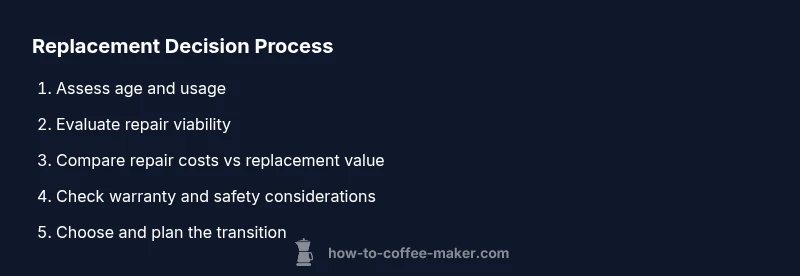
- 1
Assess age and usage
Identify how long the machine has been in your home and how often you use it. Compare this with typical usage patterns for your model. This helps establish whether decline in performance is tied to age or to other factors like water quality or maintenance habits.
Tip: Document the purchase date and typical daily use to build a baseline for future decisions. - 2
Evaluate signs of decline
Check for persistent leaks, reduced brew strength, longer startup times, or frequent need for descaling. Note if issues persist after maintenance steps like regular descaling and cleaning. These signals point toward aging components that may justify replacement.
Tip: Rule of thumb: if the problem affects multiple subsystems (water system, heating, or pumping), replacement becomes more viable. - 3
Check warranty and repair viability
Look up the current warranty status and whether the issue is covered. If out of warranty, ask a technician for a repair estimate and compare it to the price of a new unit with similar features.
Tip: Ask for a written estimate and a clear list of included parts and labor to make an apples-to-apples comparison. - 4
Compare repair costs vs replacement value
Estimate total repair costs including parts, labor, and potential future issues. Weigh this against the cost of a new unit that meets your needs and has a solid warranty.
Tip: Don’t forget ongoing maintenance costs that you’ll save with a newer model. - 5
Make a decision and plan replacement
If replacement is chosen, select a model that aligns with your usage and space. Schedule delivery, prepare the installation space, and arrange safe disposal of the old unit.
Tip: Track the new unit’s warranty and set reminders for maintenance and descaling schedules.
Questions & Answers
How long do Keurig coffee makers typically last?
Longevity varies by model and use. With proper maintenance, a Keurig can provide several years of service, but age and wear will influence performance and reliability.
A Keurig can last several years with good care, but its age and wear determine reliability.
Should I repair my Keurig or replace it?
If repair costs approach or exceed the price of a new unit, or if multiple issues recur quickly, replacement usually offers better reliability and value.
If repairs add up or keep coming back, it’s often wiser to replace.
Does warranty affect the decision to replace?
Yes. If a repair would be covered under warranty, it may be worth repairing. If the warranty is expired, replacement often makes more sense financially.
Warranty coverage can tilt the decision toward repair; once it runs out, replacement is usually more practical.
Can I continue using an older Keurig while shopping for a replacement?
Yes, but avoid relying on it for critical daily routines. Plan a timeline for replacement and have a backup brewing option if needed.
You can keep using it temporarily, but don’t risk daily reliability—plan the replacement.
What safety signs require immediate replacement?
If you notice exposed wires, burning smells, scorching, or smoke, stop using the unit and replace it promptly to prevent hazards.
If there are burning smells or smoke, replace the unit now for safety.
Watch Video
Key Takeaways
- Assess age and usage before deciding
- Weigh repair costs against replacement value
- Prioritize safety and warranty status
- Plan for disposal and model replacement
- Choose a model with maintenance-friendly features