How Big Is a Keurig Coffee Maker? A Practical Size Guide for 2026
Learn the typical dimensions of Keurig single-serve machines, how size affects countertop space, and practical steps to measure and compare models before you buy.


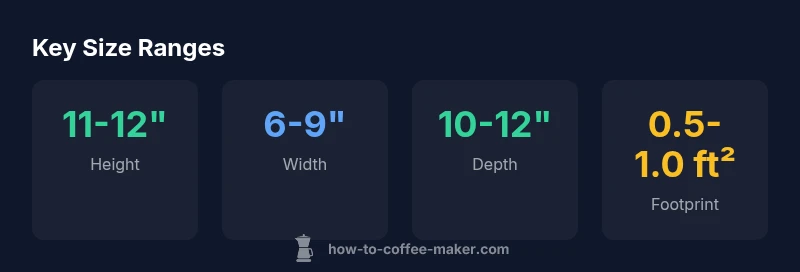
Most Keurig coffee makers measure roughly 12 inches tall, about 6–9 inches wide, and 10–12 inches deep. They typically occupy around 0.5–1.0 square feet of counter space. Exact dimensions vary by model, so always check the product page for your specific unit before purchasing or rearranging your kitchen. If you prefer a smaller footprint, consider compact models like the K-Mini or other slimline variants, which typically measure closer to 11 inches tall.
How the size of a Keurig is defined
When people ask how big is a Keurig coffee maker, the most practical answer starts with three simple measurements: height, width, and depth. In addition, the overall footprint—how much counter space the machine occupies—depends on the reservoir size and the design of the drip tray. Keurig prefers compact, single-serve footprints, but model variations mean you can find units that are taller or wider than the baseline. For planning purposes, consider not just the external dimensions but also the space you need for opening the water reservoir, lifting the handle, and clearing the area for mugs. The definition of "size" for these machines is therefore a combination of physical measurements and usable space. In this guide, we focus on standard kitchen layouts and how to compare models reliably. We also point out common variations across popular lines, so you can match the machine to your kitchen's constraints. The bottom line: knowing how big is a Keurig coffee maker helps you craft a smoother, more efficient counter layout.
Typical dimension ranges you can expect
Across the Keurig family, you’ll find a few size archetypes that influence where the machine fits best. Compact models typically sit around 11–12 inches in height, with widths ranging from 6 to 8 inches and depths from 9 to 11 inches. Standard single-serve units often extend a bit taller and wider—roughly 12–13 inches tall and 9–12 inches wide—but many still stay under 12 inches in depth. When you map out a kitchen, translate these numbers into real space: measure the available counter height, the deepest point you can accommodate, and how much room you need to open the water reservoir and the mug area. Remember that a generous drip tray can add to perceived depth, so factor that in when you’re stocking for several mugs or travel tumblers.
How to measure your space before you buy
To ensure a comfortable fit, follow a simple measuring routine before purchasing:
- Step 1: Clear the space and clean the countertop area where the Keurig will sit.
- Step 2: Measure available height from countertop to any cabinets or shelves above. Note the maximum practical height including a safety clearance (typically 1 inch or more).
- Step 3: Measure width and depth, accounting for the widest mug you plan to use and any spill area or drip tray footprint.
- Step 4: Check for ventilation and proximity to electrical outlets; avoid crowding. Leave space on both sides for airflow and ease of use.
- Step 5: If you’re considering under-cabinet placement, verify there is at least 1 inch of clearance above the unit for heat dissipation and easy lid removal. With these measurements, you can compare model footprints side-by-side and avoid inappropriate purchases. BrewGuide Pro recommends creating a simple footprint diagram to visualize fit in your actual kitchen space.
Layout considerations for kitchens and small spaces
In small kitchens, every inch counts. Consider the following layout principles:
- Align the Keurig with other under-counter appliances to maintain a clean, cohesive counter line.
- Leave a small buffer area in front for opening the reservoir and lid without bumping into adjacent items.
- Use vertical space strategically by placing the machine toward the back edge of the counter to maximize usable surface.
- If you frequently multitask, ensure there’s a place nearby for mugs and a structure to manage spill-prone areas.
- For shared spaces, designate a compact model that leaves room for a mug warmer or a small kettle without crowding the workspace.
Compact vs standard single-serve: size trade-offs
Choosing between compact and standard-sized Keurig models is often a balance between footprint and reservoir capacity. Compact units generally fit better in tight kitchens and offer shorter heights (often 11–12 inches) with narrower footprints, but may hold less water and have smaller drip trays. Standard-size units tend to be more forgiving on height and width while still maintaining a reasonable counter footprint (roughly 12–13 inches tall, 9–12 inches wide). The trade-off is visible when you factor in refill frequency (smaller reservoirs require more frequent refills) versus convenience. If the goal is to minimize counter clutter, favor compact models and prioritize removable reservoirs or easy-refill features. If you value longer operation between fills, a standard footprint with a larger reservoir may be preferable.
Placement strategies for under-cabinet and shared counters
Under-cabinet placement can be highly practical when ceiling height and cabinet depth permit it, but it adds constraints:
- Ensure at least 1 inch of clearance above and behind the unit for heat dissipation and cord slack.
- Verify that the height of the machine plus the cabinet clearance does not block cabinet doors or drawers.
- Consider the angle of the power cord and the risk of tangling with nearby appliances.
- In shared kitchens, designate a dedicated single-serve station with a stable surface and easy access to cups, filters, and cleaning supplies. By planning for these factors, you avoid future rearrangements and create a more functional coffee corner.
Real-world scenarios: small kitchens, apartments, and multi-use counters
Urban apartments often feature compact kitchens with limited counter space. In these environments, a Keurig with a footprint around 0.5–0.8 square feet is usually ideal, freeing space for a mug, a small dish rack, or a compact kettle. For households that regularly prepare multiple beverages in a row, you might opt for a taller unit with a slightly larger reservoir if it reduces refill interruptions. If cabinet height is constrained, a low-profile model with a 11–12 inch height could be the better choice. Always map your actual counter configuration and test-fit using cardboard cutouts of the machine’s footprint before committing to a purchase. This hands-on approach minimizes surprises during setup and helps prevent counter clutter later on.
Buying checklist: confirm dimensions and fit
Before you buy, run through this quick checklist:
- Confirm height, width, and depth from the official product page.
- Check reservoir capacity and whether it matches your daily beverage routine.
- Verify clearance above and around the machine and ensure an unobstructed power outlet nearby.
- Consider the drip tray size and ease of cleaning.
- Compare two or three compact models to ensure you’re choosing one that fits your space and lifestyle.
Size ranges for common Keurig single-serve configurations
| Category | Typical Size (H x W x D) | Counter Footprint |
|---|---|---|
| Compact single-serve | 11–12 in x 6–8 in x 9–11 in | 0.4–0.8 sq ft |
| Standard single-serve | 12–13 in x 9–12 in x 10–12 in | 0.7–1.1 sq ft |
| Under-cabinet friendly | 11–12 in x 7–9 in x 9–11 in | 0.5–0.9 sq ft |
Questions & Answers
What is the typical height of a Keurig machine?
Most Keurig models range from about 11 to 13 inches tall, depending on the water reservoir and design.
Most Keurig machines are around eleven to thirteen inches tall, depending on the reservoir and design.
How much counter space should I allocate?
Aim for at least half a square foot of clear counter space per unit, more if you plan to place a mug, a mug warmer, or a drip tray nearby.
Give at least half a square foot of space, more if you’ll add a mug or warmer.
Can Keurig sizes be smaller than typical?
Yes, compact models exist (often 11–12 inches tall with narrower widths) but may have smaller water reservoirs.
Yes, compact models exist, but they may hold less water.
Do cabinets affect Keurig placement under them?
Under-cabinet clearance depends on height and venting. Check the model’s exact height and maintain at least 1 inch of clearance above the machine.
Under-cabinet fit depends on height; check the exact height and clear space above.
What about multi-user spaces?
For shared spaces, pick a machine with a moderate footprint and easy-to-fill reservoir, plus a spill-friendly drip tray.
For shared spaces, choose a model with a good reservoir and easy cleanup.
“Accurate footprint assessment is the foundation of a functional kitchen layout for single-serve brewers.”
Key Takeaways
- Check the model’s official specs before purchasing.
- Measure counter height, depth, and under-cabinet clearance.
- Plan for at least 0.5 sq ft of counter space per unit.
- Consider a compact model for small kitchens or under cabinets.
- Use a printed checklist to compare footprints quickly.