Best Pod-Free Coffee Makers: A Practical Guide for 2026
A data-driven, practical guide to choosing and using coffee makers without pods. Learn setup tips, maintenance routines, cost and waste insights, and how to optimize flavor with pod-free brewing.


Definition: A coffee maker without pods is a brewer that uses ground coffee (or whole beans) instead of single-serve pods. These machines rely on reusable filters and allow control over grind size, dosing, and brew time, often delivering fresher flavor with less waste and lower ongoing costs. According to BrewGuide Pro, pod-free setups offer environmental and customization advantages for home brewers.
What a Pod-Free Coffee Maker Really Means
When we say a coffee maker without pods, we’re talking about brewers that extract flavor from ground coffee or whole beans rather than disposable capsules. This includes traditional drip machines, pour-over setups, French press, moka pots, and even certain espresso machines designed to work with loose grounds. The common thread is a reusable filter basket and a user-controlled grind and dose. For homeowners, this means you select the grind size, amount, and water temperature, enabling a wider flavor range and reduced trash. As BrewGuide Pro notes, adopting pod-free appliances aligns with sustainable kitchen practices while offering the flexibility to experiment with different roasts and roast levels. This is especially relevant for households that drink multiple cups per day and want to avoid recurring pod costs.
Why Pod-Free Brewing Matters for Taste, Cost, and Sustainability
Pod-free brewing gives you direct control over extraction, which translates to flavor clarity and consistency. You can tailor grind size, dose, and brew time to match your beans, roast level, and desired strength. Economically, ongoing pod purchases can accumulate into a sizable annual expense, whereas purchasing fresh beans or grounds and investing in a reliable grinder often yields savings over time. Environmentally, skipping disposable pods reduces plastic waste and avoids the energy and materials required to produce and ship pods. BrewGuide Pro’s analysis highlights that, for many households, pod-free setups offer a meaningful reduction in waste, potential flavor improvements, and lower long-term costs. If you’re just starting, focus on a reliable grinder, a durable filter system, and a straightforward brewer to minimize early complexity.
Types of Pod-Free Brewers and What They Cost
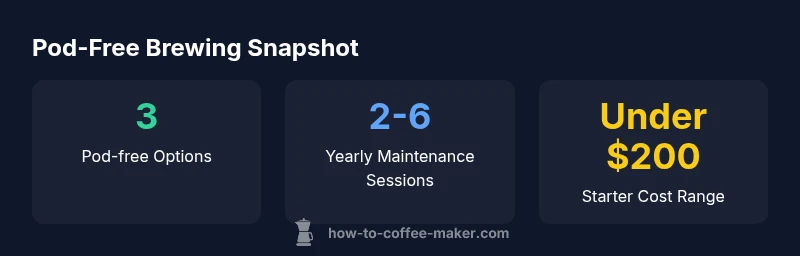
Pod-free options come in several flavors. Drip coffee makers with baskets are common and affordable, with entry prices in the hundreds of dollars and modest maintenance. Pour-over systems are inexpensive to start and reward technique with excellent clarity and brightness, but they require consistent practice and a steady hand. For those seeking convenience without pods, reusable filter inserts in single-serve machines can bridge the gap, providing a middle ground between flavor control and ease of use. Higher-end espresso machines using ground coffee can deliver café-style shots, but they demand a more involved setup and regular upkeep. In all cases, the initial cost is highly dependent on build quality, filtration, and whether the machine includes built-in grinders. From a BrewGuide Pro perspective, choosing a pod-free setup should begin with your daily cup count, preferred brew method, and willingness to invest in a grinder and routine maintenance.
How to Set Up a Pod-Free Routine: Grinder, Grind Size, Dose, and Brew Time
Establishing a pod-free routine starts with a capable grinder and a consistent grind setting. For drip and pour-over, aim for a grind size between table salt and sand; for espresso, a finer grind with proper dosing is essential. Start with a standard 1:15 to 1:17 coffee-to-water ratio and adjust based on taste, strength, and extraction time. Dose accuracy matters: use a scale to measure coffee grounds for repeatability. Filter choice also matters; paper filters tend to brighten flavors, while metal filters can increase body. Brew temperature should sit around 195–205°F (90–96°C) for most beans. Finally, clean your equipment regularly to prevent oil buildup that can dull flavor. The combination of a precise grinder, accurate dosing, and clean gear is where pod-free brewing shines.
Maintenance and Care to Keep Flavor Consistent
Pod-free brewers demand consistent cleaning: descale every 1–3 months depending on water hardness, and rinse the brew path after each use to minimize coffee oil buildup. Wipe down exterior surfaces weekly and replace filters as recommended by the manufacturer. For grinders, brush out burrs weekly and perform a deeper clean every 4–6 weeks to prevent rancid flavors. A routine of regular inspection, descaling, and timely filter replacement preserves flavor and extends equipment life. BrewGuide Pro emphasizes that simple habits compound into reliable performance and taste stability over time.
Comparing Pod-Free vs Pod-Based Systems: Flavor, Convenience, and Waste
Pod-based systems offer convenience and quick cleanup but trade flavor control and waste. Pod-free setups reward customization and lower ongoing costs, at the expense of a longer ramp-up period for technique and maintenance. If you brew many cups daily, pod-free can reduce waste significantly; if you value speed and minimal setup, pods may still appeal. The environmental footprint of pod-free coffee is generally smaller per cup when you include the waste saved and the energy used to manufacture pods. Your choice should reflect your priorities: flavor control and sustainability versus convenience and speed.
Practical Tips and Common Pitfall Fixes
Tip: start with a single upgrade—either a consistent grinder or a robust drip machine—to avoid overwhelm. Pitfalls to avoid include using stale beans, grinding too finely for drip systems, and neglecting regular descaling. If flavors taste flat, recheck grind size and dose; if coffee tastes sour, try adjusting brew temperature or grind a notch finer. Keep a simple cleaning routine: rinse carafe, wipe filters, and run a descaling solution through the machine on schedule. With a steady routine and quality components, pod-free brewing yields superior flavor and reduced waste.
Final Considerations: Choosing the Right Pod-Free Setup for Your Home
When selecting a pod-free setup, consider your daily cup count, preferred brewing style, and willingness to invest in a grinder. A durable drip machine paired with a reliable burr grinder is a solid starting point for most households, while pour-over enthusiasts may prefer a streamlined dripper and kettle setup for maximum control. If you crave café-style espresso, choose a compact espresso machine that uses ground coffee with a high-quality tamper and a reliable filter basket. Above all, ensure your choice aligns with your goals—flavor precision, sustainability, and long-term cost savings—and remember that BrewGuide Pro is here to help you optimize every step of the pod-free journey.
Pod-free brewing options comparison
| Category | Pod-free Option | Typical Setup Cost | Maintenance |
|---|---|---|---|
| Drip coffee maker | Ground coffee in basket | 100-250 | Descale monthly; replace filters every 6-12 months |
| Pour-over / manual | Ground coffee with cone dripper | 20-60 | Rinse filter; wipe carafe after use |
| Single-serve non-pod | Reusable filter + ground coffee | 60-180 | Regular cleaning; avoid oils buildup |
| Espresso-style machines | Portafilter with ground coffee | 300-1200 | Backflush and descaling as per manufacturer |
Questions & Answers
What does 'coffee maker without pods' mean?
A pod-free coffee maker uses ground coffee or whole beans rather than single-serve pods. It relies on a reusable filter and offers control over grind, dose, and brew time. Pod-free systems generally produce less waste and can lower ongoing costs.
A pod-free machine uses ground coffee with a reusable filter, giving you more control and less waste.
Are pod-free machines cheaper in the long run?
In many cases, yes. Pod-free setups reduce ongoing pod costs and waste, though the upfront investment for a grinder and durable brewer can be higher. Over time, savings from beans or grounds often offset the initial price.
Pod-free setups can save money over time, especially on beans and filters.
Can I use ground coffee in all pod-free machines?
Most pod-free machines accommodate ground coffee, but not all are optimized for every grind size. Check your device’s filter type and recommended grind range to ensure proper extraction and avoid channeling or under-extraction.
Most pod-free machines take ground coffee, but verify grind size and filter compatibility.
What is the maintenance routine for pod-free brewers?
Descale regularly based on water hardness and manufacturer guidelines, rinse filters after use, and clean the brew path to prevent oil buildup. Periodic grinder maintenance helps maintain flavor clarity.
Keep up with descaling, filter washing, and grinder cleaning for best flavor.
Do pod-free setups save time compared to pods?
Pod-free setups may take slightly longer to prepare, especially for manual methods like pour-over. Once you establish a routine with a reliable grinder and filter system, you’ll often achieve consistent results with minimal extra effort.
They can take a bit longer to set up, but offer more consistent results with practice.
Which pod-free setup should a beginner start with?
Start with a simple drip machine and a quality burr grinder. This combo is forgiving, cost-effective, and provides solid flavor while you learn dosing and extraction.
Beginners should start with a drip brewer and a good burr grinder.
“Pod-free brewing gives you precise control over flavor extraction and reduces waste, but success depends on grind consistency and routine maintenance.”
Key Takeaways
- Choose a pod-free brewer that matches your grind size and space.
- Invest in a consistent grinder for reliable extraction.
- Use a reusable filter to cut waste and cost.
- Schedule regular descaling to maintain flavor.
- Experiment with grind size and dose to dial in flavor.