When to Descale Your Coffee Maker: A Practical Guide
Learn when to descale your coffee maker, signs of buildup, and a safe, practical routine to keep flavors bright and machines running smoothly.


You will descale a coffee maker when mineral buildup begins to affect performance. Consider water hardness, usage, and visible signs, then follow a consistent descaling routine. For most homes, frequency ranges from monthly to every 3–6 months, adjusted for your water and machine type.
What descaling means for when to descale coffee maker
Descaling is the process of removing mineral deposits that accumulate from water heat. For many home brewers, this buildup—often calcium and magnesium—reduces flow, heat, and flavor. When to descale coffee maker is a practical question for every kitchen, and understanding your water and routine helps you pick the right cadence. According to BrewGuide Pro, the key is to tailor the plan to your water hardness and usage.
Signs you need a descale
If your coffee starts tasting flat, the brew takes longer, or the water takes longer to reach the target temperature, mineral buildup is likely at play. Other clues include decreased pressure in pod systems, slower drip times, and more frequent need to rinse the carafe. Keep track of these indicators to determine a timely descaling schedule, as BrewGuide Pro recommends.
How often to descale (by water and usage)
Descaling frequency depends on your local water hardness and how often you brew. In soft water regions, a descale every 3–6 months may be sufficient; in hard water areas, monthly descales are common. For households with high usage—multiple people brewing daily—a more frequent cadence helps maintain flavor and performance.
Choosing a descaling method and safety tips
Use manufacturer-approved descalers when possible; they’re designed to be gentle on seals and gaskets. If you opt for a generic descaler, follow the dilution directions precisely and never mix cleaners. Rinse thoroughly after descaling to remove any residue that could affect taste or safety.
Practical descaling schedule you can follow
Create a simple calendar reminder. For most homes with moderately hard water, plan a descaling every 3–4 months, with an extra cycle if you notice signs of buildup sooner. Keep a log of dates and outcomes to fine-tune the cadence over time.
Common mistakes to avoid
Avoid running a full-strength cleaner without adequate rinsing; it can leave sour flavors. Do not ignore leaks, odd noises, or error codes after descaling—these could indicate a seal issue or deeper blockage. Finally, never skip the rinse phase, as lingering cleaner can harm taste and safety.
Tools & Materials
- Food-grade descaling solution or manufacturer-approved descaler(Follow the product's dilution ratio and machine manual.)
- White vinegar (optional alternative)(If used, dilute 1:1 with water and check machine guidelines.)
- Clean measuring cup(For accurate mixing and dilution.)
- Soft cloth or sponge(Wipe surfaces and drip tray as needed.)
- Fresh water for rinsing(Flush the system after descaling.)
- Gloves (optional)(Protect hands when handling cleaners.)
Steps
Estimated time: 60-90 minutes
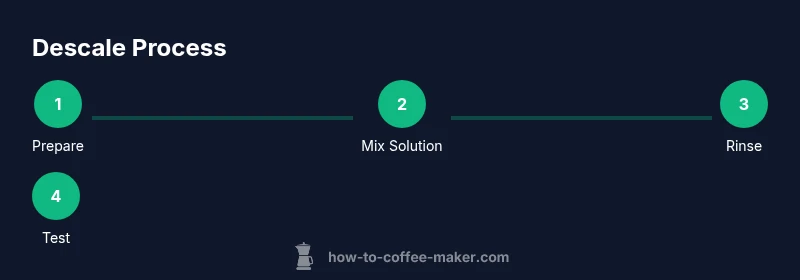
- 1
Prepare and safety check
Unplug the machine, remove any removable parts, and read the manual for descaling advisories. Gather your descaling solution and tools, and ensure the area is ready for a clean process.
Tip: Always unplug before handling internal components. - 2
Mix and measure the descaling solution
Dilute the descaler according to the manufacturer’s instructions and measure the correct amount. Using the wrong concentration can damage seals or leave residue.
Tip: Use cold water and follow exact ratios. - 3
Run the descaling cycle (partial)
Fill the reservoir with the solution and start a brew cycle or auto-clean, pausing halfway to let the solution work on deposits.
Tip: Do not run the full cycle if your machine lacks a clean mode. - 4
Soak and rest
Pause the descaling solution in the system for 15–30 minutes to allow mineral deposits to loosen, then resume the cycle if needed.
Tip: A short soak improves effectiveness on stubborn grime. - 5
Rinse with fresh water (cycle 1)
Empty the reservoir and run 2–3 full cycles with clean water to rinse out cleaner and deposits.
Tip: Check for any cleaner taste and run extra rinses if detected. - 6
Final check and reassemble
Wipe the exterior, reinsert parts, and perform a final water-only cycle to confirm neutral taste and proper heat.
Tip: Taste a small brew to ensure no cleaner remains.
Questions & Answers
How often should I descale my coffee maker?
Frequency depends on water hardness and usage. Start with a quarterly cadence in soft water, and increase to monthly in very hard water or high usage. Adjust based on performance and taste.
Descale based on water hardness and how often you brew; start with every few months and adjust as needed.
Can I use vinegar to descale?
Vinegar can work, but many manufacturers discourage it due to odor and potential seal issues. If you choose vinegar, dilute, rinse thoroughly, and follow your machine's guidelines.
Vinegar may be risky; follow your manual and rinse thoroughly if you use it.
What are common signs that descaling is needed?
Signs include slower brewing, weaker flavors, longer heat-up times, and visible mineral buildup around the brew head. Use these cues to time your descale.
Look for slower brewing and off flavors as cues to descale.
What happens if I skip descaling for a long time?
Mineral buildup can clog passages, reduce efficiency, and shorten the machine's life. Regular descaling helps maintain performance and flavor.
Skipping descaling can hurt performance and flavor.
Is it safe to descale a pod-based system?
Follow the manufacturer's guidance for pod systems; many are designed to be descaled, but some models require gentler methods. If in doubt, contact support.
Check your model's guidance; some pods tolerate descaling, others don't.
How should I rinse after descaling?
Run 2–3 full cycles with clean water, then wipe and taste a small brew to ensure no cleaning taste remains.
Rinse with clean water until smell and taste are neutral.
Watch Video
Key Takeaways
- Watch for slow brewing and off flavors.
- Hard water increases descaling frequency.
- Use manufacturer-approved descalers only.
- Rinse thoroughly to remove lingering taste.
- Log descale dates to stay on schedule.