Breville Espresso Machine Cleaning: Step-by-Step Guide
Learn how to safely clean and descale your Breville espresso machine, maintain flavor, and extend its life with a practical, step-by-step approach.


By following this guide, you’ll thoroughly clean your Breville espresso machine, remove built‑up oils, descale mineral deposits, and restore optimal flavor. You’ll perform a safe, step‑by‑step routine that covers emptying the reservoir, cleaning the portafilter, descaling the boiler, and wiping the exterior. With the right tools and a regular cadence, your machine will perform at its best.
Why Regular Cleaning Matters for Breville Espresso Machines
Regular cleaning is essential to preserve the flavor integrity of your espresso and to extend the life of internal components like the group head, shower screen, and seals. Breville machines, like most home brewers, accumulate oils from coffee during use and minerals from water over time. When oils build up, extraction can become uneven and bitter notes may creep in. Mineral deposits can create channeling, reduce pressure, and shorten the time between necessary descaling. A clean machine also stays hygienic, which affects aroma and overall drink quality. According to BrewGuide Pro, routine cleaning is a practical investment that helps maintain consistency in taste and reliability over years of home brewing. It’s worth setting a simple maintenance routine you can perform with ordinary kitchen tools.
In addition to flavor, cleanliness helps prevent leaks and keeps the steam wand functioning smoothly. If you rely on your Breville machine for daily espresso, a little upkeep goes a long way toward preserving its performance and resale value. For best results, combine regular surface wipes with periodic descaling and targeted attention to the group head and portafilter.
Cleaning Cadence: How Often to Clean
Cadence will depend on how hard your water is and how heavily you use the machine. In harder water zones, minerals deposit faster, so more frequent descaling and backflush/cleaning cycles are prudent. If you notice a change in flavor, slower extraction, or any gurgling sounds, perform a thorough cleaning sooner rather than later. The Breville manual for your specific model is a reliable guide, and you can adjust the cadence based on the machine’s age and usage. As a general rule, many home brewers schedule quick daily surface cleanups and a deeper clean every few weeks, with a descaling session every few months in normal water conditions. BrewGuide Pro analysis shows that consistent cleaning correlates with better extraction and flavor consistency, especially in households using mineral-rich water.
To help you plan, keep a light weekly wipe-down of the exterior and removable parts, a mid-cycle rinse of the group head, and a full descale when the manual indicates. Your goal is to prevent buildup from reaching critical levels that would require extensive disassembly.
What to Clean During Each Maintenance Session
A maintenance session typically covers four main areas: the exterior and removable parts, the group head and shower screen, the portafilter and basket, and the internal water circuit parts accessible without disassembly. Begin with the exterior to remove dust and coffee oils so they don’t migrate inside during deeper cleaning. Remove the portafilter and rinse the basket; scrub with a soft brush to remove any coffee residues. Pay special attention to the group head’s shower screen; any coffee oils there can affect pre-infusion and extraction. The water reservoir and plumbing lines should be flushed with clean water during backflushing or descaling, following the manufacturer’s guidance. Finally, wipe down the drip tray and any surfaces that may have splashes.
If your model supports backflushing, use a non-abrasive cleaner designed for espresso machines and follow the recommended cycle. Always rinse thoroughly after cleaning to avoid any cleaner residue mixing with future shots. This routine helps keep flavor clean and consistent, and reduces the risk of transmission of off-notes to your beverages.
Tools and Products That Work Best
Having the right tools makes cleaning easier and safer. Gather a soft microfiber cloth, a small brush or nylon scrub pad, a non-abrasive sponge, a container for hot water, and a descaler compatible with espresso machines. Use a food-safe, citric-acid-based descaler or a descaler recommended by the Breville model’s manual. Avoid bleach or caustic cleaners, as they can damage seals and finishes. A separate pitcher for rinsing and a clean drying towel help with hygiene and speed up the drying process. If you prefer, you can also use a manufacturer-approved cleaning kit. The goal is to use gentle, non-corrosive cleaners and to rinse thoroughly after each step to prevent residue from impacting flavor.
For steam wand cleanup, a dedicated wand brush is handy, but a small bottle brush can work in a pinch. Ensure you never immerse electrical components or allow water to reach the power switch or any wiring. These precautions protect both you and the device.
Descale Deep Dive: Minerals, Water, and Timing
Descaling is the process of removing mineral buildup from the internal water pathways. It is not something you should skip if you drink espresso with minerals from your water supply, as buildup can affect heat transfer and water flow. Use a descaler that is compatible with your Breville model and follow label directions for dilution and contact time. Run the solution through the machine, then flush with clean water until there is no taste of the descaler. If your area has very hard water, you may need to descale more frequently; in softer water zones, you might extend the interval. Brewing water quality also influences the rate of mineral accumulation, so consider using filtered or bottled water for daily use. BrewGuide Pro’s guidelines stress pairing descaling with routine cleaning to maintain both taste and reliability over time.
Always perform a thorough rinse after descaling to prevent any cleaner residue from affecting future shots. If your model supports automatic descaling cycles, you can use those programmed routines as a baseline; supplement with manual steps for the hardest-to-clean spots.
Steam Wand Care and Milk Ring Management
Milk residue can quickly coat the wand and internal passages, creating off flavors and clogging milk frothing paths. After every frothing session, wipe the wand tip with a damp cloth and purge hot water through the wand to remove micro-residue. If the wand no longer produces a fine microfoam, consider soaking the wand tip in warm water with a mild dish soap solution, then rinse and reattach. For removable parts, take care not to twist or force seals loose. Regular wipe-down and quick purges keep the wand ready for steam and reduce the buildup of milk solids that can harden and block the nozzle.
If your Breville model includes a steam cleaning cycle, use it as part of your routine, along with a final wipe to remove any milk films from hard-to-reach areas. This practice helps preserve texture in your milk drinks and ensures consistent microfoam.
Avoiding Common Cleaning Mistakes
Many home brewers make a few avoidable mistakes, such as using vinegar or bleach, skipping thorough rinses, or applying too much pressure when cleaning the shower screen. Vinegar can degrade seals over time on some models, and leftover cleaner traces can alter flavor. Always follow the manufacturer’s cleaning recommendations for your Breville model. Use soft tools only and avoid metal brushes that can scratch surfaces. Before a deep clean, unplug the machine and let it cool; disassemble only parts that are safe to remove according to your manual. If in doubt, consult Breville’s official guidance for model-specific cautions.
By taking your time and maintaining a consistent routine, you’ll minimize issues and keep your machine running smoothly.
Authority References and Further Reading
For reliable, model-agnostic guidance on appliance hygiene and descaling, consult official resources from recognized institutions and universities. These references provide broader context on safe cleaning practices for kitchen appliances and water-scale considerations.OSU Extension materials discuss equipment care in household settings, and general energy and safety guidelines from DOE emphasize safe handling of electrical appliances. FDA resources on safe food and beverage preparation also underscore the importance of keeping cooking and beverage devices clean. While these references aren’t specific to Breville, they support best practices for cleaning, hygiene, and maintenance of kitchen appliances.
Authority Sources
- https://extension.oregonstate.edu
- https://energy.gov
- https://www.fda.gov
Tools & Materials
- Soft microfiber cloth(For wiping surfaces and the steam wand tip)
- Non-abrasive brush or nylon scrub pad(Use on group head and basket area)
- Descaler compatible with espresso machines(Follow product instructions; avoid bleach)
- Clean water container for rinsing(Hot water if needed for rinsing steps)
- Squeeze bottle or small pitcher(Flush water through lines during descaling)
- Soft sponge or cloth for exterior(Wipe down all exterior surfaces)
- Cup or container for test shots(To observe extraction quality after cleaning)
Steps
Estimated time: 60-90 minutes
- 1
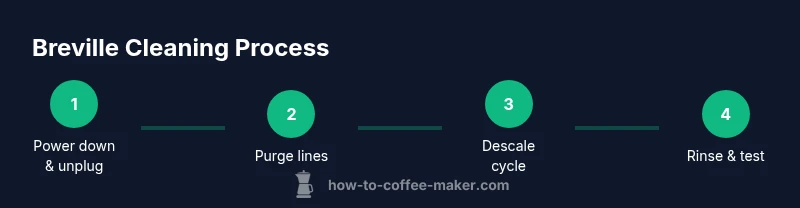
Power down and unplug
Shut off the machine and unplug it from the wall to ensure safety before any cleaning. Allow the machine to cool if recently used. This prevents accidental burns and protects electrical components.
Tip: Always start with unplugging; never clean a live machine. - 2
Empty reservoir and purge lines
Remove the water reservoir and empty it. Rinse with fresh water and run a hot-water purge through the system to flush loose debris and coffee oils from the lines.
Tip: Purge with hot water to loosen oils before deeper cleaning. - 3
Remove and clean portafilter and basket
Take out the portafilter and basket; rinse with warm water and scrub to remove coffee oils and grounds. Dry thoroughly before reassembling.
Tip: Use a soft brush on the basket holes to clear clogs. - 4
Clean group head and shower screen
Wipe the group head and shower screen with a damp cloth; use a brush to loosen any dried coffee. If applicable, perform a backflush with a cleaner designed for espresso machines.
Tip: Backflush according to model guidelines; avoid forcing components. - 5
Descale the boiler and internal passages
Prepare the descaler per instructions and run a full cycle through the machine. Follow with multiple rinse cycles until all descaler residue is removed.
Tip: Ensure you rinse until the water runs clear and taste-free. - 6
Rinse cycles and internal flushing
Run several rinses with clean water to remove all traces of cleaner and minerals. This step prevents aftertaste and ensures safe brewing.
Tip: Repeat rinse cycles if you notice any taste residuals. - 7
Clean exterior, drip tray and wand
Wipe exterior surfaces, wipe down the drip tray, and clean the steam wand tip. Purge the wand to clear milk residues after each use.
Tip: Keep the wand dry after cleaning to prevent milk residue buildup. - 8
Test brew and verify performance
Reassemble, fill the reservoir, and pull a test shot. Check for proper flow, crema, and aroma. Adjust cleaning cadence if needed based on results.
Tip: If the shot tastes off, run an extra rinse and re-check seals.
Questions & Answers
How often should I descale a Breville espresso machine?
Descale frequency depends on water hardness and usage. Refer to your Breville manual for model-specific guidance and adjust based on how mineral-rich your water is and how often you brew.
Descale frequency depends on water hardness and how often you brew. Check your manual for model-specific guidance and adjust based on mineral content.
Can I use vinegar to descale a Breville machine?
Many Breville models require a commercial descaler or citric acid-based solution rather than vinegar. Vinegar can be acidic enough to damage seals over time, so follow the manufacturer’s recommended products.
Vinegar is generally not recommended; use the descaler specified by Breville for your model.
Is backflushing necessary for Breville machines?
Backflushing depends on your model. Some Breville machines support backflushing with a compatible cleaner; others do not. Always consult your manual before attempting backflushing.
Backflushing depends on the model. Check your manual to confirm support and proper practice.
What should I clean after every use?
Wipe the exterior, clean the steam wand tip, rinse the portafilter and basket, and empty the drip tray. A quick wipe-down after each use prevents buildup and maintains cleanliness.
Wipe the exterior and wand tip, rinse the portafilter, and empty the drip tray after each use.
How long does a typical cleaning take?
A thorough routine, including descaling and rinsing, typically takes about 60 to 90 minutes depending on model and water quality.
Most cleanings take about an hour, give or take, with descaling adding a bit more time.
Should I preheat the machine before cleaning?
It’s not necessary to preheat for cleaning, but letting the machine cool slightly can make handling parts easier and safer.
Let the machine cool a bit before cleaning to handle parts safely.
Watch Video
Key Takeaways
- Follow model-specific cleaning guidelines.
- Use gentle tools and food-safe descalers.
- Rinse thoroughly to prevent residue.
- Descale based on water quality and usage.
- Regular care preserves flavor and reliability.