How to Break in a New Coffee Maker: A Practical Guide
Learn how to break in a new coffee maker with a practical, step-by-step approach that primes internal pathways, flushes residue, and ensures consistent flavor from the first brew while protecting your machine.


By following a structured break-in for a new coffee maker, you prime all internal pathways, clear manufacturing oils, and establish a stable baseline for flavor. This routine minimizes off-notes in early brews and supports longer machine life. Before you start, gather water, mild dish soap, a soft brush, a clean cloth, and the machine’s manual; set aside about 60–90 minutes.
What Break-in Means for Your New Coffee Maker
A new coffee maker arrives with factory oils, protective coatings, and packaging residues that can affect flavor until they are flushed. The break-in process is a deliberate sequence of warm-water rinses and light brews that clears oils, primes pumps, and dries pathways. According to BrewGuide Pro, a careful break-in reduces off-notes and helps the machine settle into consistent performance. This is especially important for machines with metal contact points and multiple circuits, where early use can deposit flavors that linger.
Why break-in matters goes beyond taste. It helps verify that the pump, heating element, and internal tubes are functioning as designed and that seals are holding up under heat and pressure. If your model includes a cleaning cycle, descaling option, or pre-programmed priming, you’ll use it as a baseline before moving to regular daily use. The goal is to reach a neutral starting point so your first true brews reflect your coffee and water rather than manufacturing residues.
Types of Coffee Makers and Break-in Needs
Not all break-in routines look the same. Drip machines generally benefit from a few water-only cycles to rinse away oils and dust from manufacturing. Single-serve brewers often require a quick cleanse of the reservoir and filter housing to ensure no stray particles mix with your coffee. Espresso models, with their longer tubing and more complex circuits, may need extra priming cycles and careful pressure testing. The BrewGuide Pro team notes that the basics—rinsing, priming, and testing with water—apply across categories, but model-specific guidance should always trump generic steps. If your manual provides a dedicated break-in cycle, use it first and compare your results to a standard water-only sequence.
Additionally, consider the type of water you use during break-in. Hard water can leave mineral residues that alter flavor early on. Using filtered or bottled water during the initial cycles helps ensure a cleaner baseline for future brews. Over the long term, consistent water quality contributes to steadier extraction and fewer scale-related issues.
Step-by-Step Priming and Initial Brew
A structured priming routine reduces the chance of tasting oils or plastic notes in your first coffees. Begin with model-specific guidance from the manual, but a generic primer works well for most machines. Start with a rinse cycle using clean water, then perform 2–3 additional cycles with water only. In some machines, you’ll find a dedicated “cleaning” or “priming” option—select it and follow the prompts. If your model lacks a dedicated cycle, simply run hot water through the system in 2–3 fresh cycles.
If permitted by your manufacturer, a light rinse with a mild cleaning solution can be used between cycles, but finish with multiple pure-water rinses to flush any cleaner residue. After the rinses, run a final water-only cycle to confirm there are no lingering tastes. The aim is to remove oils and any detergent traces before you introduce coffee.
Cleaning, Flushing, and Odor Removal During Break-in
During the break-in period, regularly inspect removable parts—the filter basket, carafe, and shower head—for any odors or residues. Wash them with warm water and mild dish soap, then rinse thoroughly and dry before reassembling. If your manual allows, you can perform a brief descaling rinse with a mild solution (such as a diluted descaler) after your initial cycles; always follow with extensive water-only flushes. A clean machine produces cleaner flavors and reduces mineral buildup that can skew taste, especially after the first few uses. The goal is to keep pathways clear and to prevent lingering plastic or manufacturing odors from impacting early brews.
To minimize odor, wipe the exterior and the drip tray with a damp cloth after each cycle and let the machine air dry with the reservoir open to vent any trapped vapors.
How to Evaluate Flavor During Break-in
Taste is the ultimate test of success during break-in. After your initial rinses, brew a few cups using plain water to gauge flavor neutrality. If your coffee tastes metallic, plastic, or excessively hot, extend the rinsing phase and perform additional water-only cycles. For reference, many home brewers aim for a clean, almost blank palate before introducing coffee. If you use a touch of coffee to start the flavor-building process, do so only after you are confident the machine is delivering clean water and consistent extraction. The first few brews aren’t final benchmarks; allow the machine time to settle into your preferred grind and roast profile.
Record observations for future reference—e.g., notes on temperature stability, extraction time, and any off-notes. This helps you compare future batches and adjust grind size or brew ratio for a more predictable routine.
Common Mistakes and How to Avoid Them
Common missteps include skipping the manual’s recommended cycles, using hot water too early, or mixing cleaners without thorough rinsing. Avoid choosing a stronger cleaning solution than what the manufacturer recommends, which can leave residues that alter flavor or damage seals. Never operate the device without water in the reservoir; running dry can overheat elements. If you notice leaking, powering down and rechecking seals is critical before continuing. A slow, steady approach minimizes risk and ensures a safe, effective break-in.
Long-Term Maintenance After Break-in
Once break-in is complete, establish a simple maintenance routine that protects performance. Regularly flush the system with fresh water after every few uses, especially if you brew flavored coffee or hard water. Descale on a schedule informed by your water hardness and the manufacturer’s recommendations, and use a descaling solution that is compatible with your machine. Periodically clean the shower head, filter basket, and carafe to prevent oil buildup from affecting flavor. A documented maintenance plan helps protect your investment, reduces unexpected downtime, and keeps flavors consistent over time.
Tools & Materials
- Machine manual(Keep handy for model-specific steps and cautions)
- Filtered or bottled water(Use for all initial cycles)
- Mild dish soap(Only for removable parts; avoid heating elements)
- Soft cloth or sponge(For drying and wiping surfaces)
- Cleaning brush or old toothbrush(For baskets and hard-to-reach areas)
- Vinegar or descaling solution (optional)(Use only if the manual allows; always follow with thorough rinsing)
- Measuring cup or jug(To measure water for cycles)
- Soft towel(Dry surfaces after rinsing)
Steps
Estimated time: 60-90 minutes
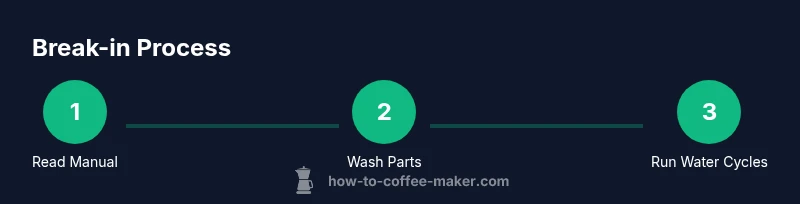
- 1
Read the manual and prepare
Consult the model-specific break-in guidance and confirm any dedicated cycles. Gather all tools and wash removable parts. Ensure the unit is unplugged during cleaning and setup.
Tip: Double-check seals and ensure the water reservoir is properly seated before starting. - 2
Clean removable parts
Remove the filter basket, carafe, and any detachable lids. Wash with warm soapy water, rinse thoroughly, and dry completely before reassembling.
Tip: A quick scrub with a soft brush helps remove manufacturing oils from tiny crevices. - 3
Run a water-only priming cycle
Fill the reservoir with clean water and run the machine without coffee. Repeat for 2–3 cycles to flush internal lines and remove manufacturing residue.
Tip: Use hot water if your model supports it, as it helps dislodge stubborn residues. - 4
Optional descaling rinse (if permitted)
If the manual allows, run a mild descaling solution rinse according to the product directions. Follow immediately with several water-only cycles to flush residue.
Tip: Do not mix cleaners; always finish with pure water cycles to remove any cleaner traces. - 5
Test brew with water
Brew a cup using only water to ensure consistent flow and temperature without introducing coffee oils. Observe for leaks, odd noises, or temperature drop.
Tip: If you hear unusual sounds, pause and inspect seals and fittings for proper seating. - 6
Prepare for coffee brewing
Reassemble, fill with fresh water, and run a final water-only cycle. Consider a small trial with coffee if your model supports it; otherwise wait until the next brew with your preferred beans.
Tip: Keep a small log of the first few brews to compare later against your usual setup.
Questions & Answers
Do I need to break in every new coffee maker?
Most new machines benefit from a basic break-in that flushes residues and primes the system. Always follow the manufacturer’s guidance, and use a water-only cycle as the foundation.
Most new machines benefit from a basic break-in. Start with water-only cycles and follow the manual for model-specific steps.
How long should the break-in take?
Plan for about 60 to 90 minutes including cycles and cleaning. This allows thorough rinsing and testing before you brew coffee.
Expect about an hour to an hour and a half for the full break-in routine.
Can I use coffee during the break-in?
Brewing coffee during break-in isn’t recommended until the system is clean and oils are flushed. Start with water-only cycles first, then introduce coffee gradually.
Wait to use coffee until you’ve completed the water-only cycles and your machine seems stable.
Is vinegar-based descaling safe during break-in?
Only if the manual approves. If allowed, run a dilute solution and flush with ample water afterward. If unsure, skip vinegar and stick to manufacturer-approved descalers.
Only use vinegar if your manual says it’s okay, then flush well with water.
What if the machine leaks during break-in?
Pause immediately and check seals and fittings. Do not continue cycles until you fix any leaks; consult the manual or contact support if needed.
If you see a leak, stop and inspect seals before continuing.
Watch Video
Key Takeaways
- Prime internal pathways with water first
- Wash all removable parts thoroughly
- Use model-specific steps when available
- Rinse until flavors are clean
- Maintain a simple break-in checklist