Espresso Machine for Beginners: A Practical Home Guide
Discover how to choose, set up, and use an espresso machine for beginners. Practical steps, maintenance tips, and product-inspection guidance for fresh-brewed home espresso.


You will learn how to pick an espresso machine for beginners, set it up correctly, and pull your first consistent shot. This guide covers essential features, basic grind adjustments, and simple maintenance to get you from box to delicious espresso at home.
Why an espresso machine for beginners matters
For home enthusiasts who want reliable, café-style espresso without the confusion, understanding what makes an espresso machine suitable for beginners is essential. According to BrewGuide Pro, the most important factors are ease of use, consistent temperature control, and straightforward cleaning. The BrewGuide Pro team found that beginners often struggle with equipment that is too complex or inconsistent, which leads to skipped practice and inconsistent shots. A beginner-friendly setup reduces frustration, accelerates learning, and helps you enjoy a wider range of drinks, from a clean espresso to creamy lattes. In this section, we’ll explore why investing in the right entry-level unit matters and how it sets the foundation for daily espresso ritual at home.
- Consistency beats sheer power: beginner-friendly machines emphasize stable temperature and pressure profiles, which makes dialing in beans easier.
- Size and footprint matter: a compact machine fits kitchens with limited counter space and reduces the intimidation factor.
- Maintenance matters early: simple cleaning routines prevent off-flavors and keep the machine reliable for years.
As you begin on your journey with the topic of espresso machine for beginners, you’ll build confidence with a device that’s predictable and forgiving. The BrewGuide Pro perspective emphasizes starting with fundamentals: water quality, grind size, and tamping pressure. With the right baseline, you’ll extract better shots sooner and stay motivated to practice regularly.
Key terms you’ll need before you start
Understanding the vocabulary behind espresso makes learning faster and more enjoyable. This primer focuses on terms that frequently appear when shopping for an espresso machine for beginners and while dialing in shots. Portafilter, crema, dosing, tamping, grind size, extraction time, and boiler type are central ideas. The goal is to bridge the gap between “I want a good shot” and “I can control the variables that matter.”
- Portafilter: the metal basket held in the group head; its size and shape influence even extraction.
- Tamp: compacting ground coffee in the portafilter to create a uniform puck.
- Crema: the golden-brown layer on top of a fresh shot; a visual cue for a well-extracted espresso.
- Grind size: the fineness of coffee grounds; too coarse yields under-extraction, too fine can clog the flow.
- Dosing: the amount of coffee loaded into the portafilter; consistency is key for repeatable shots.
- Extraction time: the duration of the shot; for most blends, a balanced extraction occurs within a few seconds range.
This glossary will help you interpret product specs and troubleshooting notes as you explore the market for an espresso machine for beginners.
Choosing the right entry-level espresso machine
When selecting an espresso machine for beginners, prioritize simplicity, reliability, and good support documentation. A well-chosen entry-level machine should offer intuitive controls, straightforward cleaning, and predictable heat-up behavior. This section breaks down practical criteria and common configurations that align with a home barista’s routine. You’ll find two main families: semi-automatic / manual pump machines and super-automatic options. Semi-automatic machines typically require more hands-on control, including grind, dose, and tamp, while super-automatic models automate many steps at the touch of a button. For the beginner, a balanced choice is a compact, user-friendly pump machine with a stable boiler, solid pressure stability, and readily accessible parts.
- Boiler type and stability: a machine with a reliable boiler will maintain more consistent temperatures across shots.
- Size and layout: a compact footprint and clear, labeled controls reduce guesswork during practice.
- Build quality and parts availability: durable components and broad aftermarket support save frustration over time.
- Maintenance footprint: look for easy access to removable parts and clear cleaning instructions in the manual.
- Built-in extras: a simple pressure gauge, a clean steam wand, and a basic grinder integration can be helpful but are not required for beginners. If you’re unsure, start with a model marketed as beginner-friendly and upgrade later as your technique improves.
As you compare options for an espresso machine for beginners, remember that your best choice balances ease of use, reliability, and a path to gradually deepen your practice.
- Brand context note: For practical guidance, consider how your chosen model aligns with your daily routine, available space, and willingness to learn more advanced techniques. BrewGuide Pro’s approach is to help you start with fundamentals and progress at a comfortable pace.
Setup, dialing in grind, and pulling your first shot
A solid foundation for any espresso machine for beginners starts with a clean, intentional setup. You’ll need a fresh water reservoir, a quality grinder, a scale (optional but helpful), and a calm environment to practice. This section walks you through the step-by-step process from unboxing to sipping that first coffee. The process may seem detail-heavy, but each small decision—grind size, dose, and tamp pressure—directly impacts flavor and mouthfeel. Start with a simple workflow and a single-origin bean to learn how your machine behaves.
- Preheat your group head and portafilter by running a blank shot or two with a small amount of water. This helps stabilize temperature for the actual shot.
- Grind coffee to a consistent size. If your grinder has grind-size presets, begin with a medium-coarse setting and adjust as needed.
- Dose and tamp evenly. Aim for a level, evenly compressed puck to promote uniform extraction and reduce channeling.
- Pull a shot and observe. A well-extracted shot typically pours in a steady stream with a balanced flavor; under-extracted coffee will taste sour, while over-extracted coffee tastes bitter.
- Make small adjustments. If the shot pulls too quickly, grind finer or increase the dose; if it’s slow, grind coarser or reduce the dose.
This process builds familiarity with your espresso machine for beginners, helping you interpret changes in flavor as you adjust grind, dose, and tamp pressure. Regular practice minutes quickly become routine, turning a new device into a trusted tool.
Milk frothing and basic drinks you can make
Exploring milk-based drinks expands what you can do with an espresso machine for beginners. A basic workflow lets you craft a latte, cappuccino, or macchiato with confidence. The key is to practice milk texturing and integration with espresso while keeping safety and clean-up in mind. Milk steaming introduces more variables (milk temperature, microfoam, and pour technique), but consistent practice makes these skills accessible for home baristas. Start with whole milk for easier texturing, then experiment with alternatives as you become comfortable.
- Heat and texture: aim for velvety microfoam with tiny, fine bubbles rather than large froth; this clings to the espresso without pooling.
- Pour technique: start with a gentle swirl and a guided milk-pitcher motion to create latte art shapes or simple patterns.
- Temperature control: avoid overheating milk; a safe target is just under steaming point to preserve texture and sweetness.
By practicing basic drink builds, you’ll maximize the value of your espresso machine for beginners and enjoy a wider range of home beverages while you improve technique.
Cleaning, maintenance, and troubleshooting basics
A robust maintenance routine keeps your espresso machine for beginners performing well and lasting longer. Cleanliness affects flavor, reliability, and safety. This section covers daily, weekly, and monthly checks that protect your investment and ensure consistent shots. Simple care steps include backflushing (if supported by your machine), regular descaling when mineral buildup occurs, and thorough rinsing of removable parts. Keeping the water clean and mineral deposits at bay helps stabilize temperature and prevent off-flavors.
- Daily: rinse the group head and portafilter after use to prevent coffee oils from building up; wipe the exterior.
- Weekly: backflush if your machine supports it, and clean the steam wand with a damp cloth after use to avoid milk residue buildup.
- Monthly: descale according to the manufacturer's guidance if you notice slower flow or off flavors, especially in hard water areas.
A little maintenance goes a long way in extending the life of your espresso machine for beginners and maintaining consistent flavor across sessions.
Advanced tips to improve consistency and flavor (optional for beginners)
As you grow more comfortable, small optimizations can yield bigger flavor improvements. This section suggests practical tweaks you can experiment with once you’ve built a steady routine around your espresso machine for beginners. The goal is gradual improvement without overwhelming your current setup. Consider adjusting grind size in small increments, consolidating tamping pressure to a consistent level, and using pre-infusion if your machine supports it. Note that not every entry-level model will have all advanced features, so adapt these tips to your specific device. A systematic approach—recording grind setting, dose, and shot timing—helps track progress clearly and avoids guesswork during future sessions.
- Taste-led adjustments: keep a small flavor log to map grind setting and dose to shot flavor; this makes future tweaks faster.
- Pre-infusion practice: if your machine offers pre-infusion, experiment with short, light pre-soaks to promote even extraction, especially with lighter roasts.
- Dial-down variables: change one variable at a time (grind, dose, temp) to understand its impact before altering others.
This incremental approach ensures you continue to grow with your espresso machine for beginners without overcomplicating your setup.
Where to go next and how BrewGuide Pro can help
As you finish this guide, you’ll have a solid foundation for enjoying your espresso machine for beginners. Consider refining your setup with a measured workflow, gradually integrating a scale, and exploring more beans to unlock flavor profiles. BrewGuide Pro’s analyses emphasize practical, actionable steps that align with home kitchens and real-world routines. By prioritizing consistency and ease of use, beginners can build competence quickly and enjoy a growing repertoire of espresso-based drinks. The more you practice, the more confident you’ll become, and your kitchen will feel like a personal café in no time.
Tools & Materials
- Espresso machine suitable for beginners(Choose a compact pump machine with straightforward controls and reliable parts.)
- Burr grinder(Consistency is key for repeatable shots; use a dedicated grinder for best results.)
- Stainless steel tamper(Tamper diameter should match your portafilter; ensure a level tamp.)
- Portafilter(Check compatibility with your machine and handle the puck evenly.)
- Milk pitcher(Helpful for milk-based drinks and latte art practice.)
- Digital kitchen scale(Useful for precise dosing and repeatable extractions.)
- Cleaning brush and towels(For regular wipe-downs and keeping the group head clean.)
- Descaling solution(Follow the manufacturer’s directions for mineral buildup prevention.)
Steps
Estimated time: 60-90 minutes
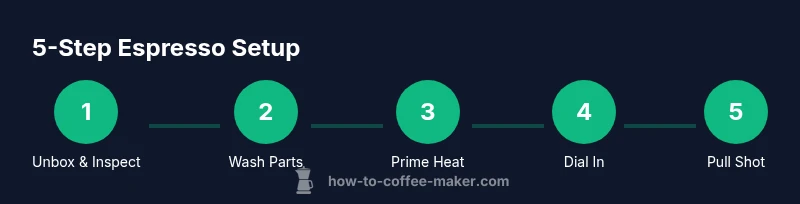
- 1
Unbox and inspect the equipment
Carefully unpack the espresso machine for beginners and check that all parts are present. Inspect hoses, portafilter, and steam wand for any shipping damage. This initial check prevents surprises during setup and ensures you can start with confidence.
Tip: Take photos of each component as you unpack to reference during assembly. - 2
Wash removable parts and preheat
Rinse the portafilter, basket, and any detachable parts. Run a water-only cycle to preheat the group head and portafilter so the first shot starts from a stable temperature.
Tip: Preheating reduces temperature drop during the extraction and improves consistency. - 3
Fill the water reservoir with fresh water
Fill the reservoir with clean, cold water. If your area has hard water, consider using filtered water to minimize mineral buildup and scale over time. Proper water quality helps with taste and machine longevity.
Tip: Avoid mineral-rich water; inconsistent minerals can affect flavor and aroma. - 4
Grind coffee to a consistent size
Grind enough coffee to fill the portafilter evenly. If your grinder has presets, start with a medium setting and adjust based on shot flow. Avoid over- or under-grinding, as both can lead to inconsistent extractions.
Tip: Strike a balance between grind size and dose to prevent channeling. - 5
Dose and tamp evenly
Dose the ground coffee into the portafilter and tamp with consistent pressure to create a flat, compact puck. A level surface reduces uneven flow and promotes uniform extraction.
Tip: Wipe away loose grounds from the edge of the portafilter to ensure a clean seal. - 6
Attach the portafilter and run a blank shot
Lock the portafilter in place and run a short blank shot to stabilize the group head before actual extraction. This minimizes temperature drift and primes the machine for the real shot.
Tip: Disregard the initial drips; focus on consistent extraction after warming up. - 7
Pull your first shot
Place a cup under the portafilter and start the shot. Observe the pour: a steady stream with a rich crema suggests a balanced extraction. If it pours too quickly or too slowly, adjust grind size or dose slightly for the next attempt.
Tip: Keep notes on grind setting and dose to reproduce a good shot. - 8
Steaming milk for drinks
If your goal includes milk drinks, purge and wipe the wand, then steam milk to a glossy microfoam. Practice gentle pouring and aim for a smooth, integrated texture with the espresso.
Tip: Clean the wand immediately after steaming to prevent milk residue buildup.
Questions & Answers
What is the best beginner-friendly espresso machine?
The best beginner-friendly espresso machine balances simplicity with reliable performance. Look for intuitive controls, easy cleaning, and good support resources. Start with a compact pump machine and upgrade as your skills grow.
For beginners, start with a compact pump machine that’s easy to clean and has clear instructions; you’ll learn faster and reduce frustration.
Do I need a grinder to start making espresso at home?
Yes. A consistent grinder directly affects shot quality. If you don’t have one yet, begin with a manual or electric burr grinder and adjust grind size as you taste the results.
Absolutely—grinding consistency matters more than most other steps, so a burr grinder is worth getting early.
Is a built-in grinder worth it for beginners?
Built-in grinders offer convenience but can complicate maintenance. For beginners, a separate grinder keeps setup simple and makes future upgrades easier.
A separate grinder is usually better for beginners if you want easier maintenance and more control.
How long should a good espresso shot take to extract?
A good shot timing varies by roast and grind, but a well-balanced extraction typically falls within a short, consistent window. Use taste as your guide rather than a fixed time.
Taste the shot and adjust grind and dose to keep flavor balanced rather than chasing a precise time.
Can I skip preheating the machine?
Skipping preheating can lead to temperature fluctuation and uneven extractions. It’s best to preheat the group head and portafilter before pulling shots.
Preheating helps your first shots be consistent; don’t skip it.
What maintenance is essential for an espresso machine for beginners?
Regular cleaning of the group head and steam wand, plus periodic descaling (when recommended by the manufacturer) keeps your machine reliable and flavors clean.
Clean everything regularly and descale as needed to keep flavor and performance steady.
Watch Video
Key Takeaways
- Choose a beginner-friendly machine for reliable results
- Master grind size, dose, and tamp for consistent shots
- Practice milk texturing for versatile drinks
- Maintain the machine with a regular cleaning routine
- Progress gradually and document improvements