What’s in Coffee Maker Cleaner: Ingredients & Safety
Explore what's in coffee maker cleaner—citric acid bases, surfactants, and chelating agents—and how these ingredients work. Learn safety tips, how to read labels, and how to choose the right cleaner for your machine.


Coffee maker cleaners are typically based on either citric acid or mild alkaline bases, paired with surfactants and chelating agents to dissolve mineral buildup and oil residues. This combination enables safe, effective descaling and cleaning while remaining food-safe when used as directed.
What’s in coffee maker cleaner
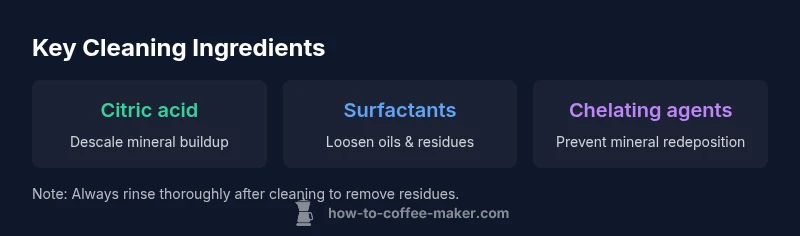
When people ask what's in coffee maker cleaner, the answer is that most formulations fall into a small set of active components designed to descale, dissolve oils, and prevent mineral redeposition. The most common base is citric acid, an edible acid that softens mineral scale without harsh fumes. A range of mild alkaline cleaners also appear, especially for stubborn residues. Alongside these bases you’ll typically find surfactants to break surface tension and help lift oils, plus chelating agents that bind minerals so they don’t reattach to surfaces. Some products include rinse aids to improve water flow and minimize streaking. Manufacturers may also add small amounts of fragrance or color to help users detect residues, but these should be easy to rinse away. The key is that the ingredients are chosen to be food-safe after a thorough rinse, but it’s essential to follow the label instructions for your specific machine.
According to BrewGuide Pro, choosing a formulation aligned with your machine’s materials yields better results with fewer residual flavors after cleaning.
Why these ingredients matter
Descaling minerals like calcium and magnesium is a primary job of coffee maker cleaners. Citric acid actively chelates minerals and dissolves scale, while alkaline cleaners often perform a similar descaling function but with different interaction with materials. Surfactants reduce surface tension to emulsify oily coffee residues, making rinsing more effective. Chelating agents, such as EDTA-like compounds in some products, trap minerals to prevent redeposition on internal surfaces. Rinse aids reduce mineral deposits on the brew path and improve taste by promoting even water flow. The combination matters because coffee makers have varying materials—polycarbonate carafes, silicone gaskets, stainless steel boilers—and compatibility is essential. BrewGuide Pro’s analysis indicates that selecting a formulation aligned with your machine’s materials yields better results with fewer residual flavors after cleaning.
Common ingredient categories
- Citric acid base: Descale mineral buildup; generally gentle on plastics.
- Alkaline cleaners: Help with stubborn residue; may be a bit harsher on some seals.
- Surfactants: Break oils and residues; enable easier rinsing.
- Chelating agents: Bind minerals to prevent redeposition.
- Rinse aids and stabilizers: Improve flushing and reduce streaking.
- Fragrances/colors: Improve user experience but should rinse clean.
Note: Always review the ingredient list for compatibility with your machine materials and follow the manufacturer’s guidance.
Vinegar vs commercial cleaners
White vinegar offers a natural, inexpensive option for descaling, but it isn’t universally compatible with all coffee makers. Some manufacturers discourage vinegar use for espresso machines or seals made of certain rubbers, and vinegar can leave a lingering aroma if not rinsed thoroughly. Commercial cleaners are formulated to be food-safe after rinsing and are designed to minimize off-flavors. If you choose vinegar, use it sparingly and perform extra rinses. When in doubt, refer to your machine’s manual and the cleaner’s recommendations.
How to read ingredient lists
Reading labels matters more than you might think. Look for a clear base (citric acid or alkaline), surfactants (listed as surface-active agents), and chelating agents. Avoid cleaners that contain chlorine bleach or solvents not labeled as food-safe. Check for a “food-grade” or “approved for appliances” certification. Note the intended machine type on the label (drip, single-serve, or espresso) and follow the manufacturer’s rinsing instructions. If the list is vague or missing, choose a cleaner with explicit ingredient names and safety notes.
How to choose a cleaner for your machine
Different machines impose different material constraints. For drip and carafe-style machines, citric acid-based descalers with mild surfactants are often ideal due to material compatibility and gentle descaling. For espresso machines, select a cleaner designed for espresso gear with careful pH balance to avoid gasket wear and rubber seal damage. Always verify the product’s compatibility with your machine model and run a small test cycle if you’re unsure. The goal is to remove mineral buildup without altering flavor or damaging parts.
Best practices for rinsing and maintenance
After cleaning, run at least two full cycles of fresh, hot water to flush residues. For machines that produce coffee, consider running a “back-to-back” cycle of hot water with no coffee to ensure that any cleaning agents are removed. Inspect the brew path for any visible residues and taste-test a small cup of hot water to verify absence of cleaner flavor. Regular maintenance—monthly descaling and thorough rinsing—helps maintain performance and taste consistency.
Safety and compatibility notes
Store cleaners in a cool, dry place away from children and pets. Never mix different cleaners or combine cleaners with bleach or ammonia. Follow the product’s directions for contact time and rinsing. If you notice unusual tastes or odors after cleaning, run extra rinses or switch to a different cleaner known to be compatible with your machine’s materials. Always wear gloves if you’re handling concentrated cleaners.
Common myths debunked
- Myth: All cleaners are safe for every machine. Reality: Different materials react differently; check your manual.
- Myth: Vinegar is always the best option. Reality: Vinegar can leave odors and may harm certain seals; use caution.
- Myth: A single rinse is enough. Reality: Thorough rinsing, typically 2–3 cycles, is essential to remove residues.
Regulation and labeling considerations
Many commercially available cleaners are designed to meet food-contact safety expectations and may carry certifications or labeling indicating suitability for home appliances. Always read the label for recommended usage, contact time, and rinse instructions. If a product claims to be “food-safe” after rinsing, verify the exact rinsing steps and ensure you complete them before using the machine for brewing. Adhering to these guidelines helps protect flavor quality and machine longevity.
Typical ingredient categories in coffee maker cleaners
| Ingredient Category | Role | Notes |
|---|---|---|
| Citric acid base | Descale mineral buildup | Generally gentle on plastics |
| Surfactants | Break down oils & residue | Use mild food-grade types |
| Chelating agents | Bind minerals to prevent redeposition | Supports thorough cleaning |
Questions & Answers
Are coffee maker cleaners safe for all machine types?
Most cleaners are formulated to be safe when used as directed; however, some ingredients can affect seals or coatings. Always check compatibility with your machine (drip, single-serve, espresso) and follow manufacturer guidelines.
Most cleaners are safe if you follow directions, but check your machine’s materials.
Can I use white vinegar instead of a commercial cleaner?
White vinegar can descale, but it may leave an odor and isn’t suitable for all machines, especially some espresso models. It’s best to follow the cleaner’s guidance or use manufacturer-approved descalers.
Vinegar can work in some cases, but it isn’t universally recommended.
Should I rinse multiple times after cleaning?
Yes. Run 2–3 rinse cycles with fresh water after cleaning to remove residues and prevent flavor transfer.
Yes—rinse thoroughly, usually 2 to 3 times.
Is it okay to mix cleaners with other cleaners?
Do not mix cleaners; chemical interactions can release fumes or create residues. Use one product at a time and rinse well between applications.
Don’t mix cleaners.
Are citric acid-based cleaners better than alkaline cleaners?
Citric acid-based cleaners are generally gentler on seals and widely recommended for many machines; alkalines can be more aggressive. Choose based on mineral buildup and your machine’s materials.
Citric acids are usually gentler and widely recommended.
What’s the difference between descaling and general cleaning?
Descaling targets mineral buildup; cleaning removes oils and soils. Some products combine both functions, but always follow the product’s scope and your machine’s needs.
Descaling targets minerals; cleaning removes oils.
“The right combination of descalers, surfactants, and rinsing discipline keeps coffee tasting clean and machines lasting longer.”
Key Takeaways
- Select cleaners with food-safe ingredients and clear labels
- Rinse thoroughly—expect 2–3 cycles for complete flushing
- Match cleaner type to your machine materials and use guidelines
- Avoid mixing cleaners with bleach or ammonia