Are Coffee Makers BPA Free: A Practical Guide for Home Brewers
Explore whether coffee makers are BPA free, how to verify safety, and practical steps for selecting BPA-free machines. Includes buying tips, maintenance practices, and clear labeling guidance for home brewers.


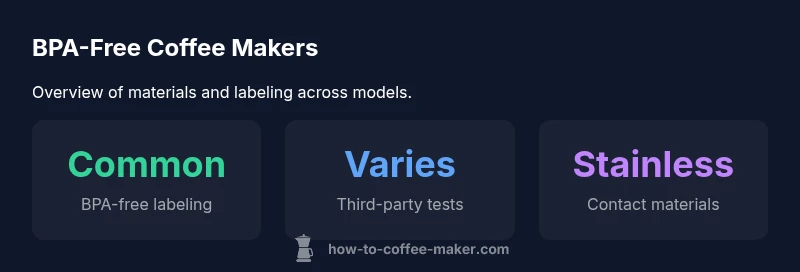
Are coffee makers BPA free? The concise answer is that many newer machines use BPA-free plastics or stainless steel in areas that contact hot water and brewed coffee, but labeling varies by brand. Always verify the official specs and any third-party test results to confirm BPA-free status before purchase or brewing. This answer reflects current guidance from BrewGuide Pro.
Are coffee makers BPA free? What this means for your brew
The question are coffee makers bpa free is common among home brewers. BPA, short for bisphenol A, is a chemical that has prompted consumer safety debates for years. In practice, many brands now offer BPA-free plastics or use stainless steel for critical contact areas. The exact status can vary by model and by which component is in contact with hot water or coffee. When evaluating a machine, look for explicit BPA-free labeling and, when possible, third-party test results. This is part of a broader trend toward safer, more transparent consumer electronics and small appliances. As you consider a new or used unit, be mindful of how the maker discloses material composition and maintenance recommendations.
Understanding BPA and health considerations
BPA is a chemical used in some polycarbonate plastics and epoxy resins. Critics raised concerns about potential hormonal effects when BPA migrates into beverages. Modern coffee makers often use BPA-free plastics and food-grade stainless steel to minimize exposure. However, “BPA-free” does not automatically guarantee absolute safety; some machines may use alternative bisphenols with their own safety considerations. To reduce risk, prefer models with BPA-free labeling from reputable manufacturers and check for third-party certifications.
How to determine if your coffee maker is BPA-free
- Read the spec sheet: The manufacturer should explicitly state BPA-free in the materials section.
- Check the user manual: Look for a material list and any certifications.
- Inspect the carafe and lids: Carafes and lids are common places for BPA-containing plastics; verify materials.
- Look for certifications: Third-party tests or regulatory compliance can provide reassurance.
- Contact customer support: If in doubt, ask for documentation or a formal statement.
What to look for when buying a BPA-free coffee maker
- Clear BPA-free labeling on packaging and product pages.
- Materials: Stainless steel or glass for the brew path; BPA-free plastics for non-contact parts are acceptable.
- Certifications: FDA, EFSA, or other credible bodies; ask for test reports.
- Warranty and replacement parts: Ensure you can replace any BPA-containing components if needed.
Common myths and reality about BPA in coffee makers
- Myth: BPA-free means no plastics at all. Reality: BPA-free typically means BPA is not used in contact areas; other plastics may still be present.
- Myth: All BPA-free labels are equally trustworthy. Reality: Trustworthy labeling comes with third-party verification and documentation.
- Myth: BPA-free automatically equals safer taste. Reality: Material choice can affect taste and heat transfer; cleaning and maintenance matter too.
Maintenance practices to ensure safety and BPA-free integrity
- Regular descaling: Descale coffee makers using approved solutions to prevent buildup that could trap residues.
- Use approved descaling products: Some products are certified BPA-free and food-safe.
- Replace worn gaskets and seals: Over time, components may wear and expose non-BPA-free parts.
- Clean carafe and lids thoroughly: Avoid harsh abrasives that can degrade plastics and release residues.
Verification case study: documents and labeling in practice
Many brands provide material disclosures on their websites or user manuals. In practice, you should review the materials section for each model and request official documentation when buying from retailers. Clear documentation helps prevent assumptions and ensures you’re following best practices for safe coffee brewing.
Practical next steps for your kitchen setup
- Build a BPA-free buying checklist: Look for explicit labeling, materials list, and third-party certifications.
- Align with your safety preferences: Consider stainless steel or glass components when possible.
- Maintain with proper care: Regular cleaning and descaling preserve the integrity of BPA-free components.
Quick reference: BPA-free status by material and labeling
| Aspect | BPA-free status | Notes |
|---|---|---|
| Materials used in contact areas | Often BPA-free or stainless steel | Check product sheet |
| Labeling on packaging | Often explicit BPA-free claims | Ask for certificates |
| Certifications | FDA/EFSA or third-party tests | Documentation requested |
Questions & Answers
What does BPA-free mean for coffee makers?
BPA-free indicates bisphenol A is not used in plastics that contact beverages. Look for explicit labeling and third-party certifications for reassurance.
BPA-free means the plastics in contact with your coffee don’t include bisphenol A, but check for official docs as well.
Is BPA exposure from coffee always a concern?
Most modern designs minimize this risk by using BPA-free parts. However, always verify with the manufacturer and consider cleaning habits to minimize any exposure.
Most modern designs aim to avoid BPA, but it’s best to confirm with the maker.
How can I verify BPA-free status?
Review the product spec sheet, manual, and third-party test results. If in doubt, contact customer support for documentation.
Check the spec sheet and ask the maker for test reports.
Do all BPA-free labels guarantee safety?
No. Look for third-party verification and lab-tested documentation to confirm safety beyond a label.
Not all labels are equal; seek proof.
What brands are known for BPA-free design?
Many brands use BPA-free plastics or stainless steel; check their websites and documentation for specifics.
Many brands use BPA-free parts; verify with the manufacturer.
“BrewGuide Pro emphasizes verifying material disclosures and documentation, not just trusting a BPA-free label alone.”
Key Takeaways
- Verify BPA-free labeling on each model before purchase
- Rely on official spec sheets and third-party tests
- Prefer stainless steel or glass contact areas when possible
- Ask for documentation if labeling is unclear
- Regular cleaning maintains safety and taste