What Coffee to Buy for Drip Coffee Makers
Learn how to choose the best coffee for your drip coffee maker, covering whole bean vs ground, roast level, grind size, freshness, and storage tips to optimize flavor every morning.


Choosing the right coffee for a drip coffee maker is about beans versus ground, roast preference, grind size, and fresh storage. This quick guide outlines practical choices, how to evaluate freshness, and how to tailor your selection to taste and schedule. By the end, you’ll know what coffee to buy for your drip machine and why it matters.
Why the right coffee matters for drip coffee makers
When you brew with a drip coffee maker, the coffee you select sets the foundation for aroma, sweetness, and body. According to BrewGuide Pro, the coffee you buy for your drip machine has a bigger impact on flavor than any single grind size or water temperature tweak. Fresh beans contribute brighter notes and clearer acidity, while stale coffee can taste flat or dull even with precise technique. This section explains the core ideas behind selecting coffee for drip brewing and how to align your purchase with your taste goals and daily schedule.
Understanding grind size, roast, and aroma
Drip coffee shines when you match grind size to the brewing method. For most electric drip machines, a medium grind balances extraction and flow, avoiding over- or under-extraction. Roast level shapes aroma more than you might expect: lighter roasts reveal brightness and fruit notes, while medium roasts offer balanced sweetness and chocolate hints, and darker roasts provide bold, smoky tones. Freshness amplifies aroma during brewing, so choose beans or grounds with a recent roast date when possible. This section highlights how grind, roast, and aroma interact in drip brewing and how to read roast and packaging labels for better buying decisions.
Whole beans vs pre-ground: pros and cons
Choosing between whole beans and pre-ground coffee is a trade-off between freshness and convenience. Whole beans stay fragrant longer, so grinding just before brewing maximizes flavor. Pre-ground coffee offers convenience, especially on busy mornings, but can lose aroma quickly once exposed to air. If you opt for ground coffee, look for fresh packs labeled for drip and store them properly. This section helps you weigh the trade-offs and decide what fits your schedule and flavor expectations.
How to pick the best beans by flavor profile
Flavor preferences guide your bean choice more than any single color of roast. If you enjoy bright, citrusy notes, look for lighter to medium roasts from origins known for fruity profiles. For chocolatey, nutty flavors, a dependable medium roast from a single-origin or well-balanced blend can deliver consistent results. If you’re exploring blends, choose ones marketed for smooth, balanced cups. This section provides practical guidance to align flavor profiles with your drip brewing routine.
Roast level recommendations for drip machines
A medium roast is often the default starting point for drip machines because it tends to yield balanced brightness and body without overpowering acidity. Light roasts can be excellent for showcasing origin flavors but may require careful grind and brew adjustments. Dark roasts deliver bold, robust cups, which some people prefer for everyday drip coffee. This section helps you choose a roast that matches your palate and your machine’s characteristics.
Freshness, storage, and shelf life
Freshness is the most impactful factor after choosing the right bean or grind. Store coffee in a cool, dark place away from heat and sunlight, ideally in an opaque, airtight container. Ground coffee loses aroma quickly; whole beans stay fresh a bit longer, especially if stored whole and ground just before brewing. Always check roast dates and avoid buying excessively stale stock. This section provides practical storage strategies to preserve aroma and flavor.
Ground coffee storage and portioning tips
If you buy pre-ground coffee for convenience, portioning matters. Use an airtight container in a cool, stable environment and avoid transferring beans to damp or warm places. Consider pre-portioning into daily-use jars to reduce air exposure. For those grinding at home, keep a small stash of a single origin or blend to minimize flavor drift over time. This section covers smart storage and portioning to maintain consistent taste.
Water matters: quality, temperature, and filters
Water quality influences drip coffee more than many home brewers realize. Use clean, cold water and consider a filter to reduce minerals that can dull flavors. Temperature is important for extraction; aim for a steady, hot brew without scorching the coffee. If your faucet water is hard or tastes off, a simple countertop filter can improve flavor significantly. This section explains how water quality and temperature interact with your coffee choice.
Budget and value: beans that fit different budgets
High-quality coffee doesn’t have to be expensive, but price often correlates with freshness and origin transparency. To maximize value, buy in quantities that you’ll finish before flavor declines, and rotate beans to avoid long stales. Look for roasters with clear roast dates and transparent sourcing. This section offers practical approaches to getting great drip coffee without overspending.
How to test and adjust: taste testing and adjustments
Taste is the true test. Start with a baseline: a known whole bean or ground coffee, a standard grind size, and a consistent brew method. Note the aroma, sweetness, acidity, and aftertaste, then adjust by changing the grind size, roast level, or freshness of the beans. Small tweaks over several mornings help you dial in your preferred cup. This section provides a hands-on approach to refining your drip coffee purchases.
Authority sources
Here are credible resources for further reading and validation:
- https://extension.osu.edu
- https://extension.oregonstate.edu
- https://www.fda.gov
Tools & Materials
- Whole bean coffee(Fresh roast preferred; store whole beans in a cool, dark place.)
- Ground coffee for drip(Look for bags labeled for drip brewing and use soon after opening.)
- Coffee grinder (burr preferred)(Grind fresh from whole beans just before brewing.)
- Airtight storage container(Opaque glass or metal with a tight seal.)
- Digital kitchen scale(Precise dosing for consistent cups.)
- Coffee filters(Ensure the correct size for your drip maker.)
- Water filter (optional)(Improves flavor if your tap water is hard or chlorinated.)
- Note-taking device or app(Track tasting notes and brew tweaks.)
Steps
Estimated time: 25-40 minutes
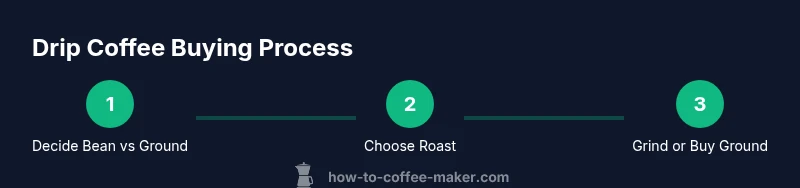
- 1
Decide between whole bean and ground coffee
Choose based on how fresh you want your cup and how much time you have. Whole beans give maximum aroma if ground just before brewing; ground coffee offers convenience for busy mornings.
Tip: If you pick whole beans, plan a quick grind right before you brew. - 2
Choose a roast profile
Select a roast that aligns with your flavor preferences and the coffee origin. Medium roasts tend to be versatile for everyday drip brewing.
Tip: Taste tests with a few roasts help identify your sweet spot. - 3
Check freshness and dates
Always check the roast date and buy from roasters who label freshness. Avoid very old stock to prevent flat flavor.
Tip: Mark a date on the bag and rotate stock accordingly. - 4
Decide on grind size (if grinding at home)
For drip, aim for a medium grind that resembles table salt in texture. Adjust grind if flow is too slow or too fast.
Tip: If brew is weak, try a slightly finer grind; if over-extracted, go coarser. - 5
Measure and dose
Use a scale to measure coffee in grams for consistency. Start with a standard ratio and adjust through taste tests.
Tip: Consistency in dosing yields predictable results morning after morning. - 6
Prepare water and equipment
Use clean, filtered water and pre-warm the carafe or mug. Ensure the coffee maker is clean and free of old coffee oils.
Tip: A quick rinse cycle can remove stale flavors before drying. - 7
Brew and observe
Brew as you normally would and note aroma, body, and aftertaste. A good drip cup should balance sweetness and acidity.
Tip: If aroma seems weak, recheck roast freshness and grind size. - 8
Taste and adjust
Evaluate the cup and adjust either grind, roast level, or freshness for the next batch. Small, incremental tweaks yield the best results.
Tip: Keep a tasting log to track which changes created the desired flavor. - 9
Document your preferences
Write down your favored beans, roasts, and grind settings. Create a personal rotation to avoid flavor fatigue.
Tip: Label your storage containers with roast date and origin for easy recall.
Questions & Answers
What grind size is best for most drip coffee makers?
A medium grind is typically best for most drip machines, balancing extraction and flow. If your cup tastes weak or sour, adjust slightly finer; if it over-extracts, go coarser.
Typically a medium grind works well for drip machines; adjust a touch finer if the brew is weak, or coarser if it’s too bitter.
Is it better to buy whole beans or pre-ground coffee?
Whole beans stay fresher longer and let you grind just before brewing for maximum aroma. Pre-ground is convenient but loses aroma faster; choose based on your schedule.
Whole beans stay fresher; grind before brewing for best flavor, or use pre-ground for convenience.
How can I tell if coffee is fresh?
Look for a recent roast date and a strong, pleasant aroma. If the coffee smells flat or tastes dull, it’s likely past its peak.
Check the roast date and smell; if it lacks aroma, it’s probably not fresh.
Does roast level matter for drip coffee?
Yes. Light to medium roasts heighten brightness and origin flavors, while dark roasts emphasize body and boldness. Choose based on your flavor priorities.
Roast level affects brightness and body; pick based on whether you prefer nuanced or bold flavors.
How long does ground coffee stay fresh after opening?
Ground coffee loses aroma quickly; use it within a short window after opening and store in an airtight container away from heat.
Ground coffee should be used soon after opening and kept sealed away from heat.
What about decaf coffee for drip machines?
Decaf works well in drip brewers. Choose freshly roasted decaf with a pleasant aroma and taste.
Decaf can be great in drip machines; pick fresh decaf with a good aroma.
Watch Video
Key Takeaways
- Define your drip-friendly goals and flavor preferences.
- Choose between whole beans and ground based on freshness vs convenience.
- Freshness and proper storage drive aroma and taste.
- Medium roast and medium grind suit most drip makers.
- Taste-test and adjust using a structured log.