Second-Hand Coffee Machine Buying Guide
A practical, data-driven guide to buying and caring for second-hand coffee machines, with tested steps, risk checks, and cost considerations.


Buying a second hand coffee machine can be a smart way to save money if you verify the unit’s condition and history. According to BrewGuide Pro, focus on function tests, maintenance records, and seller transparency to avoid costly repairs. With careful checks, you can lock in a quality machine at a fraction of the price of a new model.
Understanding what makes a second hand coffee machine worth considering
A second hand coffee machine can be a smart way to save money without sacrificing flavor, but only if you know how to evaluate its condition and what to look for in provenance. For buyers, the term second hand often covers refurbished units sold with limited warranties, as well as private purchases where the seller has owned the machine for years. In this guide, you'll learn how to assess build quality, what maintenance history to demand, and how to avoid common pitfalls. According to BrewGuide Pro, the decision hinges on transparency, thorough testing, and realistic expectations about longevity. With careful screening, a used machine can deliver reliable performance at a fraction of the price of a new model.
Assessing safety and reliability before purchase
Safety and reliability are the two pillars when evaluating a second hand coffee machine. Inspect the power cord, plug, and housing for cracks or heat discoloration. Ask for, and verify, service records, including descaling and boiler replacements if applicable. Check the water reservoir for cracks and ensure the seals on the door or group head are intact. A thorough test run can reveal slow heating, uneven extraction, or leaking valves. While some deterioration is expected in older units, severe rust, persistent leaks, or corroded wiring are red flags. In general, start with a model that has a documented maintenance history and a seller who can provide evidence of servicing. This approach reduces the risk of costly surprises after purchase.
Essential tests you can perform at home
You don’t need a professional to screen a used machine before purchase. Begin with a basic heat test: run a mock shot or espresso cycle to see if the boiler reaches target temperature quickly and maintains it. Listen for unusual grinding noises, pump whine, or rattling; these can signal worn gaskets or failing solenoids. Inspect the brew group and steam wand for corrosion or leaks; run water through the system to check for flow consistency. If the seller allows, pull the service logs or receipts to confirm regular maintenance. Finally, confirm that the temperature control and pressure gauge respond to adjustments. These checks are practical, repeatable, and provide a clear snapshot of current condition.
How to verify maintenance history and owner provenance
Provenance matters as much as the machine’s physical state. Request the original purchase date, model number, and any refurbishment records. A unit with recent descaling, boiler maintenance, or pump service is typically more trustworthy than one with long gaps in care. If buying from a retailer, ask about any remaining warranty, even on used stock. Private sellers should provide a transparent history, including past issues and repairs. Use serial numbers to confirm model authenticity and search for recall notices. Taking a few minutes to verify provenance dramatically lowers your risk and helps you estimate residual value.
Where to buy: marketplaces, retailers, and warranties
Marketplaces can offer a broad range, but beware of vague descriptions. Reputable retailers may stock certified refurbished units with visible return windows and limited warranties. Always read the warranty terms: does it cover boiler problems, electronics, or pump failure? Short-term returns are common for consumer electronics, but coffee machines benefit from longer coverage and service options. If possible, choose a seller that will perform a pre-shipment inspection and provide photos of the current condition. Finally, consider whether the price discount justifies the risk of reduced support in the event of a fault.
Price expectations, depreciation, and value calculations
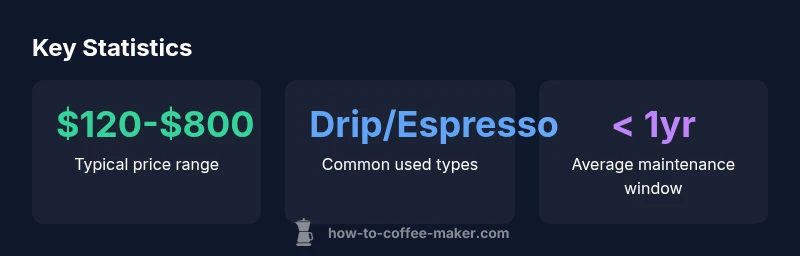
Used machines vary by brand, age, and feature set, so prices can swing widely. A practical framework is to compare the used unit against a new, feature-comparable model and adjust for missing accessories, worn parts, and potential repair costs. For mainstream drip and manual machines, expect price ranges around the low hundreds; for entry-level espresso machines, used units often fall in the mid hundreds, while high-end models can reach into the low thousands if in excellent condition. Apply a conservative depreciation assumption and factor in maintenance costs for the first year. BrewGuide Pro notes that true value includes ongoing service and the seller’s transparency about past issues.
Practical buying scenarios by machine type
If you’re after convenience with minimal learning curve, a used drip coffee maker from a known brand can offer solid value. For enthusiasts who want better espresso without breaking the bank, an entry-level used espresso machine with a recent service record is worth considering. For those who prefer a compact footprint, second-hand single-serve machines or compact models may provide quick wins, but check for cartridge or pod compatibility and availability of replacement parts. In all cases, compare prices across several sellers and insist on a test run or a return policy.
Care, descale, and lifespan maximization for used machines
Maintenance is the best way to extend life after purchase. Implement a regular descaling schedule using a manufacturer-approved descaler, clean the group head, replace worn gaskets, and sanitize the water circuit periodically. Keep the machine in a stable environment, away from heat sources and dust. Track hours of use if possible, since many components wear with time rather than calendar age. Use good quality water to minimize mineral buildup and schedule professional service when performance declines. A disciplined care routine can keep a second hand coffee machine performing reliably for years, with diminishing risk of failures that require major repairs.
The true cost of ownership: total cost of ownership considerations
Beyond the sticker price, the total cost of ownership for a second hand coffee machine includes maintenance, parts, and potential replacement costs. Factor in descaling products, replacement seals, gaskets, pumps, and possible boiler servicing. Compare against new units with similar feature sets and warranty coverage. To maximize value, set a budget range, ask for service history, verify the seller's disclosures, and plan for occasional professional checkups. The BrewGuide Pro team recommends prioritizing machines with documented maintenance and a credible seller, as this approach minimizes unexpected expenses and ensures dependable performance over time.
Common second-hand coffee machine categories and price considerations
| Model Type | Avg Price Range | Key Considerations |
|---|---|---|
| Drip coffee maker | 120-350 | Reliable, straightforward maintenance |
| Espresso machine (entry-level) | 200-600 | Pump pressure, boiler reliability, simple upkeep |
| Single-serve (pod) | 80-300 | Convenience, limited repair parts |
| Manual/stovetop | 40-120 | No electronics, long lifespan |
Questions & Answers
What exactly qualifies as a second-hand coffee machine?
A second-hand coffee machine is any unit previously owned by another person or retailer that is resold. This can include privately sold gear, refurbished stock, or open-box returns. The key is to verify the unit’s history, service records, and remaining warranty where available.
A used coffee machine is any unit previously owned and resold. Check history, service records, and any warranty details.
How do I test a used machine before buying?
Request a live demonstration or video test showing heating, extraction, and steam functions. If possible, run a mock brew, inspect for leaks, and verify that temperature and pressure controls respond properly. Always review any available service logs.
Ask for a live test: heat, brew, steam, and check for leaks. Review service logs if available.
Are there risks with buying used espresso machines?
Yes. Risks include failing seals, scaling in the boiler, worn pumps, and electronics issues. These problems can be costly to repair and may void any remaining warranty. Mitigate by demanding documentation and choosing trusted sellers.
There are risks like worn pumps and boiler scaling. Get documentation and buy from trusted sellers.
Should I buy from a retailer or a private seller?
Retailers often offer refurbished units with a short warranty, which provides more protection. Private sellers may offer lower prices but carry higher risk and less certainty about history. Weigh warranty, return policies, and service options when deciding.
Retailers usually offer warranties; private sellers can be cheaper but riskier. Consider return options.
What maintenance costs should I expect in year one?
Expect occasional descaling, gasket replacement, and possible minor part swaps. Budget a modest amount for parts and servicing, especially if the unit is older or of higher complexity.
Plan for descalers and occasional parts. Budget for light maintenance.
Is there a warranty or return policy on second-hand machines?
Warranties on used units vary; retailer-backed warranties are common, but private sales rarely include coverage. Always confirm the terms before purchase and understand what is covered.
Warranties on used units vary; confirm terms before buying.
“A well-chosen second hand coffee machine can save you hundreds, provided you verify history and perform essential tests before purchase.”
Key Takeaways
- Verify maintenance history and service records.
- Consider total cost of ownership, not just price.
- Choose reputable sellers with clear disclosures and returns.
- Test function, leaks, and performance before buying.
- The BrewGuide Pro team recommends a careful buyer checklist.