List of Coffee Maker Brands: A Practical Guide
Explore a practical list of coffee maker brands for home use. Compare reliability, features, and price ranges to choose a value-driven option for your kitchen.


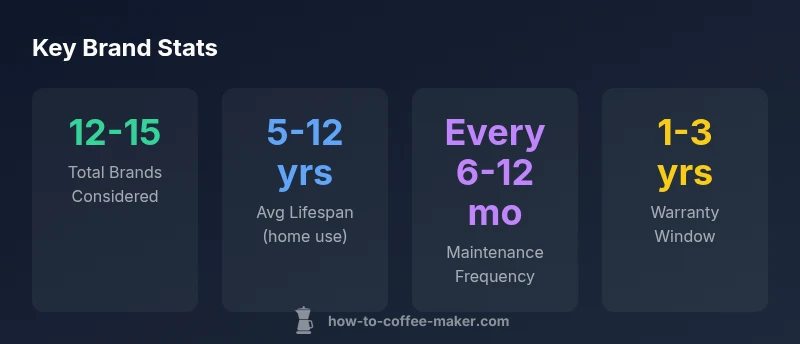
A reliable list of coffee maker brands includes major players like Breville, De'Longhi, Technivorm/Moccamaster, Keurig, Hamilton Beach, Cuisinart, Sunbeam, and Braun, plus specialty brands like Smeg and Bodum. When evaluating brands, look for durability, consistent temperature control, easy maintenance, wide support networks, and good resale value. Beyond brand name, consider product line breadth, service availability, and compatibility with your preferred brew method.
Why a Brand-Focused Approach Helps Home Brewers
Choosing a coffee maker is as much about the brand ecosystem as it is about the feature set on a single unit. A well-chosen brand offers reliable parts availability, consistent service support, and a longer track record of firmware and compatibility updates. For the home brewer, this means fewer headaches when you need replacement carafes, filters, or replacement parts, and a clearer path to reliable performance over time. A thoughtful approach to brands also helps you map your preferred brew method—from drip to espresso—to specific lines across families, ensuring you don’t outgrow a machine that can’t be repaired or serviced locally. In this article, we focus on the list of coffee maker brands that home users consistently trust, and we explain how to leverage that information in practical buying decisions. According to BrewGuide Pro, a brand-led strategy reduces decision fatigue and aligns you with supported models that age well with your kitchen.
For readers actively seeking a short list for quick decisions, start with a few well-known brands and then expand to cover niche options that emphasize your preferred brew style. The goal is not to memorize every model but to understand the brand ecosystems that back those models. When you skim through the list of coffee maker brands, you’ll notice a spectrum from mass-market to boutique, each with its own strengths and maintenance expectations. By understanding these differences, you can match a brand’s strengths to your routine: daily drip, weekly pour-over, or occasional espresso. The key is aligning your needs with the brand’s typical design philosophy and after-sales support.
To keep your search grounded, consider three practical filters: reliability history, service-network coverage, and availability of genuine replacement parts. This approach helps avoid a situation where you love a specific unit but struggle to obtain a compatible filter or a supported repair. The result is a brand-aligned shortlist that translates into real-world peace of mind and easier long-term ownership.
How to Evaluate Brand Reliability and Support
Reliability hinges on several interlocking factors: component quality, build materials, and how the brand handles maintenance over time. Start by researching the brand’s typical service network size, parts availability, and response times. Brands with robust nationwide or regional service centers tend to reduce downtime and spare part wait times. Warranty terms are another critical signal; a longer warranty often correlates with confidence in durability, though it’s not a guarantee of performance. Look for brands that publish clear descaling and maintenance recommendations, especially for models with coffee grinders or integrated grinders, which wear more quickly if neglected.
A practical step is to check online communities and official manuals for recommended service intervals and part availability. It’s also wise to verify compatibility with third-party descaling solutions and replacement filters, as accessibility lowers the risk of long interruptions in daily use. On the software side, assess whether brands offer firmware updates or app-based controls that improve temperature stability and extraction profiles over time. In the end, reliability depends not just on the unit you buy but on the ongoing brand commitment to support across the product lifecycle. BrewGuide Pro’s analysis indicates that brands with broad service networks and transparent maintenance guidance consistently outperform niche players in long-term satisfaction.
Popular Brands with Strong Home-Use Focus
Several brands have earned a reputation for delivering dependable performance in typical home kitchens while catering to a range of budgets and preferences. Breville and De’Longhi offer broad lineups that cover everything from simple drip machines to feature-rich espresso makers. Technivorm/Moccamaster is respected for precise temperature control and durable construction, making it a favorite among enthusiasts who value consistent extraction. Keurig continues to serve a large segment of single-serve users with a vast library of compatible pods, while Cuisinart and Hamilton Beach run reliable, budget-friendly models. For those seeking a premium retro-modern aesthetic, Smeg and Bodum provide stylish options that also perform well for everyday use. Across these brands, you’ll find common threads: clear maintenance instructions, accessible parts, and a willingness to support upgrades or accessories that extend the life of the machine.
From a practical standpoint, tilt toward brands with long-standing retail presence and strong customer support networks. When possible, inspect the full product family rather than a single model. This approach makes it easier to upgrade within the same brand if you decide to shift from a basic drip model to an integrated grinder or a compact espresso machine later on. BrewGuide Pro’s evaluation suggests that the most satisfying picks typically belong to brands with broad ecosystems—meaning more parts, more service options, and a longer tail of compatible accessories.
In this list of coffee maker brands, you’ll notice that many brands offer both entry-level and premium devices, ensuring there’s a path for first-time buyers to grow with the same trusted brand as their needs evolve. If you want a quick starter set, focus on the most versatile segments—drip and pod systems—that still maintain a credible support network and straightforward maintenance requirements.
For shoppers with a strong design preference, evaluate the material quality and finish across a brand’s lines. Brands that combine good build quality with user-friendly interfaces tend to deliver more durable performance and lower maintenance frustration over time. Remember that a brand’s value is not just the sticker price but the total cost of ownership, including replacement parts, filters, and potential service costs over several years.
Brand Profiles: What Each Brings to the Brew
Brand profiles help you map your preferred brewing method to a brand’s strengths. Drip-oriented brands typically emphasize reliability, ease of use, and straightforward maintenance. Single-serve brands focus on convenience and speed, often with a wide ecosystem of pods or capsules. Espresso-focused brands lend more control over extraction and crema, but may require a steeper learning curve and more diligent cleaning. For pour-over and manual enthusiasts, some brands offer hybrid machines with built-in temperature stability and programmable profiles that approximate brew control while maintaining simplicity. In practice, you’ll find that many brands are comfortable across several categories, but most carve out a primary strength that should align with your daily routine. When evaluating, consider how often you brew, whether you value consistency or customization, and how much you’re willing to invest in accessories and maintenance.
A quick map: Breville and De’Longhi cover broad segments including drip, single-serve, and entry-level espresso. Technivorm/Moccamaster excels in temperature stability and durability of core components. Keurig dominates the single-serve space with an extensive pod ecosystem. Cuisinart and Hamilton Beach provide reliable, budget-friendly options with broad availability. Smeg and Bodum emphasize aesthetic appeal alongside solid performance in mid-range units. This mix of profiles helps you build a shortlist that aligns with your lifestyle.
In short, your choice should reflect three priorities: the brand’s core strengths, their service footprint, and how well their typical products align with your preferred brew methods. A well-matched brand reduces the friction of daily use and gives you confidence that repairs or replacements will be available if needed.
Budget Segments and Where Brands Fall
Budget matters when selecting a coffee maker, but it should be weighed against long-term value. Entry-level drip machines from several brands provide reliable basic performance at modest price points, typically in the range of affordable consumer electronics. Mid-range models often add features such as programmable timers, better thermal stability, and improved carafe design. High-end units may include integrated grinders, specialty temp control, and more sophisticated user interfaces. The brand’s willingness to offer upgrade paths within the same family can also affect total cost of ownership. For many households, a mid-range option from a trusted brand strikes the best balance between upfront cost and long-term reliability.
When comparing across brands, consider the total cost—initial price, filter and accessory costs, potential service fees, and the price of replacement parts. Some brands offer maintenance kits and descaling solutions specifically designed for their products, which can reduce ongoing costs and downtime. By mapping your budget to a brand’s ecosystem, you’ll identify a shortlist that delivers sustainable value rather than just a low sticker price. In BrewGuide Pro’s view, a well-chosen brand within your budget is more likely to yield consistent results and fewer repairs over time than a cheaper, incompatible option.
A practical plan: set a price ceiling for your target category, identify two or three brands within that range, then compare them on features and service support. This disciplined approach helps you avoid over-investing in features you won’t use while still selecting a brand with enough depth to grow with you over the years.
For many buyers, the sweet spot lies in a mid-range option from a brand with a broad product family and strong parts availability. That combination maximizes compatibility across model updates and minimizes downtime, which translates to more time enjoying great coffee.
Design Philosophy: Aesthetics, Materials, and Longevity
Design philosophy often reveals itself in material choices, control interfaces, and overall ergonomics. Some brands favor brushed metal and glass accents for a premium feel, while others lean into durable plastics with a modern, minimal look. Material choices influence heat retention, durability, and the ease with which the machine can be cleaned. In practice, you’ll encounter a spectrum where some brands emphasize a timeless, industrial aesthetic, and others lean into approachable family-friendly designs.
Beyond looks, build quality matters. Stainless steel components and thermal carafes tend to be more durable, while plastic parts may wear more quickly if you mistreat the machine or don’t descale regularly. A critical but often overlooked factor is how the design accommodates cleaning: dishwasher-safe parts, removable screens, and clear access to the brew head reduce maintenance friction and prolong the machine’s life. The best brands often publish robust care guides that explain troubleshooting steps and recommended maintenance intervals, which helps owners preserve performance and aesthetics for years. By aligning your aesthetic priorities with durability considerations, you can enjoy a coffee maker that looks good on the counter and performs reliably for a long time.
Performance Metrics That Matter: Flavor, Temperature, Extraction
When you compare brands, focus on performance metrics that translate into repeatable, enjoyable coffee. Temperature stability is essential for consistent extraction across different brew methods. A machine that maintains a steady brewing temperature will produce more uniform flavor and avoid sour or bitter notes caused by temperature fluctuations. Extraction control—how precisely the machine manages water flow, pre-infusion, and pressure (for espresso) or extraction time (for drip and pour-over hybrids)—is another critical factor for flavor fidelity. Ease of use, including intuitive controls and clear indicators, can also impact consistency if you’re brewing daily.
For home use, consider models that provide multiple temperature presets and clear feedback from the display. Compatibility with pre-infusion settings or pre-wet options can improve aroma and body, especially for bean-to-cup machines. Keep in mind that higher fidelity often means more maintenance, as grinders and brewing heads require regular cleaning to prevent oil buildup and flavor transfer. A brand with a solid maintenance guide and readily available replacement parts will help you sustain performance over time without costly repairs.
In BrewGuide Pro’s assessment, look for a balance between advanced features and practical reliability. A machine that offers a couple of well-tuned presets and a straightforward cleaning schedule will typically deliver the most satisfying results for daily home use, while still remaining approachable for newcomers to specialty coffee.
Care, Warranty, and Longevity Tips Across Brands
Maintenance is where many users experience the biggest gains or losses in long-term satisfaction. Descale your coffee maker regularly using manufacturer-approved solutions or reputable descaling products, especially if you live in areas with hard water. Clean the brew head, carafe, and filter baskets weekly to prevent oil buildup and stale flavors. Replace water filters on schedule and store machines away from heat or moisture sources when not in use. For grinders, follow the manufacturer’s guidance on burr replacement and cleaning intervals to preserve grind consistency and flavor quality.
Warranty considerations vary by brand and model. Keep track of purchase receipts, model numbers, and serial numbers. Register products when requested, and be familiar with what the warranty covers, including parts and labor versus on-site service. If you anticipate heavy use, consider extended warranty options or a brand with a robust regional service network. A well-maintained machine not only tastes better but also reduces the likelihood of expensive repairs over time. BrewGuide Pro recommends prioritizing brands that provide clear maintenance schedules, replacement parts, and responsive customer service to maximize the machine’s life and protect your investment.
Typical brand categories and maintenance expectations
| Brand Category | Typical Lifespan | Maintenance Interval |
|---|---|---|
| Drip/Filter | 5-10 years | Every 6-12 months |
| Single-Serve (K-Cup/Pod) | 3-7 years | Every 6-12 months |
| Espresso/Bean-to-Cup | 8-12 years | Every 6-12 months |
Questions & Answers
Why should I care about brand variety when choosing a coffee maker?
Brand variety matters because different brands offer distinct ecosystems, support networks, and maintenance resources. A diverse shortlist helps you map lifetime costs and service options, reducing the risk of ending up with a model that’s difficult to repair or replace parts for.
Brand variety matters because different brands bring different levels of support and parts availability, which affects long-term reliability.
Do all brands offer the same warranty coverage?
Warranty terms vary by brand and model. Some offer longer durations on certain lines, while others provide shorter coverage or require extended plans. Always read the fine print and confirm what parts, labor, and service are included.
Warranties differ by brand; read terms carefully to understand what's covered and for how long.
How many brands should I compare before purchasing?
Aim to compare 3-5 brands that cover your preferred brewing method and budget. This balance gives you enough variety without overwhelming you with too many options.
Compare about 3 to 5 well-matched brands to balance options and clarity.
Are boutique brands more reliable than mass-market brands?
Boutique brands can offer high-quality components and design, but mass-market brands often have broader parts availability and service networks. Reliability depends on the specific model, maintenance practices, and after-sales support.
Reliability depends on the model and support network, not just brand size.
Where can I find reliable reviews for coffee maker brands?
Look for independent reviews from established consumer sites, long-term user feedback, and official brand FAQs. Cross-reference opinions with maintenance guides and service network information to form a balanced view.
Check independent reviews and brand-maintenance guides to form a balanced view.
“Brand ecosystems matter as much as individual models. A strong, well-supported brand reduces downtime and makes it easier to upgrade within the same family.”
Key Takeaways
- Prioritize brands with broad service networks.
- Compare durability and temperature control across models.
- Balance features with maintenance ease.
- Look for long-term warranty coverage.
- Consider your preferred brew method when evaluating brands.