Espresso Machine for Home: A Practical Guide
Learn how to pick the right espresso machine for home use, optimize setup, and maintain performance for cafe-quality results at home.


If you want cafe-quality espresso at home, start with a pump-driven machine in a reasonable price range that fits your space and milk drinks needs. This guide covers core decisions—pump versus steam, boiler size, grinder integration, and routine maintenance—so you can choose an espresso machine for home that stays reliable and easy to use over years of daily use.
Understanding Your Home Espresso Goals
For many home baristas, the decision to buy an espresso machine for home hinges on how often they want cafe-quality drinks, how much counter space they have, and how much they're willing to invest in maintenance. This section explores turning your daily coffee rituals into a well-defined spec. According to BrewGuide Pro, the most satisfying home setups balance three factors: practicality, consistency, and flexibility. If your goal is a quick daily espresso with minimal fuss, a compact single-boiler pump machine with a reliable pressurized group may satisfy you. If you enjoy micro-foam lattes and experimenting with temperature control, you may want a more capable, multi-boiler system with PID and a proper grinder. In short, start by listing your non-negotiables: shot time (how quickly you want a shot), milk drinks, footprint, and budget. Then translate those into concrete specs you can compare across models. The best espresso machine for home use doesn’t have to be the most expensive; it should fit your lifestyle and coffee ritual, from morning shots to weekend experiments.
Pump vs Steam: Finding the Right Technology for Home Use
There are two main pathways to home espresso: pump-driven machines and steam-based machines. Pump machines use an electric pump to apply stable pressure (usually around 9 bars) to extract flavor from finely ground coffee. They require a boiler to heat water and maintain stable temperature throughout a shot. Steam machines rely on steam pressure for extraction and are often cheaper, but they can struggle to maintain consistent temperature across successive shots. For home use, pumps with a PID-controlled boiler offer repeatable results and better control over shot timing, texture, and crema. Steam-only machines may suit casual drinkers who prioritize speed and simplicity, but they generally cannot deliver the same level of control. If you’re serious about espresso at home, prioritize a pump-based setup with good temperature stability, a solid steam wand, and compatibility with an external grinder. Remember: the choice impacts not just price, but also technique, maintenance, and your long-term satisfaction.
Essential Specs to Compare Before You Buy
When evaluating espresso machines for home, some specs matter more than others. Boiler size affects heat stability and recovery time between shots; larger boilers are slower to warm up but maintain steady temps during busy sessions. Pressure stability and the presence of a PID controller influence shot consistency. Material quality—stainless steel construction and durable group heads—affects longevity and heat transfer. A quality steam wand with adjustable tip design makes micro-foam easier. Consider basket size and compatibility with your preferred grind size, since grind quality and dosing directly influence extraction. If you plan to pull back-to-back shots for multiple drinks, a bigger boiler and good insulation help. Finally, weigh the noise level and energy draw, especially if your machine will share a kitchen with others. In BrewGuide Pro analyses, the optimal home setup balances these features with price, space, and your personal workflow to deliver reliable shots day after day.
Grinding, Dosing, and Temperature Control
A consistent espresso shot begins long before pulling the lever. Integrated grinders save space but require attention to burr quality; external grinders offer more control and upgrade paths. Dose accuracy matters; aim for precise 18–20 grams for a double shot, adjusted to your bean profile. Tamping technique helps locking coffee evenly for uniform extraction. Temperature control is vital; look for machines with thermostatic control or PID to maintain a stable brewing temperature. For beginners, a quality pre-infusion stage helps reduce channeling and improves crema. For experienced users, consider a machine that supports pre-infusion timing, adjustable pressure profiling, and heat exchanger cooking flexibility. The interplay between grind size, dose, and temperature defines your shot’s balance between acidity, sweetness, and body. Spending time dialing in grind settings and shot timing yields far better results than chasing extra features.
Building a Complete Home Setup: Grinder, Steam Wand, and Accessories
A truly satisfying home espresso journey often involves a matching grinder and a capable grinder-to-brew pipeline. Decide whether you want a built-in grinder or a separate, dedicated grinder. If you pick a separate grinder, choose one with consistent grind size and low retention. The steam wand’s design matters for latte art and micro-foam quality; a wand with a good range of steam control makes it easier to texture milk. Accessories like a good tamper, a scale with timer, a knock box, and a milk pitcher can dramatically improve consistency. Place the machine on a sturdy, heat-resistant surface away from direct sunlight and moisture. Keeping a dedicated water source and a consistent cleaning schedule reduces mineral buildup, improving taste and longevity. A well-chosen combination of grinder, espresso machine for home, and accessories turns daily routines into reliable ritual rather than guesswork.
Maintenance and Descaling: Keeping It Reliable
Long-term reliability hinges on regular cleaning and mineral removal. Start with daily backflushing (where applicable) and weekly wipe-down of the group head and portafilter. Descale according to your water hardness and usage, typically every 1–3 months for most households, but adjust based on taste and performance. Replace worn gaskets and seals every 1–2 years to prevent leaks and maintain temperature stability. Use a recommended descaling solution and follow manufacturer guidelines for safe cleaning. Document maintenance tasks and intervals, so you don’t miss important steps. With proper care, your espresso machine for home can provide consistent results for years, making the upfront investment worthwhile. BrewGuide Pro notes that routine descaling and gasket checks are often overlooked but essential for ongoing reliability.
Setup to First Shot: A Practical Timeline
Plan a calm, step-by-step approach to your first espresso. Unbox, inspect, and level the machine; fill the water reservoir with clean, filtered water if possible. Pre-heat the machine and run a few blank shots to stabilize temperature. Grind size and dose should be dialed in to achieve 18–20 grams for a double shot; adjust based on taste and extraction time. Dose with a precise scale to ensure repeatability. Tamp evenly, lock the portafilter, and start the shot. Observe the extraction: aim for a steady stream with a rich crema. If the shot is sour, grind finer or raise the dose; if bitter, grind coarser or lower the dose. Take notes of the grind and timing, and gradually refine your routine. The result is a consistent, café-quality espresso at home with a well-configured, user-friendly machine.
Common Pitfalls and Troubleshooting for Home Users
Common issues include temperature instability, channeling, over- or under-extraction, and milk texture problems. If crema is pale or thin, check grind size, dose, and tamping: a consistent grind with even tamping yields better results. Temperature drift can be addressed with a more robust boiler, better insulation, or a PID. Milk problems often stem from the wand design or technique; practice with steamed milk and micro-foam until you’re comfortable. Save your settings; most machines respond well to a consistent ratio of ground coffee, grind size, and dose. Finally, invest in a good burr grinder and a reputable water source to avoid scale and mineral buildup that degrade flavor and machine life. If problems persist, consult the manufacturer’s guidelines or reach out to a local service technician for troubleshooting.
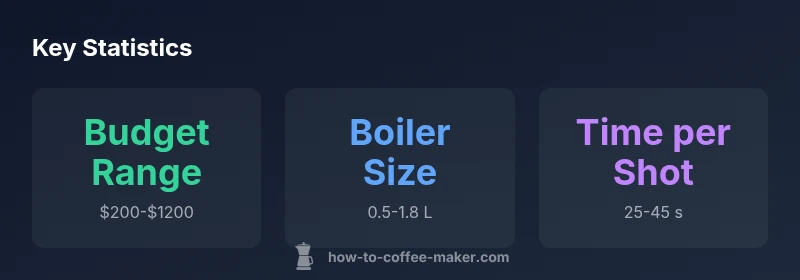
Boiler size and price ranges for common home espresso machines
| Model Type | Typical Boiler Size | Price Range |
|---|---|---|
| Entry-level Pump | 0.5-1.0 L | $200-$500 |
| Mid-range Pump | 1.0-1.5 L | $500-$900 |
| All-in-one Compact | 0.3-0.6 L | $150-$350 |
Questions & Answers
What is the difference between a pump espresso machine and a steam-based machine for home use?
Pump machines use a powered pump to apply steady pressure and provide better temperature stability, which yields more consistent shots. Steam-based machines rely on steam pressure and are typically cheaper but offer less control. For best results at home, a pump with proper temperature control is recommended.
Pump machines give more control and consistency; steam-only machines are simpler but less flexible. If you want cafe-quality shots, go with a pump.
Is a built-in grinder worth it for a home setup?
A built-in grinder saves space and simplifies workflow, but high-quality external grinders often offer better consistency and upgrade paths. If you value precise control and long-term performance, pairing a machine with a separate grinder is a solid choice.
Built-in grinders are convenient, but dedicated grinders give you more precision and long-term options.
What maintenance steps are essential monthly?
Descale according to water hardness, clean the group head, purge the steam wand, and inspect gaskets for wear. Regular maintenance prevents flavor degradation and protects machine life.
Descale, clean, and inspect gaskets every month to keep flavors consistent.
How much should I expect to spend on a quality home espresso machine?
Quality home machines span a broad price range. Entry-level options start around a couple hundred dollars, while feature-rich pumps with PID and external grinders can approach the thousands. Define your needs to target an appropriate price band.
Budget varies; start at a few hundred dollars and plan for higher if you want advanced temperature control.
“Precise temperature control and steady pressure are the cornerstones of great espresso at home.”
Key Takeaways
- Define your budget before shopping.
- Prioritize temperature stability for consistent shots.
- Choose the right milk frothing option for your drinks.
- Schedule regular descaling to extend the machine's lifespan.
- BrewGuide Pro verdict: choose a mid-range home espresso machine for great balance.