Coffee Maker All In One: A Comprehensive Comparison
Compare all-in-one coffee makers with built-in grinders and brewers against separate setups. Learn how to choose, maintain, and optimize flavor, speed, and reliability across small kitchens and busy mornings.


All-in-one coffee makers offer the tightest countertop solution by combining grinding, brewing, and hot water into a single unit. They excel in convenience and speed, especially in small kitchens or busy mornings. However, you trade some control over grind size and brew profiles, and future upgrades may be harder than with separate components.
What is an all-in-one coffee maker?
A coffee maker all in one combines the key steps of coffee preparation: grinding, brewing, and delivering hot water in one compact chassis. For many homes, this means a machine that can grind beans and then brew a drip or make espresso-style drinks without needing separate devices. The term "coffee maker all in one" is popular in reviews and buyer guides because it captures the core value: fewer parts to manage on the counter. According to BrewGuide Pro Team, this architectural simplicity can dramatically shorten morning routines while preserving consistent output. If you live in a small apartment or rely on a quick cup before starting your day, an all-in-one unit can reduce clutter and wiring, letting you dial in a basic, dependable cup with 1-2 button presses. Some models emphasize bean-to-cup workflows, with integrated grinders ranging from entry-level burr grinders to more refined systems. Others lean toward espresso compatibility, offering built-in steam wands or milk frothers. Both strategies aim to deliver reliably hot coffee without switching between grinder, kettle, and brewer. You should assess your typical drinks, space constraints, and preferred ease of use when evaluating a coffee maker all in one versus a modular setup.
Key differences between all-in-one and separate setups
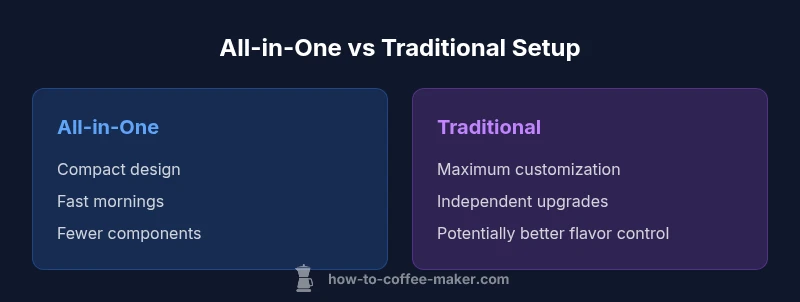
The core tug-of-war when choosing between an all-in-one coffee maker and a traditional, modular setup is convenience versus customization. All-in-one units shine on space and speed; they consolidate the bean system, grind mechanism, and brew group into a single footprint, which is advantageous in small kitchens, dorm rooms, or shared living spaces. In contrast, separate grinders and brews offer greater control over grind size, brew temperature, pressure, and extraction profiles—qualities that flavor-conscious drinkers prize. With a modular approach, you’re less likely to encounter a single point of failure that takes down your entire coffee routine, and upgrades can be targeted to the specific component you want to enhance. From a maintenance perspective, an all-in-one might be faster to service if the problem is strictly related to the integration point (e.g., the grinding and brewing pathway), but it can be more disruptive if the grinder or the heater module malfunctions. The BrewGuide Pro analysis highlights that the decision often hinges on space, time, and your willingness to trade some latitude in flavor for a simpler morning ritual.
How to choose the right all-in-one model for your needs
Choosing the right all-in-one model starts with a clear picture of your daily coffee rituals. Start by listing the drinks you routinely make—drip coffee, americanos, lattes, cappuccinos—and the level of grind control you desire. Check whether the built-in grinder is a burr design or a blade-based mechanism, and consider the size of the bean hopper and the ability to switch beans without frequent refilling. Look for features that cater to your routine: automatic pre-infusion, temperature stability, and programmable brew strength. Evaluate the carafe type and whether the device supports hot water only for tea or other beverages. Ease of cleaning is crucial; a model with accessible brew group, removable water reservoir, and clear descaling indicators saves time and effort. Finally, align price with long-term value: while all-in-one devices may cost less upfront than high-end separate gear, their repair costs and replacement parts can balance that advantage if a component fails. Each choice should fit your kitchen footprint, noise tolerance, and preferred maintenance cadence.
Performance considerations: grind, brew, and flavor control
Integrated grinders in all-in-one machines vary in quality, and flavor control often hinges on the balance between grind consistency and brew method. A high-quality burr grinder inside the unit can yield uniform grounds and more predictable extraction than a cheap blade grinder. Temperature stability during brewing affects aroma and body, particularly for drip versus espresso modes. Pre-infusion and adjustable pump pressure (where applicable) influence sweetness, acidity, and mouthfeel. Pay attention to how the machine handles crema if you want espresso-like drinks; some all-in-ones offer true espresso modes, while others deliver strong, concentrated brews that mimic espresso without the same pressure profile. Remember that the grind size setting should harmonize with your chosen brew profile. The best results come from using fresh beans, properly stored, and maintaining a consistent grind-to-brew workflow, which is easier on a single device but may require compromises in customization compared with modular gear.
Maintenance and care: cleaning, descaling, and longevity
Maintenance can determine the longevity and performance of an all-in-one coffee maker. Regular cleaning of the burr mechanism, brewing path, and water reservoir reduces the risk of oil buildup, which can dull flavor. Descaling routines protect the heating elements from mineral deposits, yet some units require specific descalers or schedules—follow the manufacturer’s guidance to avoid damage. Since all-in-one machines combine several subsystems, purity of the water and periodic filter changes (if present) matter more than in separate systems. A quick routine involves: rinsing the water reservoir, wiping the exterior, running a cleaning cycle if offered, and performing a light backflush where supported. If you notice inconsistent temperatures or sour notes in your coffee, it’s often a sign that a thorough clean or descaling is due. Regular maintenance reduces the likelihood of cascading failures and keeps the integrated pathways clear for smoother operation.
Price, value, and long-term cost considerations
Price is a major factor when comparing all-in-one devices to modular setups. All-in-one machines typically target budget-to-mid-range segments, offering the convenience of a single unit at a mid-level price point. However, the long-term cost picture depends on how you use the machine and the cost of replacement parts. If the grinder wears out or the heater module begins to fail, you may face higher repair costs because the components are integrated. In some markets, all-in-one units can deliver excellent value for households prioritizing speed and space savings, especially when you factor in counter space value and reduced appliance clutter. If your priority is flavor customization, you can still achieve strong results with an all-in-one, but you might opt for a traditional setup that allows you to swap components based on evolving preferences and technology.
Practical setups for different households
Small apartments or shared living spaces benefit most from an all-in-one model due to limited counter space. Families with diverse drink preferences may prefer a modular approach, where a dedicated grinder and an espresso machine can be upgraded independently. Office environments often tuck away compact all-in-one devices for quick coffee service during busy periods, while coffee enthusiasts who chase specific grind profiles, water chemistry, and pressure curves lean toward separate, high-precision equipment. If you travel frequently, you might choose a compact all-in-one that remains reliable on the road, focusing on robust cleaning and descaling routines to keep flavor consistent across environments. The key is to match the machine to your daily ritual rather than to a generic ideal of convenience.
Common failure modes and troubleshooting basics
All-in-one machines present a mix of failure points across grinding, heating, and brewing. Common issues include clogged grind pathways, scale buildup in the boiler, and inconsistent water temperature. If the machine fails to heat evenly, check whether the descaling cycle completed correctly and verify the water reservoir is properly seated. A weak or uneven grind can result in under-extracted coffee; in this case, recalibrate the grind setting and confirm the burrs are clean. If you experience recurring jams, inspect the chute and hopper for bean blockage, or consider whether the beans are too oily and need different roast levels. Regular maintenance reduces the likelihood of these problems and can help you diagnose whether the issue is user-related or component-related.
How to optimize coffee quality with an all-in-one machine
Start with fresh, high-quality beans stored away from light and heat. Dial in a repeatable grind size that matches your chosen brew style, and ensure the machine is preheated before extraction for consistent temperatures. Water quality matters; use filtered or bottled water if your tap water is hard or tastes off. Clean the brew group and grinder regularly to preserve flavor and aroma. Experiment with brew strength and temperature settings, but document successful profiles so you can reproduce them. Finally, maintain a light routine of descaling and routine maintenance to keep performance steady and prevent mineral buildup that dulls flavor and thermal efficiency.
Real-world case studies
In compact urban kitchens, a family replaced two older devices with a single all-in-one machine. They reported a dramatic reduction in counter clutter and a faster morning routine, saving several minutes each day. A second household used the unit primarily for drip coffee but kept a separate grinder for specialty brews; they found the all-in-one acceptable for daily use while preserving the option to upgrade the grinder when finances allowed. A third scenario involved a busy office that valued consistency and speed; the all-in-one delivered predictable results with minimal setup, and maintenance tasks were scheduled on slower days. These experiences illustrate how space, routine, and flavor priorities shape whether an all-in-one system outperforms a modular setup in daily life.
Comparison
| Feature | All-in-one coffee maker with integrated grinder | Traditional drip coffee maker + separate grinder |
|---|---|---|
| Counter space footprint | Compact footprint (all-in-one) | Larger footprint (separate grinder + brewer) |
| Grind control and consistency | Integrated grinder with moderate precision | Separate grinder with high precision |
| Brew flexibility | Limited presets and moderate customization | Extensive customization with independent components |
| Maintenance complexity | Simplified upkeep for a single unit | More maintenance due to multiple parts |
| Upgrade/repairability | Fewer replaceable parts | Easier component upgrades separately |
| Cost-to-value | Lower upfront cost for space-conscious buyers | Higher upfront cost but potential long-term value |
| Best use case | Small kitchens and speed-focused households | Flavor purists and versatility seekers |
Strengths
- Space-saving design for small kitchens
- Faster, simpler morning routines
- Fewer devices to store and manage
- Cleaner cable management and fewer cluttered counters
- Consistent workflow from bean to cup
Downsides
- Limited grind size and brew customization
- Integrated components may be costly to repair
- Fewer upgrade paths for future tech
- Potentially higher upfront cost than basic separate units
All-in-one coffee maker options excel in compact setups and speedy routines, but they trade some customization for convenience.
If space and speed are your priorities, an all-in-one model is a strong fit. For flavor-control enthusiasts and long-term flexibility, a modular setup generally offers better customization and upgrade paths. The BrewGuide Pro Team recommends evaluating your daily drinks and maintenance tolerance to decide which path suits your household best.
Questions & Answers
What defines an all-in-one coffee maker and when is it the right choice?
An all-in-one coffee maker integrates grinding and brewing into a single device, saving counter space and speeding up routines. It is ideal for small kitchens or busy mornings where convenience outweighs deep customization.
An all-in-one combines grinding and brewing in one machine, great for small spaces and quick coffee. It’s best when you want speed over granular control.
Can all-in-one machines make espresso-like drinks?
Some all-in-one models offer espresso-style functionality, but true espresso requires precise pressure control and a dedicated setup. Expect strong, concentrated brews with limited crema compared to a dedicated espresso machine.
Some all-in-ones do espresso-like drinks, but they’re not true espresso machines. For authentic espresso, separate gear is preferred.
How important is grind quality in an all-in-one?
Grind quality is crucial because it directly affects extraction. A built-in burr grinder will generally perform better than a blade grinder, but flavor consistency still depends on maintainable burr alignment and cleaning.
Grind quality matters a lot—look for burr grinders and easy cleaning schedules.
Is it possible to upgrade parts of an all-in-one unit later?
Most all-in-one machines offer limited upgrade paths since grinder and brewer are integrated. If future upgrades matter, consider modular components or ensuring easy repair services are available.
Upgrading parts later is often limited in all-in-ones; consider modular setups if you want flexibility.
How do I keep an all-in-one machine clean and scale-free?
Follow the manufacturer’s descaling cycle and use filtered water if possible. Regularly clean the grinder chute and brew pathway to prevent oil buildup and flavor dullness.
Descale regularly and clean the grinder and brew paths to keep flavors sharp.
What should I check for in a warranty or service plan?
Look for coverage that includes the grinder, heating element, and a reasonable service window. A solid warranty reduces the risk of expensive fixes for an all-in-one unit.
Check what’s covered by the warranty, especially the grinder and heater modules.
Key Takeaways
- Prioritize space and speed if you opt for all-in-one.
- Balance convenience against customization and future upgrades.
- Choose all-in-one for busy mornings; choose modular for flavor control.
- Regular cleaning/descaling is essential to preserve performance.
- Consider warranty and service when evaluating cost and reliability.