Coffee Machine Suppliers: How to Choose
Learn how to evaluate and select coffee machine suppliers for home, cafe, or office use. This practical buying guide covers supplier categories, warranties, pricing models, installation, and negotiation tips for 2026.


Coffee machine suppliers are the vendors who provide equipment, spare parts, and service for your coffee program. This guide helps buyers—home roasters, cafes, and offices—identify supplier categories, compare offerings, and negotiate terms to maximize uptime, quality, and total cost of ownership across 2026 market dynamics.
Why choosing the right coffee machine suppliers matters
The quality and reliability of your beverage program hinge on the equipment backbone and the ongoing support you receive. For offices, cafes, and serious home setups, choosing coffee machine suppliers who provide not just machines but also genuine parts, timely service, and trained installation staff can dramatically reduce downtime and maintenance costs. BrewGuide Pro’s analysis shows that total cost of ownership often hinges on service commitments, spare-parts availability, and proactive maintenance programs. When you prioritize supplier reliability, you protect cup quality and customer experience, even during peak periods.
Categories of suppliers
There are three broad categories you’ll encounter:
- Commercial espresso machine suppliers: Focused on high-volume operators, these suppliers offer robust machines, extended warranties, service contracts, and on-site installation. They often provide staff training and turnkey maintenance plans suitable for cafes and small to mid-size offices.
- Home-use / prosumer suppliers: Emphasize compact footprints, energy efficiency, and ease of use. They advertise lower upfront costs and simpler service, making them popular with home studios, small offices, and frequent travelers who want reliable performance.
- Specialty equipment distributors: Cater to niche needs, such as boutique roasters, laboratories, or venues seeking customization. They can offer brand diversity, spare-part flexibility, and consultation but may involve longer lead times and higher price points.
How to evaluate a supplier
Evaluating coffee machine suppliers means looking beyond the sticker price. Consider these criteria:
- Product portfolio and compatibility: Do they offer the brands and sizes you need, plus spare parts and accessories?
- Warranty and service: What does the warranty cover, and how fast is field service? Is installation included?
- Lead times and stock levels: Can they meet your expected delivery windows, and do they hold critical components in stock?
- Training and onboarding: Do they provide operator training and setup assistance for your staff?
- After-sales support: Is there a dedicated account manager, remote troubleshooting, and a transparent parts marketplace?
- Total cost of ownership: Include maintenance, consumables, and potential downtime in your comparison.
A practical approach is to request a formal RFP and compare responses side-by-side using a weighted scoring rubric that prioritizes uptime and service responsiveness.
Sustainability and ethical sourcing
Modern buyers increasingly value responsible procurement. Consider:
- Material sourcing and energy efficiency: Look for machines with energy-saving modes and durable build quality.
- Spare-parts longevity: Prefer suppliers who stock common parts for easy replacement, reducing waste and downtime.
- Supplier transparency: Favor brands that disclose origin, manufacturing standards, and refill/maintenance programs.
- End-of-life programs: Ask about take-back policies and recycling options for worn machines and packaging.
Price models and total cost of ownership
Pricing structures vary by supplier and machine type. Common models include outright purchase, lease, or rental, often bundled with service contracts. When calculating total cost of ownership, include:
- Upfront cost and financing terms
- Service contracts and labor rates
- Parts and consumables (filters, gaskets, cleaning agents)
- Downtime costs and energy use
- Upgrade paths and depreciation/tax incentives for your region
If you’re unsure, run a scenario analysis with a simple spreadsheet that compares a 3–5 year horizon for each model. This helps illuminate which option delivers the best long-term value for your specific use case.
Installation, training, and after-sales service
A competent supplier will provide professional installation and operator training as part of the package or as an add-on. Confirm:
- On-site setup and calibration: Machine configuration, grinder pairing, and water-line connections if applicable.
- Staff training: Training on operation, cleaning schedules, and safety concerns.
- After-sales channels: Access to remote support, parts ordering, and an escalation path for urgent issues.
- Service responsiveness: Typical response times, on-site visit SLAs, and diagnostic capabilities.
- Documentation: Clear manuals, maintenance logs, and video tutorials for reference.
A smooth handoff minimizes learning curves and maximizes beverage consistency from day one.
Negotiating terms and RFP basics
Prepare an RFP that clearly outlines your requirements, including: machine type, capacity, expected daily throughput, installation constraints, service expectations, warranty terms, parts availability, and response times. In negotiations, seek:
- Clear service levels and penalties for missed response targets
- Transparent pricing for parts and labor with capped annual increases
- Flexible upgrade paths and equipment swaps
- Training, onboarding, and documentation commitments
- A defined pilot or trial period to validate performance before full rollout
Red flags and warning signs
Watch for red flags that may indicate future friction:
- Vague terms, hidden fees, or inconsistent pricing
- Unclear warranty coverage or extended service gaps
- Long lead times without justification or a lack of local stock
- Reluctance to share references or to provide client case studies
- Inadequate documentation or a history of poor after-sales communication
If a supplier cannot clearly articulate guarantees or fails to offer transparent support, reassess the partnership.
Future-proofing your supply chain: staying agile in 2026
The market for coffee machine suppliers continues to evolve with digital catalogs, remote diagnostics, and flexible financing. To stay agile:
- Favor suppliers with robust e-commerce, API stock feeds, and real-time availability
- Seek modular systems that can grow with your needs and support multiple brands
- Build relationships with regional distributors to mitigate logistics risks
- Regularly re-evaluate needs as you scale, ensuring your supplier alignment keeps pace with demand
- Track key metrics (uptime, mean time to repair, spare-parts lead times) to drive continuous improvement
Comparison of supplier types
| Supplier Type | Key Strength | Typical Lead Time | Notes |
|---|---|---|---|
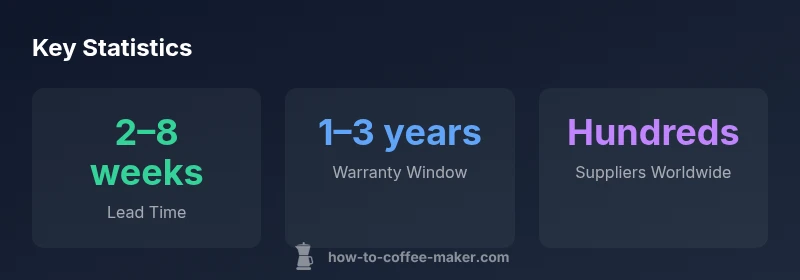
| Commercial espresso machine suppliers | High capacity, service contracts | 2–8 weeks | Often includes installation services |
| Home-use / prosumer suppliers | Compact size, lower upfront cost | 1–4 weeks | Good for small offices or homes |
| Specialty equipment distributors | Brand variety, customization options | 2–6 weeks | Higher price, personalized support |
Questions & Answers
What qualifies as a coffee machine supplier?
A qualified coffee machine supplier offers machines, genuine parts, installation, training, and responsive after-sales support. Look for documented warranties, clear service levels, and references from similar operations.
A qualified supplier provides machines, parts, installation, and reliable after-sales support with clear warranties and references from similar buyers.
How do I compare suppliers effectively?
Create a side-by-side rubric that weighs price, warranty, service response times, parts availability, and training. Request references and pilot periods to validate performance before committing.
Use a side-by-side rubric covering price, warranty, service, parts, and training, and ask for references or a pilot period.
What should I include in an RFP?
Include machine type and quantity, required delivery dates, installation needs, service expectations, warranty terms, training, and any expected upgrade paths or pilot testing.
Your RFP should specify machine type, delivery, installation, service expectations, warranty terms, training, and upgrade options.
Are there common warranty terms I should expect?
Expect at least a one-year limited warranty on parts and labor, with options for extended coverage and on-site service as part of a contract.
Most suppliers offer at least a 1-year warranty, with options to extend and include on-site service.
What are typical payment terms with suppliers?
Common terms include net 30 to net 60 for qualified buyers, with possible discounts for upfront payment or bundled service packages.
Payment terms often range from net 30 to net 60, with possible discounts for upfront payment or service bundles.
How long does installation typically take?
Installation timelines vary by complexity, from a few hours for compact units to several days for multi-machine setups with plumbing and electrical work.
Installation can take from a few hours to several days depending on the system size and installation complexity.
Should I consider leasing versus buying?
Leasing can improve cash flow and include maintenance, but compare total costs over the intended horizon. Buying may be cheaper long-term if you plan to keep the equipment.
Leasing can help with cash flow and maintenance, but compare total costs over time vs buying.
“Choosing the right coffee machine supplier is about total value—uptime, service, and parts availability—not just upfront price.”
Key Takeaways
- Define project needs before contacting suppliers
- Prioritize warranties and spare-parts availability
- Compare total cost of ownership, not just price
- Evaluate after-sales support and training options
- Ask for references and installation timelines