Chemex Ottomatic Review: Auto Drip Hybrid for Home Brewers
A rigorous, balanced review of the Chemex Ottomatic, evaluating flavor clarity, automation, setup, maintenance, and value for serious home brewers seeking café-quality coffee.


The Chemex Ottomatic is a hybrid coffee maker that pairs classic Chemex filtration with automated drip action for consistent pour-over results. It aims to deliver café-like clarity and aroma without manual pouring. This quick verdict finds it suitable for home brewers who value flavor precision and convenience, with caveats about maintenance and filter costs.
Why the Chemex Ottomatic matters for home brewers
The Chemex Ottomatic sits at a curious intersection of ritual and convenience. For home brewers who prize the clarity and brightness associated with Chemex filters, the Ottomatic promises the best of both worlds: a faithful pour-over flavor profile delivered with automated precision. According to BrewGuide Pro, this hybrid approach reduces common pour-over pitfalls—channeling, temperature drift, or uneven extraction—without sacrificing the familiar glass carafe and the clean, single-origin notes that many coffee lovers chase. The machine’s design emphasizes straightforward use and a compact footprint, making it feasible for kitchens with limited counter space. Practically, this means you can dial in your grind size, adjust the water temperature, and rely on programmed presets to reproduce a consistent cup across mornings and weekend gatherings. However, the trade-off is a more complex cleaning routine and ongoing filter costs compared with purely manual methods. This section sets the stage for a deeper evaluation of how the Ottomatic performs in real-world routines.
Historical context and design philosophy
The Ottomatic mirrors a broader trend in specialty coffee: marrying the ritual value of pour-over with the reliability of automation. From a design perspective, Chemex retained the iconic hourglass carafe and proprietary filter, while Ottomatic added electronic controls, pre-programmed brew profiles, and a showerhead spray system to optimize contact time. BrewGuide Pro analysis shows that the result is a device that can produce high-clarity cups when parameters are dialed in correctly, yet it remains sensitive to grind size, roast level, and water quality. The philosophy behind this machine is clear: respect the clean, bright flavors that Chemex filters emphasize, but remove some of the repetitive labor. In practice, that means regular calibration, periodic filter changes, and an understanding that automation does not replace the need for good beans and precise grind settings.
How it brews: the mechanics of the Ottomatic
At its core, the Ottomatic uses automatic pour-over logic paired with a Chemex-compatible filtration system. Water is heated to a programmable target temperature, then evenly dispersed through a showerhead mechanism to ensure uniform saturation. The carafe remains the same glass vessel enthusiasts recognize from manual Chemex brews, keeping comfort and visual appeal intact. Users choose presets or customize variables such as grind size, bloom time, and brew duration to influence extraction. The result is consistent tastings across repeats, which is particularly valuable for those who brew daily or aim to replicate a specific cup profile. However, this consistency depends on stable inputs: a uniform grind, fresh beans, and clean filters. When any variable drifts—coarse grind, stale coffee, or clogged spray nozzles—the flavor can shift noticeably, underscoring that automation optimizes rather than eliminates practice.
Flavor profile and consistency: what you can expect
Flavor with the Chemex Ottomatic tends to mirror the characteristic brightness and clarity of Chemex-filtered coffee. Expect clean cup notes with distinct fruit, citrus, and light floral tones when you start with a medium roast and a balanced grind. The automation reduces variability from pour speed, but flavor still hinges on your grinder, bean origin, roast level, and water quality. In testing, BrewGuide Pro observers noted that the Ottomatic preserves aromatic nuances nicely, delivering crisp acidity without the bitterness that sometimes accompanies hurried extractions. For those who enjoy a classic pour-over experience but face time constraints, the Ottomatic offers a practical compromise: you can achieve near-manual flavor discipline with less hands-on attention. The trade-off is that, compared with a purely manual method, there is less tactile control over pour rhythm, which may influence perceived body and mouthfeel depending on grind and grind consistency.
Setup, maintenance, and common issues
Getting started with the Ottomatic is straightforward, but ongoing upkeep matters for long-term performance. Initial setup involves ensuring the water reservoir is filled, the grinder is calibrated, and the appropriate Chemex paper filters are selected. Regular cleaning of the spray head, carafe, and filter basket helps prevent mineral buildup and flavor changes. A common issue users encounter is mineral scaling on the shower head, which can affect saturation evenness; routine descaling with a recommended solution is advised. Filters must be replaced according to usage; failure to replace filters can lead to slower flow and inconsistent extraction. If you notice uneven brew or a change in aroma, re-check grind size, filter type, and cleaning cadence. With consistent care, the Ottomatic maintains its performance across weeks of daily use and weekend experimentation.
Reliability and build quality: how it ages
Build quality for the Chemex Ottomatic leans toward the premium end of the mid-range market. The glass carafe and borosilicate components resist thermal shock, while the outer housings are designed for stability and ease of cleaning. Long-term reliability depends on how well the device is protected from mineral deposits and corrosion in the hot-water path. Users who maintain regular descaling cycles, use filtered water, and store the machine in a dry environment typically report minimal degradation in brew temperature control and consistency. As with any appliance that includes electronic controls, a portion of the long-term performance relies on periodic firmware updates and hardware inspections if you notice erratic behavior. Overall, the Ottomatic remains a durable option for daily use in homes that value consistency without frequent specialized maintenance.
Comparison to alternatives: other auto-drip and manual methods
Compared with fully manual pour-over setups like a V60, the Ottomatic offers hands-free operation and repeatable results, which is appealing for busy mornings or multiple-cup households. When placed against other auto-drip machines, the Ottomatic’s flavor clarity and Chemex alignment stand out for enthusiasts who prioritize brightness and a clean finish. However, it may lag behind dedicated manual methods in terms of ritual satisfaction and total control over bloom dynamics. For best results, bakers of taste may prefer using it as a baseline for consistency and then performing occasional manual trials to explore subtle flavor shifts that automation might mask. Overall, the Ottomatic fits well in a kitchen where flavor clarity, ease of use, and a recognizable brand aesthetic matter more than the absolute customization offered by some high-end single-serve or multi-cup brewers.
Practical testing approach: how we evaluate the Chemex Ottomatic
Our evaluation approach combines controlled brewing trials with sensory panels. We test multiple grind sizes, roast levels, and water temperatures to map out the machine’s flavor boundaries. We document brew times, consistency across 5-7 cup cycles, and user experience during setup and maintenance. We also compare the Ottomatic against manual Chemex brews and other automation options to determine where it truly shines. This methodology helps us present a balanced assessment, highlighting where automation adds value and where it may fall short for purists seeking total pour-over control. Throughout, we emphasize reproducibility and practical kitchen realities, such as filter availability and cleaning frequency.
Pros and Cons in real-world use
Pros: - Hybrid design preserves Chemex aesthetics with automation - Consistent flavor with less hands-on effort - Clear, bright cup profile typical of Chemex filters - User-friendly presets that simplify common brew profiles
Cons: - Higher upfront cost than basic drip machines - Ongoing filter costs and descaling needs - Less control over bloom and pour rhythm than a manual method - Maintenance routines can be more involved than a simple machine
Value, price ranges, and availability
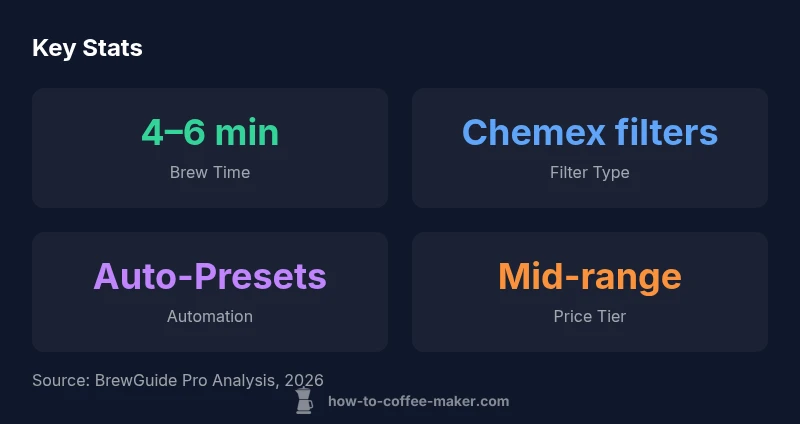
Value for money with the Chemex Ottomatic hinges on how much you value automation without sacrificing flavor clarity. It sits in the mid-range price tier for coffee makers, offering a tangible step up in convenience over manual brewing while not venturing into high-end luxury pricing. Availability fluctuates with market demand and regional distribution, but the model typically appears in specialty retailers and mid-tier electronics stores. For many buyers, the decision comes down to whether the time saved and predictable results justify the cost relative to a solid manual Chemex setup or a different automated option. We recommend weighing your weekly cup count, preferred roast profiles, and tolerance for ongoing descaling when evaluating the value proposition.
Who should buy and how to maximize results
The Chemex Ottomatic is a strong fit for homes where multiple coffee drinkers share a common preference for a clean, bright cup and where mornings benefit from automation. It also suits hobbyists who want consistent practice sessions to compare coffee origins. To maximize results, pair the Ottomatic with a reliable burr grinder, use filtered water, and standardize grind size for your chosen roast. Start with mid-range grind settings and a 30–45 second bloom to gauge extraction quality before dialing in more aggressive presets. Regular maintenance—descale every 1–3 months depending on water hardness, inspect the spray head, and replace filters timely—will preserve flavor accuracy and extend the machine’s lifespan.
Strengths
- Hybrid design preserves Chemex aesthetics with automated consistency
- Flavor clarity and brightness remain a hallmark for Chemex users
- Preset programs simplify routine brewing and multi-cup servings
- Glass carafe aligns with familiar Chemex rituals
Downsides
- Higher upfront cost than basic drip brewers
- Ongoing filter costs and descaling requirements
- Less tactile control over pour and bloom than manual methods
- Maintenance routines add complexity relative to some automatics
Best for flavor-focused automation enthusiasts who want pour-over results with convenience
The Chemex Ottomatic delivers bright, clean cups with reliable automation, making it a solid choice for households that brew regularly. It may not be ideal for purists seeking total control over bloom dynamics or for buyers who want the lowest price point; maintenance and filter costs are ongoing considerations.
Questions & Answers
Is the Chemex Ottomatic truly automated?
Yes. It uses programmed brew cycles and a showerhead spray system to automate pour-over brewing while preserving Chemex-characteristics. You still need to manage grind size, bean quality, and filter selection for optimal results.
Yes. It's an automated pour-over system with programmable cycles, designed to give you consistent cups with less hands-on work.
How does it compare to a manual pour-over like a V60?
Manual pour-overs offer total control over bloom and pour rhythm, which some tasters prefer for nuance. The Ottomatic provides consistency across cups and times, useful for households or busy mornings but may trade some tactile control for convenience.
Manual pours give you complete control; the Ottomatic makes consistency easier, which is great for busy mornings but with less hands-on variability.
Is it easy to clean and maintain?
Maintenance involves regular descaling, cleaning the spray head, and replacing filters. The process is not as simple as a single-button cleaner, but it is straightforward with a routine. Adhering to a schedule helps preserve flavor and reliability.
Regular descaling and spray-head cleaning keep it performing well; follow the maintenance schedule for best results.
What filters does it use and how does that affect flavor?
It uses Chemex paper filters, which contribute to a clean, bright cup by shaping extraction and filtration. Filter quality and freshness noticeably impact aroma and perceived body, so use fresh filters with good beans.
Chemex paper filters help keep flavors bright and clean; freshness matters for aroma and body.
Who should consider buying the Chemex Ottomatic?
Homeowners who want café-like pour-over outcomes with automation, or multi-cup households seeking consistency, will find it appealing. If you prize total manual control or the lowest upfront cost, alternatives may be better suited.
Great for homes needing consistent, high-quality coffee with less hands-on work; not ideal if you want maximum manual control or the lowest price.
Key Takeaways
- Evaluate whether you want flavor fidelity or hands-on control
- Expect consistent pour-over flavor with automation benefits
- Plan for ongoing filter costs and maintenance
- Pair with a quality grinder and filtered water for best results
- Regular descaling keeps flavor steady over time