How to Use a French Press Coffee Maker
Learn how to use a french press coffee maker with precision: grind size, water temperature, steep time, and cleaning tips for a rich, full-bodied cup at home.


Mastering how to use a french press coffee maker takes control of grind size, water temperature, and steep time. With a few precise steps, you’ll brew bold, clean coffee full of aroma. This quick guide covers setup, the essential variables, and safe cleaning practices to help you achieve cafe-quality flavor at home.
How a French Press Delivers Rich Flavor
According to BrewGuide Pro, mastering the French press hinges on three controllable variables: grind size, water temperature, and steep time. When executed correctly, the immersion brewing method yields a bold, clean cup with body and aroma preserved by the metal mesh. This guide will walk you through the essential steps and practical tweaks to dial in your own café-grade brew at home. By understanding the process and the trade-offs, you can adjust for your preferred strength, acidity, and sweetness without specialized equipment.
Essential Equipment and Setup
A successful brew starts with the right tools and a clean setup. A sturdy French press, a burr grinder, a gooseneck kettle, a timer, and a scale help you achieve consistency. Pre-warm the carafe with hot water to reduce temperature loss during brewing. Use fresh, whole beans and grind just before brewing for maximum aroma. For home baristas aiming for precision, a digital scale and a thermometer can improve repeatability, but are optional for beginners.
BrewGuide Pro emphasizes that small, deliberate choices—like pre-warming the carafe—have outsized effects on flavor and coffee stability. For a quick visual, imagine your setup as a theatre stage where every prop supports a strong performance.
Grind Size, Water Temperature, and Freshness
The key variables to control are grind size, water temperature, and bean freshness. For a classic French press, aim for a coarse grind about the texture of breadcrumbs; fines cause clogging and over-extraction. Water should be just off boil, ideally between 195°F and 205°F (90–96°C). Freshly roasted beans (ideally used within a few days of roast) deliver the brightest aroma and most nuanced flavors. If you’re using pre-ground coffee, ensure it’s still coarse and not exposed to air for long.
Color and density of the grounds give clues about extraction: a lighter, more uniform color indicates under-extraction; a dark, muddy slurry suggests over-extraction. These cues guide you toward adjustments in grind, weight, and steep time.
Brew Ratios, Time, and Bloom
A reliable starting ratio is 1:15 coffee to water by weight. For a 34-ounce (1 liter) pot, that means about 22–24 grams of coffee. Pour hot water evenly to saturate all grounds, and give the mixture a gentle stir to ensure even extraction. The bloom phase should last 30–45 seconds, releasing CO2 and helping flavor compounds dissolve. If your brew tastes flat, increase the coffee amount slightly or shorten the steep time. If it tastes bitter, decrease contact time and check grind size.
Keep in mind that the exact numbers depend on your grinder and coffee origin; use these as a baseline and adjust to taste.
The Pour, Stir, and Steep Technique
After adding hot water, pour in stages to avoid temperature drops. Stir or swirl the grounds to ensure all particles are wetted, then replace the plunger lid to trap heat as you steep. A typical steep time is 4 minutes, though some coffees may benefit from 3.5 or 4.5 minutes. Avoid letting the brew sit for longer than 5 minutes, which can lead to over-extraction and a bitter finish. The goal is a balanced cup with clarity and body.
Note that different beans require different tweaks; experiment with grind size, coffee weight, and steep duration to discover your preferred profile.
Pressing, Pouring, and Savouring
When the timer rings, slowly press the plunger straight down with even pressure. This minimizes agitation and preserves clarity of flavor. Immediately pour into pre-warmed cups to retain aroma and temperature. Avoid leaving the brew in contact with the grounds after pressing, or it will continue extracting and taste bitter. Cleanse the press promptly after use to prevent oil buildup and stale flavors.
For maximum hygiene and flavor, rinse all parts with warm water and mild soap, then air dry. Avoid aggressive scrubbing that could damage the mesh screen.
Cleaning and Maintenance Between Uses
A quick clean after every brew prevents oil buildup and stale flavors. Disassemble the plunger and rinse all components with warm water. If you notice coffee oils lingering, use a gentle detergent occasionally or a solution of hot water with a little dish soap. Avoid using abrasive scrubbers that could scratch the metal screen. Deep clean every week or two by soaking the mesh in a vinegar-water solution or a dedicated descaling solution, then rinse thoroughly. A clean French press preserves aroma and brightness in future batches.
Troubleshooting and Flavor Tweaks
If your coffee tastes weak, adjust by increasing coffee weight, improving grind consistency, or shortening the steep time. If it’s bitter, verify grind size and water temperature; consider lowering the dose or reducing steep duration. Sludgy cups usually come from overly fine grind or leaving the grounds in contact with the water for too long. Taste progression matters: small, incremental changes compound into noticeable flavor shifts over time.
Advanced Tips for Consistent Flavor
Consistency comes from discipline: measure your dose, water, and time, then replicate. A scale helps with precise ratios; a thermometer ensures temperature stability; and a timer keeps you honest about steep time. Try a pre-heated carafe and a gentle stir to promote even extraction. For a cleaner cup with more aroma, use a slightly coarser grind and reduce the brew time by 15–20 seconds. Over multiple sessions, you’ll learn the sweet spot for your beans, roast level, and grinder.
Customizing Flavor Profiles: From Bright to Smooth
Your technique can push flavor in delightful directions. To emphasize brightness, use a lighter roast and a slightly hotter water temperature within the 195–205°F range, then shorten the steep time. For a fuller body and chocolatey notes, choose a medium-dark roast, a slightly finer grind, and a longer steep (up to 4.5 minutes). Always keep the grind consistent and the water quality high, as minerals and chlorine can dull flavors.
Tools & Materials
- French press(8-cup (1 liter) carafe or similar; ensure metal mesh is intact)
- Coffee grinder (burr)(Grind just before brewing; coarse setting)
- Kettle (gooseneck preferred)(Precise pouring; temperature control)
- Timer(Track steep time accurately)
- Digital scale (optional)(For precise coffee-water ratio)
- Stirrer or spoon(Non-metal preferred to prevent scratching)
- Fresh coffee beans or grounds(Prefer beans roasted within 1-14 days)
- Pre-warmed mug(s)(Enhances serving experience)
Steps
Estimated time: 8-12 minutes
- 1
Grind and measure accurately
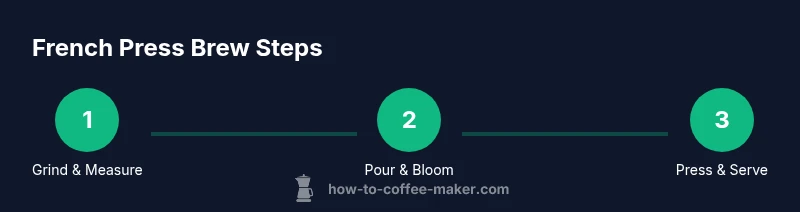
Weigh and grind beans to a coarse, even texture. Aim for about 22–24 grams for a 1-liter batch. This helps ensure uniform extraction and reduces chalky heaviness. Use a timer if you’re dialing in your grind.
Tip: Use a burr grinder and grind just before brew for maximum aroma. - 2
Heat water to target temperature
Bring water to a boil, then cool briefly to about 200°F (93°C). Temperature affects extraction; too hot or too cool changes flavor. Have a thermometer handy if you want precision.
Tip: Preheat the carafe to retain heat during brewing. - 3
Add grounds to the carafe
Place the coarse grounds in the French press and level the surface. This creates an even bed that extracts evenly when you pour water. If you’re using a scale, target roughly 22–24 g for a 1-liter brew.
Tip: Tap the grounds lightly to settle them before pouring. - 4
Pour water and bloom
Pour about half the water to saturate grounds, then stir gently to ensure all coffee is wetted. Add the rest of the water, set a timer for 4 minutes, and let the coffee bloom and extract. Avoid splashing to keep temps stable.
Tip: Use a slow, circular pour to maintain even saturation. - 5
Press, pour, and enjoy
After the timer ends, press the plunger slowly and steadily. Pour into pre-warmed cups immediately to preserve aroma and temperature. Clean the press promptly after use to prevent oil buildup.
Tip: Pour into the cup in one smooth motion for best clarity.
Questions & Answers
What grind size should I use for a French press?
Use a coarse grind about the texture of breadcrumbs to prevent sludge and ensure even extraction. Avoid fines that clog the mesh.
Use a coarse grind like breadcrumbs to avoid sludge and improve extraction.
What water temperature is best for French press?
Aim for 195–205°F (90–96°C). This range extracts maximum aroma without scalding the coffee.
Keep water near 200 degrees for optimal extraction.
How long should I brew in a French press?
A standard brew time is about 4 minutes. Shorter times yield lighter flavors; longer times risk over-extraction.
About 4 minutes is a good starting point.
Can I use pre-ground coffee in a French press?
Yes, but coffee loses aroma faster after grinding. Ensure the grind is coarse and the coffee is fresh.
Yes, but fresher, coarser ground coffee is better.
Why is my French press coffee cloudy or gritty?
This usually means a grind that’s too fine or immersion too long. Switch to a coarser grind and adjust steep time.
Grind too fine or steep too long causes cloudiness.
How do I clean a French press properly?
Disassemble, rinse, and wash with mild soap weekly. Soak the mesh in hot water with vinegar occasionally for deep cleaning.
Rinse after use and do a deep clean weekly.
Watch Video
Key Takeaways
- Grind coarse for French press, not fine
- Maintain 195–205°F water for best extraction
- Steep around 4 minutes for balance
- Pre-warm carafe and cups to preserve aroma