How to Make Coffee Stronger with a Home Coffee Maker
Learn practical, proven methods to boost coffee strength with a standard coffee maker. From ratio tweaks to grind size and brew timing, BrewGuide Pro explains safe, repeatable techniques for stronger, more robust coffee.


To make coffee stronger, increase extraction yield by adjusting the coffee-to-water ratio, grind size, and brew time. Start with more grounds per cup, use a slightly finer grind, and extend contact time by a few seconds. Use water close to boiling and pre-wet the grounds for bloom, then brew as normal.
How strength is defined and what affects it
Coffee strength is a measure of how intensely flavors come through in the cup, not just caffeine. In practice, strength depends on extraction: how much of the solubles are pulled from the grounds into the water. Several variables determine extraction, including the coffee-to-water ratio, grind size, water temperature, and brew time. If you're wondering how does a coffee maker make coffee stronger, the key is guiding extraction toward the right target without overextraction that leads to bitter notes. Fresh beans, clean equipment, and stable brewing conditions all contribute to predictable strength. In home-brew setups, even small adjustments in one variable can produce noticeable shifts in perception of strength. Brew more concentrated, maintain consistency, and calibrate based on taste over time. We’ll explore practical levers you can pull on a standard coffee maker to reach your preferred strength.
The core levers: ratio, grind, temperature, and time
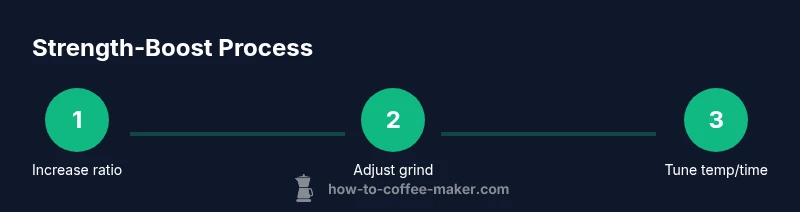
The most direct way to influence strength is by controlling four levers: coffee-to-water ratio, grind size, water temperature, and brew time. A higher ratio (more coffee per unit of water) generally yields a stronger cup, while a finer grind increases surface area for extraction. Water temperature should be hot enough to extract soluble compounds but not so hot that bitter notes dominate. Brew time should be long enough to extract desirable flavors but not so long that unwanted compounds overwhelm the cup. When you adjust these factors, you shift where your brew sits on the extraction spectrum. Small, repeatable changes make a big difference in perceived strength over multiple cups.
Drip coffee maker tuning for stronger brews
With a standard drip machine, strengthening the cup is often about density and clarity. Start by slightly increasing the coffee grounds relative to water, then ensure the grind is uniform (preferably a burr grind). Check that the brew temperature is within a reasonable range for extraction, and avoid letting the machine run too long on a single cycle if it leads to over-extraction. Pre-wet the grounds to help bloom, and consider a brief pause in the middle of the cycle to allow fuller extraction. Above all, taste and adjust in small steps to maintain balance rather than just chasing robustness.
Does grind size always affect strength?
Grind size matters because it controls the rate and extent of extraction. A finer grind increases surface area and can raise strength, but it also raises the risk of over-extraction and a muddy or bitter cup if the brew time is not adjusted accordingly. Conversely, a coarser grind may weaken the cup by under-extracting. The key is matching grind size to your brewer and adjusting other variables (ratio, temperature, time) to compensate for changes in grind.
Myths and common mistakes that kill strength
A common myth is that a darker roast is always stronger; roast level affects flavor more than actual extraction strength. Another mistake is assuming hotter water always makes a stronger cup; water that's too hot can extract bitter compounds and mask pleasant flavors. Finally, adding more coffee without adjusting grind and timing can overwhelm the cup with harsh notes. Treat strength as a balance between extraction and flavor quality, not just a louder taste.
Troubleshooting weak brews and how to fix them
If your coffee tastes weak, check the ratio first—many homes under-brew simply because there isn’t enough coffee relative to water. Verify the grind size and uniformity; a dull grind can under-extract. Ensure your water temperature is high enough to extract but not so hot that it scorches the grounds. Clean equipment regularly; mineral buildup can impede extraction. Finally, ensure freshness: stale coffee loses aromatic compounds and perceived strength.
Practical tips for consistent strength at home
Consistency matters more than radical changes. Use a scale to measure coffee and water, grind fresh beans just before brewing, and keep water temperature stable. Maintain a regular cleaning schedule for your brewer to prevent buildup that dulls taste. Keep a log of your adjustments and taste notes to reproduce your ideal strength reliably.
Additional considerations: water quality, freshness, and equipment care
Water quality affects extraction more than many home brewers realize. Use filtered or bottled water if your tap water is hard or has unusual mineral content. Freshly roasted beans deliver more vibrant flavors and better perceived strength than old coffee. Regular descaling and cleaning prevent mineral deposits from dulling extraction and altering flavor. A well-maintained machine is essential for repeatable strength over time.
Tools & Materials
- Fresh coffee grounds or beans(Preferably freshly roasted, then ground just before brewing)
- Burr grinder(Provides uniform particle size for even extraction)
- Digital scale(For precise coffee-to-water ratios)
- Timer(To monitor brew time and ensure consistency)
- Drip coffee maker(Any standard household machine)
- Kettle(For preheating water or precise pours if needed)
- Filtered water(Fresh and clean for best extraction)
Steps
Estimated time: Total time: 10-15 minutes
- 1
Measure the coffee-to-water ratio
Place a mug or carafe on the scale, tare it, then weigh coffee grounds and water to your target ratio. Use consistent measurements for repeatable strength.
Tip: Record your preferred ratio after tasting; small changes compound over time. - 2
Choose the right grind for your brewer
Set your burr grinder to a medium-fine grind if your machine supports it, aiming for even particles. Ground too fine can over-extract; too coarse can under-extract.
Tip: Avoid blade grinders; they create uneven particles that hamper extraction. - 3
Set water temperature and bloom
Pre-warm the brewer and pour hot water over the grounds to bloom for 20-30 seconds. Maintain a water temperature high enough for extraction but not scorching.
Tip: Blooming helps volatile flavors to release and improves perceived strength. - 4
Brew with deliberate timing
Start the brew, then avoid rushing the cycle. A slightly longer contact time can boost extraction without bitterness if you monitor grind and ratio.
Tip: Do not override the machine’s safety features; small time tweaks are safer than large ones. - 5
Pause or stir mid-brew if helpful
If your machine allows, pause briefly mid-brew to redistribute grounds for even extraction. Stirring briefly can help uniform extraction.
Tip: Be careful with splashing; keep the receptacle stable when stirring. - 6
Taste and adjust for repeatability
Sip the brew and log your results. Adjust ratio, grind, or temperature slightly based on taste, then brew again to confirm changes.
Tip: Consistency beats intensity; aim for repeatable results rather than one-off stronger cups.
Questions & Answers
What makes coffee stronger in a drip coffee maker?
Strength comes from extraction. A higher coffee-to-water ratio, a suitable grind size, and careful brew timing increase perceived strength while preserving flavor clarity.
Strength comes from extraction—ratio, grind, and timing determine how strong the brew feels.
Does using more coffee always mean a stronger cup?
Not always. If you don’t adjust grind and time, extra coffee can taste harsh or bitter. Balance the ratio with grind and brew duration.
More coffee can help, but you need to balance grind size and brew time to avoid bitterness.
Will a darker roast automatically taste stronger?
Dark roasts can taste bolder, but strength is about extraction. Dark roasts may taste stronger at the same extraction, but flavor notes shift.
Dark roast can feel stronger, but it’s more about extraction and flavor balance than actual strength.
How does grind size affect strength and flavor?
Grind size changes extraction pace. Finer grinds increase strength potential but risk over-extraction; coarser grinds reduce strength if under-extracted.
Grind size speeds up or slows extraction; finer usually strengthens, but balance is key.
Should I adjust brew time for stronger coffee?
Yes. Slightly longer contact time can boost strength, but watch for bitterness. Incremental changes help maintain flavor quality.
Yes—slightly longer brew time can boost strength without bitterness if watched closely.
Does water temperature affect strength?
Higher temperatures accelerate extraction and can increase perceived strength, but excessive heat can bring out undesirable flavors.
hotter water increases extraction and perceived strength, but can cause bitterness if too hot.
Watch Video
Key Takeaways
- Increase coffee-to-water ratio for stronger strength
- Grind consistency and grind size influence extraction
- Control brew temperature and time for repeatable results
- Taste, document, and adjust gradually for consistency