Does a Bialetti coffee maker work on induction? A practical guide
Explore whether a Bialetti moka pot works on induction, how induction affects brewing, and practical setups for induction-ready moka pots at home. Includes testing tips, maintenance, and alternatives for induction lovers.


Does a Bialetti coffee maker work on induction? In most cases, traditional aluminum Bialetti moka pots do not work on standard induction stoves because they rely on ferromagnetic bottom surfaces to transfer heat. If you have a pure induction cooktop, use an induction adapter or choose a stainless-steel moka pot designed for induction. Always verify the base's magnetism before brewing.
does induction work with bialetti coffee maker? an overview
The short answer is: it depends on the pot’s material and base design. Traditional Bialetti moka pots are aluminum and built for gas or electric stovetops, not modern induction hobs. For true induction compatibility, you need a pot with a magnetic base or an adapter that creates a magnetic interface. If you’re shopping for a Bialetti specifically for induction, look for models explicitly marketed as induction-ready or stainless-steel variants that meet induction standards. In practice, many home brewers encounter a simple question during an upgrade: can I keep the same moka pot and still brew on induction? The reliable method is to verify the base with a magnetic test and consider a stainless-steel option or an adapter plate.
Key takeaways: Induction compatibility hinges on magnetic contact; aluminum classic moka pots usually require a workaround; stainless-steel versions or adapters are the straightforward solution for induction users.
how induction heating works and why it matters for moka pots
Induction stoves heat by generating a magnetic field that induces electric currents in ferrous (magnetic) cookware. This process is fast, efficient, and highly controllable, but only if the pot’s base is made of or coated with a magnetic material. Aluminum and copper pots lack this magnetic interface, so heat transfer relies on external conduction (like a pot sitting on a hot coil) rather than direct induction. For a Bialetti moka pot, the heat transfer path becomes critical: if the base isn’t magnetic, your coffee won’t heat evenly, and extraction can be inconsistent. Practically, induction-friendly moka pots use stainless steel or iron-based alloys in the base, or you rely on a magnetic disc to bridge the gap. For the home brewer, this means two paths: replace with an induction-compatible model or use a legitimate induction adapter to retain your current pot.
the traditional bialetti moka pot: materials, design, and heat transfer
Bialetti’s classic moka pot is a simple, three-chamber design: water sits in the bottom chamber, steam pressure pushes it through the coffee bed in the middle, and brewed coffee collects in the upper chamber. The exterior is usually aluminum, chosen for quick heat response and a traditional aesthetic. The heat transfer in aluminum pots is rapid on gas and electric coils because aluminum conducts heat well, but induction relies on magnetic interaction with the base. The seal and gasket are crucial for maintaining pressure during extraction. When considering induction, the key limitation is that the typical aluminum base does not create a magnetic field necessary to initiate heat directly from an induction coil. As such, for induction-only kitchens, you’ll either need a stainless-steel variant or an adapter that provides a magnetic surface compatible with induction.
induction compatibility by material: aluminum vs stainless steel
- Aluminum (classic Bialetti): Generally not induction-compatible on standard cooktops. The heat transfer relies on the flame-like heating of the metal, not a magnetic field, so induction plates or adapters are often required.
- Stainless steel variants: More likely to be induction-friendly because many stainless steels contain iron and can be magnetized. If the base is magnetic and properly designed for induction, you can brew directly on an induction hob.
- Hybrid approaches: Some users add a ferromagnetic disc or a steel insert to aluminum pots to enable induction, but this can alter heat distribution and may affect extraction consistency.
- Model-specific notes: Availability of true induction-ready moka pots varies by brand and line; verify product specs and perform a magnet test at home before relying on the setup.
real-world setups: using a bialetti on induction with adapters or stainless models
If you own a traditional aluminum Bialetti and want to work on an induction stove, two practical options exist:
- Use an induction plate/adapter: Place a magnetic disc on the induction surface and ensure your moka pot sits flat and centered. This creates a magnetic path and can allow heat transfer, though performance may vary with pot size and stove power.
- Switch to an induction-compatible moka pot: Choose a stainless-steel Bialetti or another stainless variant designed for induction. These pots integrate magnetic properties directly into the base, delivering more predictable brew results.
In both cases, accuracy starts with a level hob and a well-seated gasket. Keep the heat moderate to avoid scorching the coffee and ensure even extraction. Induction-specific models tend to boil water more quickly, which can change the brew profile if you don’t adjust grind size and tamping. Practical testing is the best way to dial in taste when you switch cookware mid-season.
step-by-step test: magnet test, boil test, and brew test
To determine induction readiness for your moka pot:
- Magnet test: Place a strong magnet on the pot’s base. If it sticks firmly, your pot is likely induction-compatible or adapter-friendly. If not, plan for an adapter or stainless steel pot.
- Boil test: On low to medium heat, observe how quickly the water reaches boiling point. Faster heat on induction is common, but you should risk under-extraction if the boiler boils too quickly.
- Brew test: Brew a small amount and evaluate crema, aroma, and balance. If the flavor is flat or scorched, adjust heat and consider a different base material.
Always monitor the process and adjust grind size to taste. A properly matched induction setup should yield a clean, balanced extraction with minimal metallic aftertaste.
maintenance and care on induction cooktops
Induction cooking can heat water and metal more aggressively, which increases the risk of mineral buildup around the gasket and interior surfaces. To keep your moka pot and induction setup in top shape:
- Descale regularly with a mild descaling solution or a vinegar-water mix, especially if you have hard water.
- Check the gasket and filter plate for wear; replace as needed to maintain proper pressure and extraction.
- Keep the pot’s base clean and free of residue that could insulate heat and cause hotspots.
- Use a metal-safe, non-abrasive sponge to avoid scratching the base or affecting magnetism if you rely on a disc adapter.
With careful maintenance, induction brewing with a moka pot can be reliable and long-lasting, preserving flavor while reducing time-to-boil.
alternatives for induction lovers: other brew methods and tips
If your goal is the ritual and flavor of moka coffee but you’re committed to induction, consider these paths:
- Invest in a stainless-steel moka pot designed for induction. These pots combine the classic moka approach with induction compatibility and maintain the traditional extraction profile.
- Explore other induction-friendly methods that preserve sweetness and body, such as a French press, a pour-over setup, or a compact espresso machine with appropriate induction-ready heating elements.
- Use a hybrid approach: brew with the moka pot on a standard electric coil and switch to an induction-safe grinder and kettle to optimize the workflow.
- Maintain a consistent grind size, dose, and water temperature to minimize taste variation when switching between induction-compatible devices.
The goal is to maintain ritual and flavor while leveraging induction’s efficiency and speed.
quick-start checklist for ensuring induction readiness
- Verify magnetism: Use a magnet to check the base; if it sticks, you may be ready for induction use or an adapter.
- Decide on approach: Choose between an induction-ready stainless moka pot or a compatible adapter plate for your aluminum pot.
- Confirm size fit: Ensure the pot matches your burner diameter to maximize contact with the induction surface.
- Test taste: Pull a test shot to calibrate grind size, water temperature, and brewing time for consistent flavor.
- Maintain equipment: Regularly descale and inspect gaskets to ensure a tight seal and steady pressure during brewing.
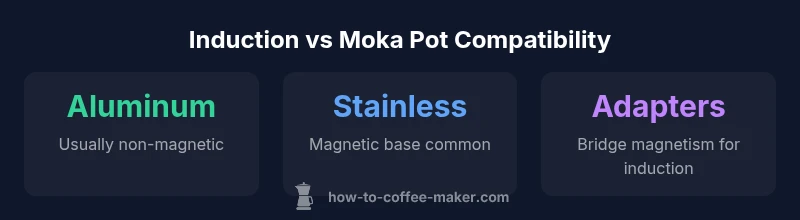
Induction compatibility matrix for moka pots
| Aspect | Induction Compatibility | Notes |
|---|---|---|
| Moka pot material | Aluminum | Usually not compatible with induction on standard cooktops |
| Moka pot material | Stainless steel | Typically compatible if the base is magnetic and designed for induction |
| Induction adapter | Compatibility option | Can enable aluminum pots to work on induction by providing a magnetic surface |
| Induction testing | Magnet test | Use a magnet to test base magnetism; if it sticks, induction use is possible |
Questions & Answers
Can I use an aluminum Bialetti moka pot on an induction stove without any accessories?
Generally, no. Aluminum moka pots do not create the magnetic interface needed for induction heating. You would need either an induction adapter or a stainless-steel version of the moka pot to work reliably on induction.
Aluminum moka pots usually won't heat on induction unless you use an adapter or switch to a stainless-steel pot.
Will an induction plate affect the taste of the coffee when used with a moka pot?
An induction plate is a heat-transfer aid. It can alter heat transfer slightly, which may affect extraction if not dialed in. Start with a gentle heat and adjust grind size and brew time to taste.
An induction plate can change heat transfer; test and adjust grind and brew time to taste.
What is the simplest way to brew a Bialetti on induction if I don’t want to buy a new pot?
Use a magnetic induction plate or adapter with your current aluminum pot, ensuring a level surface and controlled heat. This is a quick path but may require tweaking heat and grind.
Try a magnetic induction plate with your current pot, then adjust heat and grind as needed.
Are there any safety concerns when using moka pots on induction?
Always monitor the pot during brewing, avoid overheating, and check seals. Induction heats aggressively, which can cause pressure buildup if the gasket is worn.
Watch the pot closely while brewing and check the seal; induction heats faster, so monitor closely.
What alternatives should I consider if I want induction-friendly brewing but love moka flavor?
Opt for a stainless-steel moka pot designed for induction, or explore other methods like a French press or espresso machine with induction-ready heating.
Choose an induction-friendly moka pot or try other induction-friendly methods like French press.
“When it comes to induction compatibility, the key is magnetic contact between the pot and the cooktop; aluminum moka pots need a magnetic bridge to heat properly.”
Key Takeaways
- Check magnetism before brewing on induction
- Choose stainless-steel moka pots for reliable induction use
- Adapters can enable aluminum pots but may affect heat distribution
- Descale regularly to maintain flavor and seal integrity
- Test brew parameters after any equipment change