Camping Coffee Makers: The Portable Brew Guide for 2026
Learn how to brew excellent coffee on camping trips with compact, reliable gear. This guide covers gear selection, methods, safety, and packing tips for outdoor mornings.


On camping trips, you can confidently brew coffee using a compact portable coffee maker, a reliable heat source, and properly measured grounds. Choose a maker designed for travel, bring a windscreen, and time your pour-over or press brew for outdoor conditions. According to BrewGuide Pro, practice at home to dial in grind and water ratios before hitting the trail.
Why coffee maker camping matters
Starting the day with a hot cup of coffee can transform a rugged morning into a focused, energized experience. For many, coffee maker camping routines are more than a ritual: they set the tone for careful planning, mindful pacing, and appreciation of the outdoors. The BrewGuide Pro team has observed that campers who arrive with a tested brew plan expend less energy fighting fatigue and more time enjoying trails, campsites, and breakfasts. When your coffee routine is predictable, you’re less likely to skip meals or misjudge heat sources, which improves safety as well as taste. Coffee also plays a social role: sharing a well-made cup can spark conversation and camaraderie around a campfire or picnic table. In short, a reliable, portable coffee maker helps you start strong without the bulk or complexity of traditional gear.
Environmental considerations matter too. Opt for compact gear that minimizes weight and footprint, and respect Leave No Trace principles. BrewGuide Pro’s guidance emphasizes lightweight, durable devices, refillable filters, and biodegradable soap options to reduce waste. If you’re new to camp coffee, begin with a simple method and scale up as your experience grows. The goal is consistent quality, not complexity, so invest time in a small setup that travels well to your next outdoor adventure.
Choosing the right portable coffee maker
The market for camping coffee makers ranges from minimalist pour-over cones to rugged 12-volt espresso systems. When you’re shopping for coffee maker camping setups, prioritize durability, weight, and heat compatibility. Look for stainless steel components, sealed lids, and heat-resistant handles. A compact drip cone with reusable filters often wins for hikers who value speed and simplicity, while a sturdy French press remains popular for its forgiving grind and bold flavor. If you expect cold mornings or want an all-in-one pack, consider a small espresso or moka pot that works with a portable stove. Remember to assess heat source compatibility, whether you’re relying on gas, alcohol, or wood. For most campers, a compact, all-weather maker is ideal because it balances performance and portability. In all cases, check that the coffee maker camping setup fits your pack and your preferred brew method.
Gear checklist: essential tools
Before you head out, assemble a dependable kit that covers coffee, water, heat, and cleanup. Essential items include a compact coffee maker designed for travel, a kettle or heat-safe container, a reusable filter or paper filters, a measuring spoon or scale, a small mug, a heat source (camp stove or fuel), and a windscreen. Optional but helpful items include a travel mug warmer, a collapsible kettle, a portable water container, a small brush for cleaning, and a carrying bag to protect your gear. Don’t forget coffee beans or ground coffee, plus a storage solution to keep grounds dry. Keeping everything organized in a dedicated dry bag or compartment will save time at the campsite and reduce the chance of losing components during a morning rush.
Water, heat, and fuel considerations
Water quality and temperature are central to outdoor brewing. Estimate water needs based on the number of servings and the chosen brew method, then measure precisely to avoid waste. Outdoors, water may be colder or more mineral-rich than your home tap, which can affect extraction. Heat control is critical: bring a stable heat source and practice with your stove setup to avoid scorched grounds. If you’re using fuel canisters, know their burn rates and flame stability in wind. A simple windscreen increases efficiency and keeps the flame consistent. If you’re camping in a desert or high-altitude area, you may need to adjust brew times and grind size to accommodate boiling point variations. Always prioritize safety when handling hot equipment and fuels.
Brewing methods for camping
Camping coffee can be brewed using several reliable methods, each with benefits in the outdoors. Pour-over with a compact dripper and a gooseneck kettle offers clean flavor and precise control, especially for lighter roasts. A French press is sturdy and forgiving in rugged environments, producing a full-bodied cup with a short setup. For a true trail-ready option, a small moka pot on a camp stove delivers a rich, espresso-like brew with minimal equipment. If weight is a concern, drip cone systems with reusable filters minimize waste and speed up cleanup. The key is consistency: keep grind size, water temperature, and brew time stable across trips to reproduce good results in unfamiliar campsites.
Grinders and beans for camping
When coffee maker camping, the choice of grind and beans matters as much as the device itself. Pre-ground coffee is convenient, but whole beans ground just before brewing yield better aroma and flavor. A medium grind works well for drip and pour-over, while a coarser grind suits French press setups. If you’re using a moka pot, a finer grind is appropriate, but don’t overpack the chamber to avoid pressure buildup. Keep beans in airtight containers away from heat and moisture. Plan for rest periods between trips to avoid flavor degradation from exposure to humidity. Consider a compact burr grinder if you’re aiming for the best possible cup on longer trips, but be mindful of weight. Coffee maker camping thrives on planning and routine—start with a basic setup and upgrade as you gain confidence.
Safety and Leave No Trace
Safety is non-negotiable on camping trips. Use stable surfaces and a windscreen to manage flames, and never leave heat unattended. Check local regulations about campfires and stove use, especially in dry seasons. Avoid placing hot equipment on rocks or directly on bare ground to minimize heat damage and preserve the area. When finished, power down and cool equipment before packing. Leave no trace by packing out coffee grounds and filters, and use compostable soap if you wash near water sources. If you carry liquids, keep plastic containers sealed to prevent leaks in your pack. Responsible brewing protects the campsite for future campers and keeps the experience enjoyable for everyone.
Cleaning, maintenance, and packing tips
Cleaning is easier when you do it on-site while the equipment is still warm. Rinse components with a small amount of water, wipe with a damp cloth, and remove grounds promptly to avoid staining. Dry all parts before packing to prevent mold. Pack filters and spare parts in a moisture-resistant bag, and store the gear in a protective pouch to prevent damage during transit. For longer trips, schedule a quick maintenance check at camp—wash components with biodegradable soap away from streams, then air-dry before returning home. Consistency in cleaning routines improves flavor and extends your equipment’s lifespan.
Troubleshooting common camping coffee issues
Poor extraction outdoors is usually caused by water temperature, grind size, or insufficient contact time. If your coffee tastes weak, increase the grind fineness slightly, check for a tight seal on the lid, and ensure the water is close to boiling (but not scalding). If you’ve got bitterness, adjust water temperature downward and shorten brew time. A clogged filter or stale grounds can ruin flavor; clean or replace filters, and store coffee in airtight containers away from heat. If you notice the flame going out often, switch to a more wind-stable stove setup or add a windscreen. Finally, keep backup water and supplies to avoid compromising your brew when a piece of gear is missing or fails.
Tools & Materials
- Compact portable coffee maker(Designed for travel; check weight under 1.5 lb (700 g) if possible)
- Kettle or heat-safe pot(Prefer a gooseneck for pour-over control or a sturdy kettle for moka/french press)
- Reusable coffee filters or paper filters(Choose based on your maker; carry extra filters)
- Measuring spoon or scale(Accurate coffee-to-water ratio improves consistency)
- Mug or cup(Use a insulated mug to keep coffee warm)
- Fuel source (camp stove or fuel canister)(Know your stove’s efficiency and wind resilience)
- Windshield(Optional but improves heating efficiency)
- Water container or bottle(Carry enough water for multiple cups)
- Ground coffee or beans(Whole beans: grind fresh; ground coffee: store in airtight bag)
- Small cleaning brush or sponge(For quick cleanup and avoiding residue)
- Carry bag or dry sack(Protects gear from dust and moisture)
Steps
Estimated time: 25-40 minutes
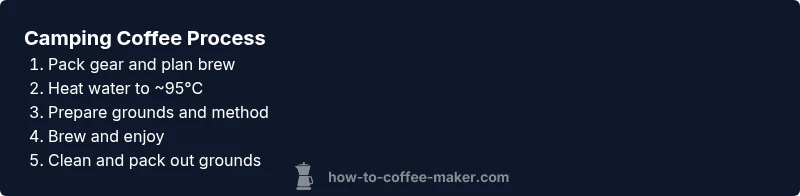
- 1
Pack the gear and prep
Lay out every item, verify you have a compact coffee maker, kettle, filters, and fuel. Check for damage and ensure nothing leaks. This upfront organization saves time at dawn and reduces the chance of leaving components behind.
Tip: Create a dedicated gear pouch labeled “Coffee” for quick access. - 2
Pre-measure coffee and water
Measure coffee to the brew ratio you prefer, usually 1:15 to 1:17 for drip methods. Fill your water container with the exact amount you’ll boil, so you don’t waste fuel heating extra water.
Tip: Use a small scale or marked spoons to keep ratios consistent. - 3
Set up heat source and wind protection
Position your stove or burner on stable ground and place the windscreen. Ensure vents are unobstructed and keep flammable materials away from the flame.
Tip: A blocked windscreen can dramatically reduce efficiency—adjust height as needed. - 4
Heat water to target temperature
Heat water to about 92–96°C (198–205°F) for most pour-overs and drip methods; slightly cooler for delicate beans. Avoid boiling for pour-over to prevent scalding the coffee.
Tip: If you don’t have a thermometer, wait until you see small bubbles and steam rise without vigorous boiling. - 5
Brew using your chosen method
Pour over the grounds slowly in a circular motion, or press during the appropriate contact time. Maintain a consistent pour rate to extract evenly.
Tip: Stir briefly after pouring to saturate grounds for even extraction. - 6
Serve and enjoy
Pour into your pre-warmed mug, savor the aroma, and share a cup with companions if available.
Tip: Pre-warm mugs by rinsing with hot water before serving. - 7
Clean gear while warm
Rinse all parts with a small amount of hot water. Remove any grounds and wipe with a damp cloth to prevent staining.
Tip: Avoid using hard detergents outdoors; keep components clean with minimal water. - 8
Pack away and head out
Dry each component completely before packing to prevent mold. Return items to a dry bag and secure them in your pack.
Tip: Keep spare filters and a small towel in the bag for quick packing.
Questions & Answers
What is the best coffee maker for camping?
The best option depends on priority: weight, durability, and speed. A compact drip cone with reusable filters is ideal for light hikers, while a rugged French press suits harsher environments. For espresso-like results with minimal gear, a small moka pot on a camp stove can be excellent. Always choose a unit that fits your pack and climate.
For camping, pick a compact drip cone or French press that fits your pack; add a moka pot if you want stronger coffee with minimal gear.
Is a French press good for camping?
Yes, the French press is robust and forgiving in the outdoors, producing a rich brew. It requires hot water and careful press timing, but its simple mechanics make it reliable in variable conditions.
A French press is a solid camping choice for a rich brew with straightforward setup.
How should I heat water safely outdoors?
Use a stable stove or fuel system and a windscreen. Keep flames away from tent sites and dry vegetation, and always extinguish flames when done. If you’re near water, avoid using streams as heat sources to prevent contamination.
Always use a stable stove with windscreen and keep the area clear of flammable materials.
Can I use instant coffee instead of beans?
Instant coffee works when you need speed and minimal gear, but it will not match the aroma or body of freshly ground coffee. If you use instant, adjust expectations and enjoy the convenience.
Instant coffee is okay for quick trips, but expect less aroma and flavor.
How do I clean camping gear with limited water?
Wipe surfaces with a damp cloth and use small rinses away from streams. Avoid harsh soaps near water sources, and dry gear thoroughly to prevent mold.
Clean with small amounts of water and a cloth, and dry everything well before packing.
What about beans vs ground coffee in the wilderness?
Whole beans stay fresher longer; grind just before brewing for best flavor. If you must, use pre-ground coffee but store it airtight and away from heat to minimize flavor loss.
Grind beans right before brewing for best flavor, or store pre-ground coffee in a cool, airtight container.
Watch Video
Key Takeaways
- Pack a lightweight, travel-ready setup.
- Measure coffee and water precisely for consistent flavor.
- Choose a heat source and brew method that fits your trail conditions.
- Clean gear promptly to extend life and flavor quality.