Chemex Coffee Maker Instructions: A Practical Step-by-Step Guide
Discover chemex coffee maker instructions to brew clean, crisp pour-over coffee at home. This guide covers setup, grind, bloom, water temp, and essential care.


You will learn to master chemex coffee maker instructions for a clean, bright pour-over. This guide covers gear setup, correct grind size, bloom timing, controlled pouring, and precise water temperature to consistently brew balanced coffee using a Chemex.
Understanding the Chemex: Design, Filters, and Flavor
The Chemex is a classic pour-over brewer renowned for producing exceptionally clean, bright coffee. When you study chemex coffee maker instructions, you learn how the glass carafe, wooden collar, and thick filter work together to remove oils and sediment, giving you a cup with remarkable clarity. The filters are thicker than standard paper filters, which slows extraction and highlights the inherent flavors of your beans. By following a consistent grind size, water temperature, and pouring pattern, you can consistently reproduce clean results that showcase a wide range of coffees. This section explains the fundamental design elements and how they influence flavor, aroma, and mouthfeel in everyday brewing.
Remember: precision in each step of the process yields repeatable, café-quality results at home.
Grind Size, Water Temperature, and Ratios
Chemex brewing rewards a careful balance between grind size, water temperature, and coffee-to-water ratios. For most coffees, aim for a medium-coarse grind—roughly the texture of sea salt. A typical starting ratio is about 1:15 to 1:17 (coffee:water), which means 20 g of coffee for roughly 300 ml of water. Water temperature should sit around 92–96°C (195–205°F) to optimize extraction without scorching the grounds. Using a scale helps you stay consistent across brews and adjust based on bean origin, roast level, and personal taste. The thicker filter requires a slightly longer contact time, which is why a gentle pour and even saturation matter as much as the grind.
Filter Preparation and Preheating: The Quiet Foundation
Rinse the paper filter with hot water before adding coffee. This preheats the carafe and removes any papery taste from the filter, contributing to a cleaner cup. Place the filter in the Chemex with the unfolded edge against the spout to ensure proper fitting. If possible, warm the empty carafe slightly with hot water, then discard the warming water before dosing the grounds. This small habit stabilizes temperatures and helps prevent abrupt drops during the brew.
Bloom and Initial Pour: Building Saturation and Aroma
Begin with a small pour to saturate all grounds evenly, typically about 30–40 seconds of blooming time. The CO2 released during blooming assists in even extraction, yielding richer aromatics. After blooming, pour in a slow, controlled circle from the center outward, maintaining a steady pace to maintain contact with the coffee bed. Aim to reach your target water amount gradually, pausing briefly if the flow accelerates, so the grounds stay evenly saturated.
The Pouring Technique: Consistency Is Key
Pour using a gooseneck kettle for precision. Keep the pour rhythm smooth and continuous, using concentric circles to cover all grounds. The goal is uniform saturation rather than rapid water delivery. If you notice channeling or gaps in the bed, pause and adjust your pour angle slightly to redistribute water. The final pour should resemble a soft, even shower over the entire puck, yielding a balanced extraction.
Common Flavor Pitfalls and How to Address Them
Bitter flavors usually point to over-extraction, which can come from too-hot water, a grind that’s too fine, or brew times that are too long. Sour notes indicate under-extraction, often due to too-coarse grind or insufficient contact time. If your cup lacks body, try a slightly finer grind or a longer pour. If it tastes flat, check grind freshness, water quality, and ensure you’re not under-pouring. Small adjustments yield big flavor improvements.
Cleaning, Care, and Longevity of Your Chemex
After brewing, discard the grounds and filter, then rinse the Chemex with warm water. Avoid soap residue that can linger and affect flavor; if needed, use a mild, food-safe cleaner and rinse thoroughly. Dry the carafe to prevent mineral spots, and store the Chemex with the handle free to prevent cracks. Regular cleaning preserves clarity in flavor and extends the life of your brewer.
Variations and Enhancements: Tuning Ratios and Techniques
Experiment with coffee origin, roast level, and grind adjustments to discover your preferred flavor profile. Lighter roasts may benefit from a slightly longer brew time and a finer grind, while darker roasts can tolerate a coarser grind with a briefer pour. Some home brewers enjoy a longer rest between bloom and final pour to emphasize sweetness. Keep notes for future reference and refine your technique over time.
Storage, Reuse, and Efficiency: Practical Tips
Store beans in a cool, dark place to preserve aromatics for Chemex brewing. Grind only what you need for each brew to maximize aroma and flavor. Pre-wet filters and preheat the carafe, and ensure your kettle is clean to avoid transferring off-flavors. Use a timer to track bloom time and pour rate, which helps achieve consistent results across different beans and roasts.
Final Notes on Quality and Practice
Chemex coffee maker instructions emphasize consistency and practice. Small, repeatable steps—filter prep, grind size, precise pouring, and temperature control—build a reliable workflow that yields excellent cup quality. As you gain experience, you’ll recognize which tweaks most impact your taste preferences and can adapt the method while maintaining the core principles.
Tools & Materials
- Chemex brewer (glass carafe with pour spout)(Choose the size matching your target brew volume; inspect for chips.)
- Chemex filters(Natural brown filters; rinse before use to reduce papery taste.)
- Gooseneck kettle(Precise control for even saturation; allow steady pours.)
- Burr coffee grinder(Grind just before brewing; aim for a medium-coarse texture.)
- Coffee scale(Weigh coffee and water for consistent ratios.)
- Hot water (filtered preferred, ~93°C / 200°F ideal)(Prep water to the target temperature for bloom.)
- Timer(Track bloom and total brew time.)
- Mug or server(Serve immediately after brewing for best aroma.)
Steps
Estimated time: 15-20 minutes
- 1
Prepare gear and preheat
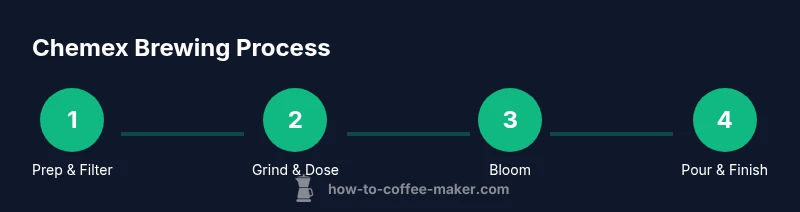
Place the Chemex on the scale, insert a filter, and rinse with hot water to preheat the carafe. This also removes any residual paper taste from the filter. Ensure the carafe is warm before you dose the coffee.
Tip: Rinse the filter with hot water to prevent papery flavors. - 2
Grind and measure coffee
Grind coffee to a medium-coarse texture just before brewing and weigh the grounds for accuracy. For a single cup, aim for around 20 g of coffee; adjust with experience and bean origin. Keep the grounds dry until the pour begins.
Tip: Freshly ground coffee yields the best aroma; grind right before brewing. - 3
Set up and dose into the filter
Place the filter in the Chemex and add the ground coffee evenly to form a flat bed. Level the surface with a gentle shake to ensure uniform saturation. This creates a consistent starting point for extraction.
Tip: Tap the Chemex lightly to settle grounds for even contact. - 4
Bloom with a small pour
Start with a small, even pour to saturate all grounds, initiating bloom for about 30–40 seconds. This releases trapped CO2 and primes the bed for even extraction. Focus on full but gentle saturation rather than fast pouring.
Tip: Aim for a bloom that looks like a foam ring forming over the bed. - 5
Pour in concentric circles
After blooming, pour in a slow, circular motion from the center outward, keeping the water level steady. Stop after reaching the target weight, allowing the grounds to settle before the next pour.
Tip: Maintain a consistent flow rate to avoid channeling. - 6
Complete the extraction
Continue pouring in stages until you reach your target water amount. The total brew time should generally fall in the 3–4 minute range. If the pour slows noticeably, pause briefly to let the bed recover.
Tip: Small, measured pours beat a single long pour for even extraction. - 7
Remove the filter and finish
Once brewing completes, remove the used filter and gently swirl the carafe to mix. Pour immediately into a mug to preserve aromatics. Cleanliness at this stage prevents lingering flavors.
Tip: Dispose of grounds promptly to avoid bitterness from residual oils. - 8
Serve and enjoy
Pour the coffee into a warmed mug and enjoy while hot. The Chemex brew shines when sipped within a few minutes of finishing. Pair with breakfast or a mid-morning snack for best flavor.
Tip: Warm mugs ahead of time to maintain temperature and aroma. - 9
Initial clean-up
Rinse the filter and grounds away with water and rinse the carafe thoroughly. Dry promptly to prevent mineral spots. Store ready for your next Chemex session.
Tip: Avoid leaving water in the carafe to prevent mineral buildup. - 10
Maintenance and storage
Store the Chemex and filters in a cool, dry place. Regularly inspect the glass for any chips or cracks and replace as needed. Cleanliness today reduces flavor impacts tomorrow.
Tip: Periodic deep cleaning extends the life of your equipment.
Questions & Answers
What grind size should I use for a Chemex?
For Chemex, use a medium-coarse grind about the texture of sea salt. This supports even extraction and avoids clogging the filter.
Use a medium-coarse grind, like sea salt, for even extraction.
Do I need to rinse the Chemex filter?
Yes. Rinsing removes papery taste and preheats the setup for a cleaner cup.
Yes—rinse the filter to remove papery flavors and preheat.
What water temperature is ideal for a Chemex brew?
Aim for about 92–96°C (195–205°F). Too hot can over-extract, too cool under-extract.
Keep water around 92 to 96 degrees Celsius for best results.
How long should bloom time be?
Bloom for about 30–45 seconds to allow CO2 to escape and prepare grounds for extraction.
Bloom for roughly 30 to 45 seconds.
Can I reuse Chemex filters?
It's not recommended to reuse paper filters; they lose effectiveness at trapping fines.
Usually best not to reuse filters—start fresh.
Why is my brew tasting bitter or sour?
Bitterness signals over-extraction (hot water, fine grind, long brew). Sour notes indicate under-extraction (coarse grind or short brew). Adjust grind size, temperature, or brew time accordingly.
Bitter means over-extracted; sour means under-extracted. Adjust grind, temp, or time.
Watch Video
Key Takeaways
- Warm carafe and filter for stable temperatures
- Grind fresh and weigh beans for accuracy
- Pour with a controlled, spiral motion
- Maintain water temp around 92–96°C
- Clean the Chemex after use to preserve flavor